How to build a balanced stock portfolio

The dream is simple: put your money into the stock market and watch it grow while you sleep. The reality, however, is often a rollercoaster of emotions, red numbers, and the nagging fear that you’re one “market correction” away from losing your shirt.
In 2026, the market is faster than ever. Between AI-driven trading, global economic shifts, and the 24/7 noise of financial social media, building a balanced stock portfolio isn’t just a good idea—it’s your primary survival mechanism.
This isn’t about picking the next “meme stock” or trying to outsmart a supercomputer. It’s about building a resilient, high-performance engine that thrives in good times and protects you in the bad. In this exhaustive guide, we will walk through the exact steps to construct, manage, and scale a balanced stock portfolio from scratch.
Why a Balanced Stock Portfolio is Your Best Defense Against Market Volatility

Before we talk about how to build it, we need to understand why balance is the secret sauce of the world’s most successful investors.
Many beginners make the mistake of concentration. They find one sector they like—usually Tech or AI lately—and put 90% of their money there. When that sector is booming, they feel like geniuses. But when that specific sector takes a hit (and it always does), their entire financial life is in jeopardy.
The Mathematics of Recovery
A balanced portfolio is designed to minimize the “drawdown” (the percentage your portfolio drops during a crash). Why does this matter? Because of the math of recovery.
-
If your portfolio drops 10%, you need an 11% gain to get back to even.
-
If your portfolio drops 50%, you need a 100% gain just to get back to where you started.
By balancing your stocks across different industries and risk profiles, you ensure that even if one part of your engine fails, the others keep you moving forward.
Defining Your Risk Tolerance: The “Sleep Test” for Modern Investors
Every great portfolio starts with a mirror. You cannot build a balanced portfolio without knowing how much “heat” you can handle. This is known as your Risk Tolerance.
The Psychology of Risk
In 2026, we see a lot of “aggressive” investors who are only aggressive when the market is green. True risk tolerance is measured when the market is red.
-
Conservative: You prioritize keeping your money over growing it. You prefer steady dividends and low volatility.
-
Moderate: You want growth but can’t handle seeing your account drop by 30% in a month.
-
Aggressive: You are playing the long game (10+ years) and view market crashes as “clearance sales” to buy more.
Determining Your Time Horizon
The “balance” of your portfolio is heavily dictated by when you need the money. If you’re 25, you have decades to recover from a mistake. If you’re 55, your tolerance for error is much lower.
The Pillars of Strategic Asset Allocation: Stocks, Bonds, and Alternatives
While this guide focuses on a stock portfolio, a truly balanced portfolio often includes other “buckets” to offset stock market volatility. This is called Asset Allocation.
The 2026 Perspective on the 60/40 Rule
For decades, the “60% stocks and 40% bonds” rule was the gold standard. However, in the current economic climate, many investors are moving toward a more dynamic split:
-
70% Equities (Stocks): For growth and inflation protection.
-
20% Fixed Income (Bonds/CDs): For stability and income.
-
10% Alternatives (Gold, Real Estate, or even a tiny sliver of Digital Assets): For non-correlated protection.
Diversification vs. Diworsification: Finding the Sweet Spot

“Don’t put all your eggs in one basket” is the most famous cliché in finance. But there is a danger in taking this too far—a phenomenon legendary investor Peter Lynch called “Diworsification.”
The Danger of Over-Diversification
If you own 100 different stocks, you essentially own an index fund but with higher fees and more stress. You become so spread out that no single “winner” can actually move the needle for your wealth.
The Rule of 20 to 30
For most individual investors, the “sweet spot” is owning between 20 and 30 high-quality stocks.
-
This is enough to protect you: if one company goes to zero, it only represents 3-5% of your portfolio.
-
This is concentrated enough to win: if one of your companies doubles in value, you will see a significant jump in your net worth.
Constructing the “Core-Satellite” Model: A Strategy for Stability and Growth
One of the most effective ways to balance a portfolio is the Core-Satellite Model. This strategy allows you to have the safety of a “boring” index fund while still having the excitement of picking individual stocks.
The Core (70-80% of your portfolio)
Your core should be made of “set it and forget it” investments. This is usually a broad-market ETF like the S&P 500 (VOO) or a Total World Stock Market ETF (VT). This ensures that as long as the global economy grows, you win.
The Satellites (20-30% of your portfolio)
This is where you get to be an “investor.” You use this portion of your money to buy individual stocks that you believe will outperform the market.
-
Tech stocks for high growth.
-
Energy stocks for dividends.
-
Small-cap stocks for explosive potential.
Sector Diversification: How to Weather Any Economic Storm
A truly balanced stock portfolio isn’t just about owning different companies; it’s about owning companies that do different things. In the stock market, different industries (sectors) react differently to the economy.
Defensive Sectors (The “Need” Categories)
These companies do well even in a recession because people still need their products.
-
Healthcare: Medicine and hospitals.
-
Consumer Staples: Toothpaste, toilet paper, and groceries.
-
Utilities: Electricity and water.
Cyclical Sectors (The “Want” Categories)
These companies explode during a boom but struggle during a bust.
-
Technology: New gadgets and software.
-
Consumer Discretionary: Travel, luxury cars, and high-end dining.
-
Industrials: Construction and manufacturing.
The Strategy: A balanced portfolio should have a footprint in at least 7 of the 11 major stock market sectors. This ensures that when Tech is “cooling off,” your Healthcare or Utility stocks are likely “holding the line.”
The Role of Dividends: Creating a “Floor” for Your Portfolio
If you want to balance your portfolio, you cannot ignore Dividends. These are cash payments that companies send to you just for owning their shares.
Why Dividends are a Defensive Tool
During a “Flat Market” (where stock prices aren’t really moving), dividends are often the only way investors make money.
-
Reinvestment: By using a DRIP (Dividend Reinvestment Plan), you use that cash to buy more shares. Over time, this creates a “snowball effect” that drastically increases your wealth.
-
Psychological Safety: It is much easier to hold a stock during a market crash if you know that a dividend check is arriving in your account next month.
Identifying “Quality” Stocks: The Three Metrics Every Investor Needs
When picking individual stocks for your balanced portfolio, you need a filter. In 2026, “Hype” is everywhere, but “Quality” is rare. Use these three metrics to screen your stocks:
1. The P/E Ratio (Price-to-Earnings)
Is the stock expensive? The P/E ratio tells you how much you are paying for every $1 of profit the company makes.
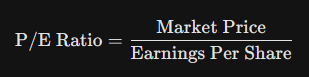
Compare a company’s P/E to its competitors and its own historical average.
2. Debt-to-Equity Ratio
Does the company owe too much money? High debt is the #1 reason companies go bankrupt during a recession. Look for companies with a debt-to-equity ratio below 1.5.
3. Free Cash Flow (FCF)
Cash is king. Profits can be manipulated by accountants, but cash flow is harder to fake. A company with growing Free Cash Flow has the “fuel” to pay dividends, buy back shares, and survive a crisis.
Geographic Diversification: Looking Beyond the U.S. Borders

In 2026, the “Home Country Bias” is a dangerous trap. Many investors only buy stocks in their own country. For U.S. investors, this means missing out on the growth of emerging markets in Asia and Latin America, or the stable “Value” giants of Europe.
The Global Balance
A balanced portfolio should ideally have:
-
60-70% Domestic Stocks: (In the market you know best).
-
20-30% Developed International: (Europe, Japan, Australia).
-
5-10% Emerging Markets: (India, Brazil, Southeast Asia).
Innovation isn’t exclusive to one country. By diversifying geographically, you protect yourself if your home country’s currency devalues or its economy stagnates.
The Art of Rebalancing: Keeping Your “Pie” in Shape
Imagine you start with a perfect plan: 50% Tech stocks and 50% Energy stocks.
-
Tech has a massive year and goes up 100%.
-
Energy has a bad year and stays flat.
-
Suddenly, your portfolio is 75% Tech and 25% Energy.
You are no longer “balanced.” You are now heavily over-exposed to a tech crash. This is why you must Rebalance.
How to Rebalance Properly
Once or twice a year, you should look at your portfolio’s percentages.
-
Sell High: Sell a portion of the stocks that have grown too large.
-
Buy Low: Use that cash to buy more of the stocks that are currently undervalued.
This mechanical process forces you to follow the golden rule of investing: Sell High, Buy Low.
Handling Volatility: The Psychological Side of Balance
You can have the most balanced portfolio in the world, but it won’t matter if you panic and sell everything at the first sign of trouble.
The “News” Filter
In 2026, the financial media survives on clicks, and clicks are driven by fear. “THE MARKET IS CRASHING” gets more views than “The Market is Doing Exactly What It Has Done for 100 Years.”
-
The Strategy: Stop checking your portfolio every day. If you have a balanced portfolio, daily fluctuations are just “noise.”
The Power of “Dollar-Cost Averaging” (DCA)
The best way to maintain balance is to invest a fixed amount of money every month, regardless of the price.
-
When prices are high, your money buys fewer shares.
-
When prices are low, your money buys more shares.
This removes the “guessing game” and ensures that your portfolio stays fueled through all market cycles.
The Checklist for a Balanced 2026 Portfolio
Before you make your next trade, run through this checklist to see if your portfolio is truly balanced:
-
[ ] Do I own at least 20 different companies?
-
[ ] are my stocks spread across at least 7 different sectors?
-
[ ] Do I have an “Emergency Fund” so I’m never forced to sell my stocks?
-
[ ] Is at least 70% of my portfolio in a low-cost, broad-market Index Fund?
-
[ ] Do I have international exposure?
-
[ ] Is my “Risk” consistent with my age and my goals?
The Quiet Path to Extraordinary Wealth

Building a balanced stock portfolio isn’t about “hitting a home run.” It’s about staying in the game long enough for the power of Compounding Interest to turn a small amount of money into a fortune.
The stock market is a marathon. Those who sprint with all their money in one “hot” stock usually trip and fall before the finish line. Those who maintain a steady, balanced pace—diversifying their sectors, reinvesting their dividends, and rebalancing their winners—are the ones who cross the line with total financial freedom.
Start building your foundation today. Don’t wait for the “perfect” market; build a portfolio that can handle any market.