10 Mistakes Beginners Make in the Stock Market

The stock market is one of the greatest wealth-building engines in human history. It has turned schoolteachers into millionaires and small savings into generational fortunes. However, for every success story, there are dozens of “cautionary tales”—investors who jumped in with high hopes only to see their hard-earned money evaporate.
If you are just starting your journey in 2026, you are entering a market that is faster, more digital, and more influenced by social media than ever before. While the tools to invest have become easier to use, the psychological traps remain the same.
To help you stay on the right side of the profit line, we’ve compiled the 10 most common mistakes beginners make in the stock market. By understanding these pitfalls, you can build a portfolio that stands the test of time.
Investing Without a Clear Strategy or “North Star”

The biggest mistake a beginner can make is treating the stock market like a shopping mall. They buy a little bit of this and a little bit of that because it “looks good,” without any overarching plan.
Why You Need an Investment Policy Statement (IPS)
Successful investors operate with a plan. Before you buy a single share, you should know:
-
Your Goal: Are you saving for a house in 5 years or retirement in 30?
-
Your Risk Tolerance: Can you handle a 20% drop in your portfolio without losing sleep?
-
Your Exit Strategy: Under what specific conditions will you sell?
Without a strategy, you are just gambling. As the saying goes, “If you don’t know where you’re going, any road will get you there—but it might not be the road to wealth.”
Letting Emotions Drive the “Buy” and “Sell” Buttons
Humans are biologically wired to fail at investing. Our ancestors survived by following the herd and fleeing from danger. In the stock market, those exact instincts—Greed and Fear—will lead you to financial ruin.
The Cycle of Emotional Investing
-
Optimism: The market goes up, and you feel smart.
-
Greed/FOMO: You see others making money and buy at the peak.
-
Fear: The market dips, and you panic.
-
Capitulation: You sell at the bottom to “save” what’s left.
The “truth” no one tells you is that you must be comfortable being bored. Successful investing is often the process of doing nothing while everyone else is panicking.
Attempting to “Time the Market”
Beginners often think they can wait for the “perfect moment” to buy low and sell high. They stay on the sidelines waiting for a crash, or they sell everything because they “feel” a recession is coming.
The Cost of Missing Out
Data consistently shows that time in the market is more important than timing the market.
Example: If you missed just the 10 best days of the S&P 500 over a 20-year period, your total returns would be nearly cut in half. Since those “best days” often happen right after the “worst days,” trying to time the exits usually means you miss the recovery.
Instead of timing, use Dollar Cost Averaging (DCA). Invest a fixed amount every month regardless of the price. This mathematically lowers your average cost over time.
Failure to Diversify (The “All Eggs in One Basket” Trap)

It’s tempting to put all your money into that one “hot” tech stock your friend recommended. If it doubles, you’re a hero. If it goes to zero, you’re broke.
Diversification is the Only Free Lunch
Diversification is the practice of spreading your investments across different sectors (Tech, Healthcare, Energy), asset classes (Stocks, Bonds, Real Estate), and geographies.
By diversifying, you ensure that a failure in one company doesn’t destroy your entire net worth. For most beginners, the easiest way to achieve instant diversification is through a low-cost Index Fund or ETF that tracks the entire market.
Chasing “Hype” Stocks and Following Social Media Trends
In 2026, the influence of “fin-fluencers” on TikTok, Reddit, and X (Twitter) is at an all-time high. Beginners often fall for the hype of “meme stocks” or the “next big AI breakthrough.”
The Danger of Hype
By the time a stock is trending on social media, the “smart money” has likely already bought in and is looking for someone (you) to sell to. Chasing hype is a recipe for buying at the top.
-
Rule: If you don’t understand the company’s business model or how they make money, don’t buy the stock just because it’s “trending.”
Ignoring the Impact of Fees and Commissions
Many beginners don’t realize that even a 1% or 2% fee can eat up a massive portion of their future wealth. Whether it’s high expense ratios in mutual funds or “hidden” fees in trading apps, these costs add up.
The Math of Fees
Consider the compound interest formula with an added variable for fees ($f$):
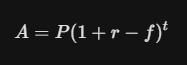
If your return ($r$) is 8% and your fee ($f$) is 2%, you are only growing at 6%. Over 30 years, that 2% difference can result in you having 40% less money in retirement. Always look for “No-Load” funds and ETFs with expense ratios below 0.20%.
Thinking Short-Term in a Long-Term Game
The stock market is a terrible place to put money that you need for next month’s rent or a wedding next year. Beginners often invest money they need in the short term, forcing them to sell at a loss if the market has a bad week.
The 5-Year Rule
Generally, you should only invest money in the stock market that you don’t plan on touching for at least five years. This gives you enough time to ride out the natural “bumps” in the market cycle. If your timeline is shorter, a High-Yield Savings Account (HYSA) or a Certificate of Deposit (CD) is a much safer bet.
Not Doing Your Own Due Diligence (DYOR)

Buying a stock because a headline said it’s a “strong buy” is not a strategy. Beginners often skip the research phase, which leaves them blind when the stock price starts to fluctuate.
Fundamental vs. Technical Analysis
-
Fundamental: Looking at a company’s earnings, debt, management, and competitive advantage.
-
Technical: Looking at price charts and patterns.
For long-term investors, Fundamentals matter most. You should be able to explain to a 10-year-old what the company does and why it will be more valuable in ten years. If you can’t, you shouldn’t own it.
Overlooking the Power of Taxes
Investing has a “silent partner” named the government. Beginners often forget that every time they sell a stock for a profit, they owe Capital Gains Tax.
Tax-Advantaged Accounts
In the US, using accounts like a 401(k), Traditional IRA, or Roth IRA can save you hundreds of thousands of dollars in taxes over your lifetime.
-
Roth IRA: You pay taxes now, but your money grows and is withdrawn tax-free in retirement.
Ignoring these “buckets” is one of the most expensive mistakes a beginner can make.
Lack of Patience and Constant Portfolio “Churning”
We live in an age of instant gratification. Beginners often check their brokerage apps ten times a day. If a stock hasn’t moved in a month, they get bored and sell it to buy something else. This is called Churning.
The Cost of Activity
Every time you trade, you potentially trigger taxes and “spread” costs. More importantly, you interrupt the process of Compound Interest.
“The stock market is a device for transferring money from the impatient to the patient.” — Warren Buffett.
| Investor Type | Average Holding Period | Typical Outcome |
| Day Trader | Minutes/Hours | 95% lose money |
| Speculator | Days/Weeks | High volatility, inconsistent |
| Long-Term Investor | 10+ Years | Historically 7-10% annual returns |
How to Correct Your Course: A Beginner’s “Fix-It” Guide
If you realize you’ve been making these mistakes, don’t panic. The best time to fix your strategy is today.
Step 1: Build an Emergency Fund
Before you invest another dollar, ensure you have 3–6 months of living expenses in a liquid savings account. This is your “Armor” against having to sell your stocks during a market crash.
Step 2: Simplify Your Portfolio
If you find yourself overwhelmed by picking individual stocks, move your capital into a Total Market Index Fund (like VTI or VOO). This removes the stress of “picking winners” and guarantees you get the average return of the entire market.
Step 3: Automate Your Contributions
Set up an automatic transfer from your bank to your brokerage. By making it “invisible,” you remove the emotional decision-making process. You buy when it’s up, you buy when it’s down, and you win in the long run.
Investing is a Marathon, Not a Sprint

The stock market isn’t a “get rich quick” scheme; it’s a “get rich eventually” process. Most beginners fail because they try to skip the steps, chase the hype, and let their emotions take the wheel.
Success in the stock market requires discipline, patience, and a willingness to be “boring.” Avoid these ten mistakes, keep your fees low, and stay invested for the long haul. Your future self will thank you for the quiet, steady decisions you make today.