Why People Spend Money to Impress Others

In the modern world, your bank account is often invisible, but your lifestyle is on full display. We live in an era where social media feeds, high-end neighborhoods, and designer labels act as a digital and physical “scorecard” for success. But have you ever stopped to wonder why we feel an almost primal urge to buy things we don’t necessarily need—or even like—just to show them off to people we barely know?
In behavioral finance, this phenomenon is more than just “vanity.” It is a complex intersection of evolutionary biology, social psychology, and economic signaling. Understanding the “why” behind the “buy” is the first step toward reclaiming your financial sovereignty. If you’ve ever felt the pressure to “keep up with the Joneses,” this deep dive into the psychology of spending for status is for you.
The Evolutionary Roots of Status Signaling

To understand why a 21st-century consumer might take on a $1,000 monthly car payment for a luxury SUV, we have to look back thousands of years. In ancestral environments, status was not a luxury; it was a survival mechanism.
Costly Signaling Theory
In biology, “Costly Signaling” is a behavior where an organism engages in a visible, expensive activity to prove it has high-quality traits. A classic example is the peacock’s tail. The tail is heavy, attracts predators, and requires immense energy to maintain. However, that is exactly why it works: only a truly fit and healthy peacock could afford to survive with such a handicap.
Humans do the exact same thing with their finances. By purchasing a luxury watch or a high-end handbag, you are signaling to the “tribe” that you have an abundance of resources. You are saying, “I am so successful that I can afford to ‘waste’ money on this non-essential item.” This signal historically led to better social standing, more trust from the community, and better opportunities.
The Survival of the “Fittest” Consumer
While we no longer live in small tribes where status determines our access to food, our brains haven’t caught up to modern civilization. We still experience a dopamine hit when we receive social validation for a purchase because our subconscious links that validation to safety and reproductive success.
Conspicuous Consumption and the Veblen Effect
The term Conspicuous Consumption was coined by economist Thorstein Veblen in his 1899 book, The Theory of the Leisure Class. Veblen observed that people often use wealth not to satisfy their own needs, but to publicly manifest their social status.
What are Veblen Goods?
In standard economics, when the price of a product goes up, demand usually goes down. However, Veblen Goods break this rule. For items like luxury cars, high-end watches, and designer fashion, a higher price can actually lead to higher demand.
Why? Because the high price is the feature, not the bug. If a Rolex cost $50, it wouldn’t be a status symbol. The fact that it costs $10,000 is what makes it a “costly signal.” When you buy a Veblen good, you aren’t paying for the utility of the item; you are paying for the “prestige” of the price tag.
The Social Media Comparison Trap
If the 20th century was about keeping up with the Joneses next door, the 21st century is about keeping up with the entire world. Social media has created a “comparison group” that is both global and artificial.
The 24/7 Highlight Reel
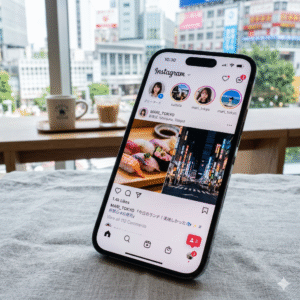
Before the internet, you only knew what your neighbors or coworkers owned. Now, you have 24/7 access to the curated highlight reels of the top 0.1% of the world. When you scroll through Instagram and see an influencer on a private jet, your brain registers that as a “standard” you are failing to meet.
The Rise of “Performative Spending”
Social media has turned consumption into a performance. We no longer just eat a meal; we photograph it. We don’t just go on vacation; we “content create.” This leads to Performative Spending, where the primary value of an experience or product is the social validation (likes, comments, views) it generates. This creates a vicious cycle where we spend more money to maintain a digital image that doesn’t match our actual financial reality.
The Diderot Effect: Why One Purchase Leads to Ten More
Have you ever bought a new pair of shoes, only to realize your jeans now look too old? You buy new jeans, and then your shirt looks faded. This is known as the Diderot Effect.
Named after the French philosopher Denis Diderot, this concept explains how the introduction of a new possession that is “out of sync” with your current lifestyle can trigger a spiral of consumption. Diderot received a beautiful scarlet robe as a gift, and suddenly his old desk, chair, and rug looked “shabby.” He replaced them all to match the robe, eventually falling into debt.
When we buy a status symbol to impress others, we often find ourselves in a “consumption spiral.” A luxury car feels out of place in a modest garage, which leads to home renovations, which leads to a new wardrobe. This is how a single attempt to “signal status” can balloon into a full-scale financial crisis.
The Invisible Cost: Wealth vs. Riches
In behavioral finance, there is a massive distinction between being “rich” and being “wealthy.”
-
Richness: This is current income and visible spending. It is the car you drive and the brand on your chest. Richness is “noisy.”
-
Wealth: This is the money that hasn’t been spent. It is the assets in your brokerage account, your retirement fund, and your business equity. Wealth is “quiet.”
The Paradox of Spending
The paradox is that if you spend your money to show people how much money you have, you no longer have that money. Every dollar spent on an “impressive” liability is a dollar that cannot be invested to build true wealth.
If you invest $1,000 a month in a diversified portfolio with an average 7% annual return, the compound interest formula tells us:
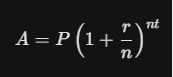
After 30 years, that $1,000 monthly “signal” would have grown into approximately $1.2 million. By choosing to impress others today, you are effectively choosing to be a million dollars poorer in the future.
Status Anxiety and Mental Health
Spending money to impress others isn’t just bad for your wallet; it’s bad for your mind. This behavior is often fueled by Status Anxiety—the constant fear that we are being judged by our peers as “unsuccessful” or “lesser.”
The Hedonic Treadmill
Status-seeking spending puts you on the Hedonic Treadmill. You buy a new item, get a temporary “status high,” and then quickly return to your baseline level of happiness. To get the next high, you need a more expensive item. Because there will always be someone with a “bigger” signal, you can never win this game. This leads to chronic stress, financial anxiety, and a feeling of never being “enough.”
How to Break the Cycle: Reclaiming Your Financial Identity
If you find yourself caught in the comparison trap, the solution isn’t just “spending less.” It’s about shifting your mindset.
1. Identify Your Core Values
Before making a major purchase, ask yourself: “Would I still buy this if I could never show it to anyone or post about it online?” If the answer is no, you are buying for status, not for value. Focus your spending on things that align with your personal goals, health, and family, rather than external validation.
2. Practice “Quiet Luxury” and Minimalism
True wealth is often understated. Many of the world’s most successful people—from Warren Buffett to Mark Zuckerberg—are famous for their lack of conspicuous consumption. They understand that their time and their freedom are far more valuable than a designer logo.
3. Automate Your Wealth Building
Remove the “decision” from the equation. Set up automatic transfers to your investment accounts the moment your paycheck hits. If the money is moved to your “Wealth” bucket immediately, you won’t be tempted to use it as a “Signal” for others.
4. Redefine Status
What if “status” was redefined? Instead of the brand of your car, what if status was:
-
Being debt-free.
-
Having a 12-month emergency fund.
-
Having the freedom to take a Tuesday afternoon off to spend with your kids.
-
Retiring 10 years earlier than your peers.
The Only Person You Need to Impress is Your Future Self

At the end of the day, the people you are trying to impress with your spending are usually too busy trying to impress you with theirs. It is a game where the only real winner is the credit card company.
Financial freedom begins the moment you stop seeking validation from strangers and start seeking security for yourself. Wealth isn’t the things you own; it’s the options you have. By choosing to live below your means and ignoring the “Joneses,” you aren’t missing out—you are buying your future freedom.