What Does Home Insurance Cover?
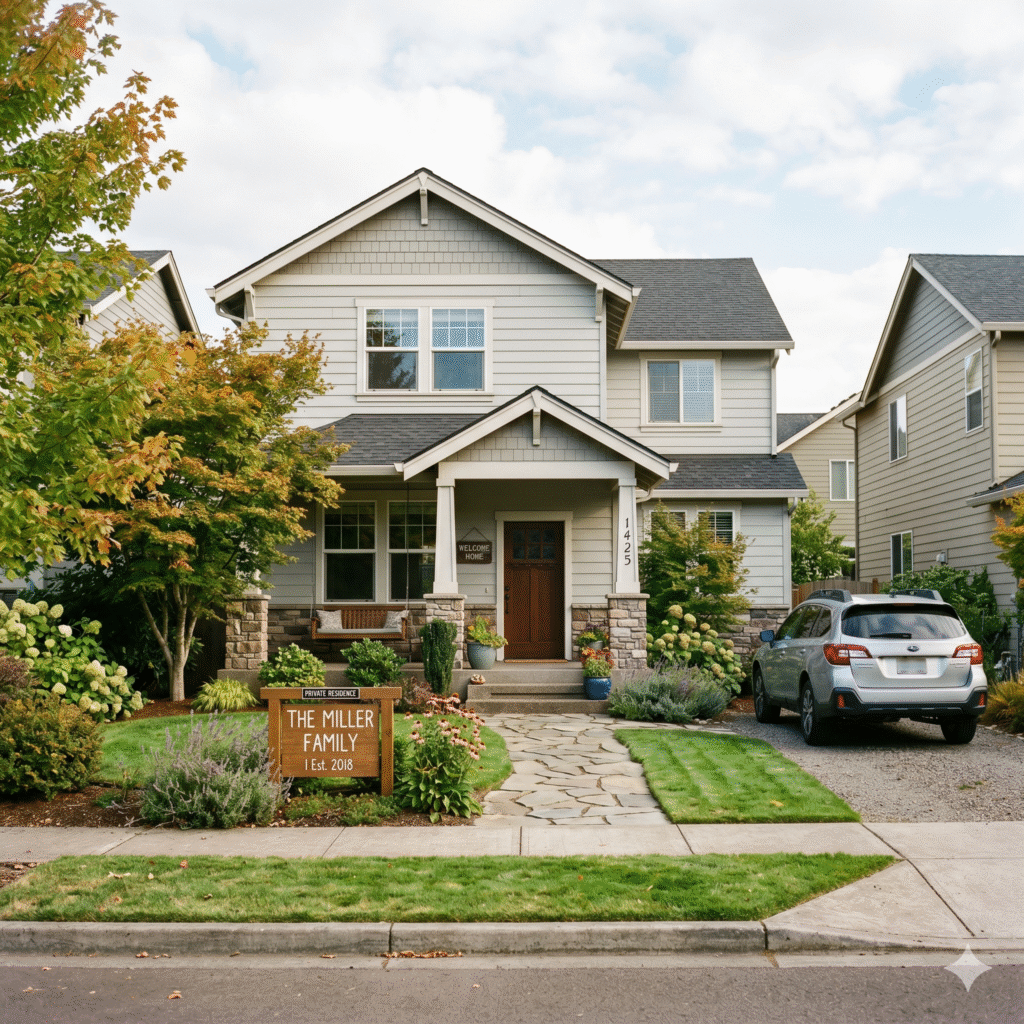
For most people, a home is the single largest purchase they will ever make. It is not just a financial asset; it is the sanctuary where you raise your family, store your valued possessions, and build your life. Because your home represents such a massive financial and emotional investment, protecting it from unforeseen disasters is one of the most critical steps in your personal finance journey.
This is where homeowners insurance steps in.
To the untrained eye, insurance policies look like daunting booklets filled with dense legal jargon, complex clauses, and confusing financial terms. If you are a new homeowner or shopping for your first policy, you might be asking a deceptively simple question: What does home insurance actually cover?
A standard homeowners insurance policy is not a single blanket of protection. Instead, it is a sophisticated bundle of several distinct coverages designed to safeguard your physical house, your personal belongings, and your financial net worth. This comprehensive guide breaks down exactly how home insurance works, what is included, what is strictly excluded, and how to pick the right limits for your property.
Understanding the 6 Core Components of Standard Homeowners Insurance Policies
When you purchase a standard homeowners insurance policy (frequently referred to in the industry as an HO-3 policy), your coverage is automatically divided into six distinct sections. Each section is labeled with a letter from A through F, and each has its own separate coverage limit.
To understand your policy, you must look at how these six components work together to build a complete wall of financial defense.
+-----------------------------------------------------------------------+
|                       STANDARD HO-3 POLICY                            |
+-----------------------------------------------------------------------+
|  PROPERTY PROTECTION                 |  LIABILITY PROTECTION          |
|  • Coverage A: Dwelling              |  • Coverage E: Legal Liability |
|  • Coverage B: Other Structures      |  • Coverage F: Medical Payments|
|  • Coverage C: Personal Property     |                                |
|  • Coverage D: Loss of Use (ALE)     |                                |
+-----------------------------------------------------------------------+
What Is Dwelling Coverage? Protecting Your Home’s Physical Structure
Coverage A, known as Dwelling Coverage, is the structural anchor of your insurance policy. It pays to repair or completely rebuild the primary physical structure of your home if it is damaged or destroyed by a covered hazard (such as a fire or a severe windstorm).
What Counts as Part of the Dwelling?
Dwelling coverage does not stop at your exterior walls. It includes:
-
The roof, foundation, and framing of your home.
-
Attached structures, such as an attached two-car garage, a screened-in porch, or a deck connected directly to the house.
-
Built-in appliances and interior fixtures, including your heating, ventilation, and air conditioning (HVAC) systems, water heaters, built-in cabinetry, flooring, and plumbing systems.
Crucial Concept: Your dwelling coverage limit should never be based on the market value of your home. Market value includes the value of the land your home sits on. If your home burns down, the land is still there. Therefore, your dwelling limit must be based exclusively on the estimated reconstruction cost—the actual amount of money it would take to pay for local labor and construction materials to rebuild your home from scratch.
Other Structures Coverage: Fences, Sheds, and Detached Garages Explained

Your property consists of more than just your main house. Coverage B, or Other Structures Coverage, focuses entirely on the standalone physical structures located on your property lines that are not physically attached to your main dwelling.
Examples of Covered “Other Structures”
-
Detached garages or standalone guest houses.
-
Tool sheds, pool houses, and gazebos.
-
Fences, brick walls, and privacy gates.
-
Driveways, sidewalks, and unattached retaining walls.
-
In-ground swimming pools.
How Much Coverage Do You Get?
By default, insurance companies usually set your Coverage B limit at 10% of your total Dwelling Coverage limit.
Example: If your main house is insured for $400,000 under Coverage A, your policy will automatically allocate $40,000 to cover your other structures under Coverage B. If you have an expensive, fully finished detached guest house on your property that costs more than $40,000 to rebuild, you will need to contact your insurance agent to manually increase this limit.
Personal Property Insurance: What Possessions Does Home Insurance Cover?
If you were to take your entire house, turn it upside down, and shake it, everything that falls out is considered your personal property. Coverage C protects these personal belongings from loss, damage, or theft.
What Is Covered Under Personal Property?
Personal property coverage blankets almost all your everyday items, including:
-
Furniture (couches, beds, dining tables).
-
Electronics (smartphones, laptops, televisions, gaming consoles).
-
Clothing, shoes, and accessories.
-
Kitchenware, cookware, and small appliances.
-
Tools, sports equipment, and musical instruments.
Off-Premises Protection
One of the most remarkable, beginner-friendly benefits of Coverage C is that it provides worldwide, off-premises coverage. This means your belongings are protected even when they are not inside your house.
If your laptop is stolen from your hotel room while you are traveling abroad, or if a thief breaks your car window and steals your golf clubs out of the trunk, your homeowners insurance personal property coverage can step in to reimburse you for the loss (subject to your policy’s deductible).
Internal Limits on Luxury Items
While standard personal property coverage is incredibly broad, insurance companies place strict internal payment caps—known as sub-limits—on high-value luxury items to prevent fraud and manage risk.
| Category of Belongings | Standard Internal Policy Sub-Limit (Typical Caps) | How to Fully Protect It |
| Jewelry, Watches, & Furs | $1,500 total for theft | Add a Scheduled Personal Property Rider |
| Firearms & Related Gear | $2,500 total for theft | Itemize and purchase a policy endorsement |
| Silverware & Goldware | $2,500 total for theft | Provide appraisals for separate scheduling |
| Cash, Coins, & Banknotes | $200 total for any loss | Keep funds in a secure banking institution |
If you own an engagement ring worth $8,000 and it is stolen from your home, a standard policy with a $1,500 jewelry sub-limit will leave you with a massive $6,500 financial deficit. To fully protect these items, you must buy an add-on rider called Scheduled Personal Property, which bypasses the sub-limit and covers the item for its exact appraised value.
Loss of Use Coverage: How Additional Living Expenses (ALE) Save Your Budget
Imagine a catastrophic kitchen fire renders your home completely uninhabitable. While a team of contractors spends the next six months gutting and rebuilding your home, you still have to live somewhere. You cannot simply stop paying your monthly mortgage just because your house is unlivable.
This is where Coverage D, known as Loss of Use or Additional Living Expenses (ALE), saves your personal finances.
What Expenses Does Loss of Use Cover?
Loss of Use insurance pays for the necessary increase in living expenses you incur to maintain your normal standard of living while your home is undergoing repairs due to a covered claim. It covers:
-
The cost of renting a comparable home or staying in an equivalent hotel room.
-
Excess restaurant bills if your temporary living arrangements do not include a functional kitchen.
-
Storage unit fees to house any furniture saved from the disaster.
-
Extra mileage costs if your temporary home results in a longer, more expensive daily commute to work or school.
-
Pet boarding fees if your temporary rental does not accept animals.
The Golden Rule of ALE: Loss of Use only pays for the difference between your normal expenses and your new expenses. If your normal monthly grocery bill is $500, but because you have no kitchen you must spend $1,200 eating at restaurants, your policy will reimburse you for the $700 increase, not the full $1,200. Always keep every single receipt during a displacement crisis to guarantee accurate reimbursement.
Personal Liability and Medical Payments: Protecting Your Financial Assets from Lawsuits
The first four sections of a home insurance policy (Coverages A through D) protect your physical property. The final two sections focus entirely on protecting your money from legal liability. We live in a highly litigious society, and if a visitor is injured on your property, you could face devastating legal bills and settlement costs that could trigger bankruptcy without the right safety net.
Coverage E: Personal Liability
Personal Liability Coverage steps in if a guest is injured on your property, or if you accidentally cause property damage or bodily injury to someone else away from your home, and you are found legally at fault.
-
What it pays for: It pays for the injured party’s medical bills, lost wages, and pain and suffering settlements. It also fully funds your legal defense team, paying for lawyers, court fees, and investigators, regardless of whether the lawsuit against you is legitimate or groundless.
-
Real-world examples: A delivery driver slips on an icy patch on your front walkway and breaks their hip. Your dog escapes your yard and bites a neighbor down the street. Your child accidentally throws a baseball through a neighbor’s expensive custom stained-glass window.
Standard policies usually come with a baseline liability limit of $100,000, but financial planners regularly advise homeowners to increase this limit to at least $300,000 or $500,000 to safeguard their accumulated investments and home equity.
Coverage F: Medical Payments to Others
Medical Payments Coverage is designed to be a quick, “no-fault” financial cushion for minor injuries that occur on your property. Unlike Coverage E, the injured guest does not need to sue you or prove you were negligent to access this money.
-
What it pays for: Small medical expenses, such as an X-ray, an ambulance ride, or a few stitches.
-
Real-world example: A friend is helping you cook dinner in your kitchen, slips on a dropped ice cube, and cuts their hand badly enough to require urgent care stitches. They don’t want to sue you, and you don’t want to go to court. They simply submit the $1,200 urgent care bill to your insurance company, and it is paid directly out of Coverage F.
-
Typical Limits: Coverage F is intended for minor incidents, so limits are low, usually ranging between $1,000 and $5,000.
Open Perils vs. Named Perils: Which Disasters Are Actually Covered?

To truly grasp what your home insurance covers, you must understand how disasters are categorized. In the insurance industry, a cause of loss or damage is called a peril.
Standard homeowners insurance policies utilize two completely different frameworks for evaluating claims: Open Perils and Named Perils.
1. Open Perils (For Your Dwelling)
A standard HO-3 policy treats your physical house (Coverage A and B) under an Open Perils framework. This means that your house is fully covered against every single conceivable disaster on planet Earth, except for a specific list of exclusions explicitly named in your policy documents. If a bizarre freak accident occurs and it is not on the exclusion list, your insurance company must pay the claim.
2. Named Perils (For Your Personal Property)
Conversely, your personal belongings (Coverage C) are typically protected under a Named Perils framework. This means your items are only covered if they are damaged or destroyed by a disaster that is explicitly listed in the policy booklet. If a disaster ruins your couch and that disaster is not on the list, you receive no payout.
Most standard policies protect your personal property against the 16 Standard Named Perils:
-
Fire or lightning
-
Windstorm or hail
-
Explosions
-
Riots or civil commotion
-
Damage caused by aircraft
-
Damage caused by vehicles (not owned by you)
-
Smoke damage
-
Vandalism or malicious mischief
-
Theft
-
Volcanic eruption
-
Falling objects (e.g., a tree branch falling on your roof)
-
Weight of ice, snow, or sleet
-
Accidental discharge or overflow of water or steam (from plumbing/appliances)
-
Sudden and accidental tearing, cracking, burning, or bulging of a heating/cooling system
-
Freezing of plumbing, heating, or AC systems
-
Sudden and accidental damage from an artificially generated electrical current (power surges)
The Strict Exclusions: What Home Insurance Does NOT Cover
Many homeowners find out what their insurance policy excludes when it is far too late—after a disaster has occurred and they are looking at thousands of dollars in uncovered damages. To prevent catastrophic surprises, you must commit the industry’s standard exclusions to memory.
No matter how comprehensive your policy claims to be, standard homeowners insurance never covers the following events:
1. Floods and Surface Water Damage
This is the single biggest misconception in personal finance. If a heavy rainstorm causes a nearby river to overflow, or if a massive flash flood sends water rushing across your yard and into your basement, your standard home insurance policy will not pay a single penny.
To protect your home from rising surface water, you must buy a completely separate Flood Insurance Policy through the National Flood Insurance Program (NFIP) or a private specialty insurer.
2. Earthquakes and Earth Movement
Standard policies exclude all damage caused by earthquakes, mudslides, landslides, sinkholes, and volcanic earth tremors. If you live in an area prone to seismic activity, you must add an Earthquake Endorsement to your policy or buy a standalone policy to manage this specific risk.
3. Maintenance Neglect and Wear and Tear
An insurance policy is a safety net for sudden, accidental, and unpredictable events; it is not a home maintenance plan. It is your legal responsibility as a property owner to maintain your home.
If your roof leaks because it is 25 years old and rotting, your insurance will deny the claim. Similarly, damage caused by slow, hidden leaks that persist over months, rust, corrosion, rot, and general deterioration is entirely your financial responsibility.
4. Pest Infestations
Damage caused by wood-boring insects (like termites), carpenter ants, rodents, mice, rats, or birds is explicitly excluded. Extermination and structural repairs linked to pests fall squarely under regular home upkeep.
5. Sewer Backups
If a main municipal sewer line backs up and sends raw sewage flowing through your basement drains, a standard policy will not cover the cleanup or restoration. Fortunately, you can easily buy a cheap add-on policy endorsement called Water Backup and Sump Pump Overflow Coverage to hedge against this disgusting and expensive event.
Actual Cash Value vs. Replacement Cost: How Insurance Claims Are Paid
When a covered disaster strikes and it is time for the insurance company to pay your claim, the amount of money you receive depends entirely on whether your policy is written using Actual Cash Value (ACV) or Replacement Cost Value (RCV). Understanding the distinction between these two evaluation methods is vital.
Actual Cash Value (ACV) = Depreciated Value
Actual Cash Value pays you the amount it costs to replace or repair your damaged item, minus a deduction for physical depreciation based on the item’s age and wear.
ACV Example: Imagine a thief breaks into your home and steals your 4-year-old big-screen television. You bought it originally for $1,200. However, because electronics depreciate rapidly, its current value after four years of use is only $400. If your policy uses ACV, the insurance company will write you a check for $400 (minus your deductible). You will have to pay the remaining $800 out of your own pocket if you want to buy a brand-new equivalent TV.
Replacement Cost Value (RCV) = Fresh and New Value
Replacement Cost Value pays you the actual retail dollar amount it takes to buy a brand-new, equivalent version of your damaged or stolen property today, without any deductions for depreciation.
RCV Example: Using the exact same television theft scenario, if your policy features RCV, the insurer will look at what a brand-new TV of the same size and quality costs in today’s market. If a new one costs $1,000, they will write you a check for the full $1,000 (minus your deductible), allowing you to replace your item without dipping into your personal savings.
Whenever you shop for homeowners insurance, always confirm that both your Dwelling (Coverage A) and your Personal Property (Coverage C) are set to Replacement Cost Value. RCV policies have slightly higher monthly premiums, but they offer vastly superior financial protection during a major claim.
Essential Home Insurance Endorsements: Customizing Your Protection Plan

Because every home and homeowner faces unique environmental and structural risks, standard policies allow you to attach add-on coverages known as endorsements or riders. These allow you to plug the holes created by standard policy exclusions.
Consider adding these popular, high-value endorsements to your policy:
-
Water Backup Endorsement: Covers structural cleanup and personal property replacement if a sewer line backs up or a sump pump fails, flooding your home with dirty water.
-
Extended Replacement Cost: Provides an extra safety cushion (usually an additional 25% to 50% above your Coverage A limit) to help rebuild your home if regional construction material and labor costs skyrocket suddenly following a widespread natural disaster.
-
Building Ordinance or Law Coverage: Pays for the increased costs associated with upgrading your rebuilt home to meet modern city building codes, wiring standards, and zoning laws following a covered structural loss.
-
Scheduled Personal Property: Provides open-peril, zero-deductible coverage for specific high-value luxury items (fine art, luxury watches, expensive jewelry) based on recent certified appraisals.
How to Calculate Exactly How Much Homeowners Insurance You Need
Choosing your policy limits should never be a guessing game. To guarantee your financial planning is sound, use this step-by-step checklist to calculate the exact amount of coverage your property requires:
1. Pinpoint Your Reconstruction Cost
Do not look at your property tax assessment or your recent real estate purchase price. Instead, talk to a local contractor, a certified appraiser, or your insurance agent to calculate the local per-square-foot building costs in your city. Multiply that dollar amount by your home’s total square footage to find your true Coverage A (Dwelling) target.
2. Take a Detailed Visual Home Inventory
Walk through every room in your house with your smartphone and record a high-definition video. Open your closets, pull out drawers, and document your electronics, clothes, and appliances. Keep a spreadsheet of major purchases, model numbers, and receipts.
Sum up the total value of your items to confirm your Coverage C (Personal Property) limit is high enough to replace everything all at once. Save this digital inventory file to a secure cloud drive so you can access it if your home is destroyed.
3. Evaluate Your Total Liability Exposure
Add up the collective value of your personal assets, including your home equity, liquid cash accounts, stocks, mutual funds, and retirement accounts. Make sure your Coverage E (Personal Liability) limit meets or exceeds this total number to prevent a severe lawsuit from stripping away your life savings.
Securing Your Peace of Mind
Homeowners insurance is much more than a mandatory check you write to satisfy your mortgage lender’s requirements. It is a vital financial defense system that stands between your family and absolute financial ruin following a catastrophic property emergency.
By learning how the six core coverages interact, understanding the difference between named and open perils, and intentionally purchasing endorsements to cover standard exclusions like floods or sewer backups, you take total control of your financial security. Take the time to audit your policy documents annually, maintain a fresh home inventory, and ride out life’s unpredictable emergencies with total confidence and peace of mind.