Why Supermarkets Make You Spend More Than Planned
We have all experienced it: you walk into a supermarket intending to buy a gallon of milk and a loaf of bread, only to walk out forty minutes later with a cart full of gourmet cheeses, seasonal snacks, and a receipt that double-tracks your intended budget.
It is easy to chalk this up to a personal lack of discipline or weak willpower. However, behavioral science and retail analytics reveal a far more calculated reality. Supermarkets are not passive distribution warehouses; they are hyper-optimized, multi-sensory sales funnels. Every square inch of a modern grocery store—from the ambient temperature and background musical tempo to the physical dimensions of the shopping carts—is systematically engineered by retail psychologists to maximize basket size and trigger impulse spending.
To protect your household capital from these invisible drains, you must understand the microeconomic and psychological systems built to separate you from your money. Here is an advanced breakdown of why supermarkets successfully make you spend more than planned, and how to neutralize their strategies.
The Architecture of Impulse: How Supermarket Floor Plans Manipulate Consumer Foot Traffic

The moment you cross the threshold of a supermarket, your directional freedom is subtly compromised. Retailers utilize specific floor plan layouts designed to extend your dwell time—the total duration spent inside the store—because data shows a direct statistical correlation between time spent in aisles and overall transaction value.
[Store Entrance] ──> The Decompression Zone (Slowing down your walking pace)
        │
        ▼
[Perimeter Maze] ──> Clockwise or Counter-Clockwise flow driving you past high-margin items
        │
        ▼
[Destination Barriers] ──> Core staples (Milk, Eggs) placed at the furthest absolute points
        │
        ▼
[Center Aisle Traps] ──> Dense corridors filled with processed, highly branded goods
1. The “Decompression Zone” Illusion
The first few yards inside a supermarket entrance are known as the decompression zone. Here, you are greeted by wide spaces, pleasant lighting, and attractive non-threatening displays like fresh flowers or seasonal produce.
This area serves a specific psychological purpose: it transitions your brain from the high-stress environment of a parking lot or traffic grid into a relaxed, receptive consumer state. Retailers deliberately avoid placing bargains or essential items here because shoppers are still adjusting their walking speed and will naturally blow past them. Instead, this zone primes you to feel that the store is fresh, clean, and abundant.
2. The Strategic Dispersion of Destination Staples
Consider the physical location of the items that appear on almost every single household grocery list: milk, eggs, fresh meats, and butter. These are known as destination staples.
In almost every major grocery chain, these items are located at the furthest absolute corners of the store perimeter, deep at the back of the building. To obtain a basic carton of eggs, you are forced to walk through the entire length of the store, exposing your subconscious mind to hundreds of high-margin impulse items, display endcaps, and promotional banners along the way.
3. The One-Way Traffic Matrix
Many modern grocery store designs use structural physical barriers, turnstiles, or one-way gate systems near the entrance to guide you into a specific traffic pattern (usually counter-clockwise in North America).
By controlling the direction of the traffic flow, stores can predict exactly which displays your eyes will hit first, allowing them to sell that premium shelf space to major consumer goods corporations for maximum visibility.
Sensory Marketing Tactics: How Sights, Sounds, and Smells Bypass Rational Financial Decisions
Human beings like to believe they make financial decisions based on pure logic and utility. In reality, our purchasing behavior is deeply governed by our limbic system—the primitive part of the brain responsible for emotion, memory, and sensory processing. Supermarkets exploit this biology through advanced sensory marketing.
The Olfactory Trigger: The Scent of Hunger
There is a structural reason why the in-store bakery and rotisserie chicken stations are located near the front or center of the shopping path. The smell of fresh-baked bread or roasting meat triggers involuntary physiological responses:
-
Salivary Activation: The scent simulates hunger, even if you recently ate a full meal.
-
Impulse Acceleration: When a consumer feels hungry, their brain enters a resource-acquisition state. This state drastically increases their tolerance for impulse purchases, making non-essential snacks look highly appealing.
The Auditory Brake: The Metric of Background Music
Supermarkets rarely play fast-paced, high-energy music. Instead, they curate playlists featuring slow-tempo songs, typically tracking below 70 beats per minute (BPM).
The Musical Velocity Study: Landmark research in retail psychology demonstrated that when supermarkets switch from fast-tempo music to slow-tempo tracks, the walking speed of shoppers decreases by roughly 15% to 30%. This slower pace leads to a massive, measurable increase in gross sales volume, as consumers spend more time lingering in front of shelves evaluating products.
Color Psychology and Visual Priming
The use of color inside a grocery store is highly calculated. Bright red and neon yellow tags are universally recognized symbols for discounts. Supermarkets leverage this deeply ingrained conditioning by placing bright red tags on items that are not actually on sale, but merely priced at regular retail value. Your brain registers the visual cue of “deal” long before it processes the actual math on the price tag.
Product Placement Strategies: Decoding the Profit Margin of Shelf Geometry
Shelf real estate inside a multi-billion-dollar supermarket chain is managed with the precision of high-end urban real estate. Every inch of vertical and horizontal shelving space is categorized by profitability, governed by corporate agreements known as slotting fees.
| Shelf Tier Zone | Physical Height | Target Demographic | Product Types & Margin Profile |
| Top Shelf | Above 5.5 Feet | Niche / Specialty Buyers | Small-batch, organic, or local brands. Low volume but decent margins. |
| Eye-Level Zone | 4 to 5 Feet | General Adult Consumer | Premium national brands. Highest slotting fees and maximum corporate markup. |
| Kids’ Zone | 2 to 3 Feet | Children / Toddlers | Highly sugared cereals, branded snacks, toys. Engineered for eye-contact with carts. |
| Bottom Shelf | Below 2 Feet | Value-Driven Shoppers | Bulk items, generic store brands, unbranded staples. High utility, lowest cost. |
The “Eye-Level is Buy-Level” Framework
Products positioned directly at an adult’s eye level (roughly 4 to 5 feet from the ground) experience the highest conversion rates in retail. Consequently, national brand manufacturers pay immense sums to secure these specific slots.
If you want to find budget-friendly options, alternatives, or generic private-label equivalents, you must train your neck to look explicitly at the lowest two shelves. Supermarkets place value options there because they want to force you to perform physical work (bending down) to save money, hoping your convenience bias will win out.
The Endcap Illusion
The displays located at the very ends of the aisles are known as endcaps. Because they stand completely independent of the crowded inner shelving matrix, items featured on endcaps experience an immediate volume surge in sales.
Retailers leverage this layout quirk by building elaborate structures on endcaps that mimic a massive sale (e.g., stacked pyramids of soda or towers of chips). In reality, many endcap items are priced at full retail value; the store is simply exploiting your cognitive assumption that prominence equals a bargain.
Deceptive Pricing and Packaging Architecture: Multi-Buy Traps and Volume Anchoring

Supermarkets are masters of behavioral economics, frequently deploying pricing strategies that trick your brain into buying higher quantities of food than your household actually requires.
1. The Multi-Buy Anchoring Trap
You will frequently see signage shouting configurations like “10 for $10” or “Buy 3 for $6.” The human brain exhibits a cognitive bias known as anchoring—we latch onto the initial number presented to us and adjust our behavior around it.
[Store Tag: "10 for $10 Yogurt"] ──> Subconscious Anchor: I must buy 10 units to participate.
                                              │
                                              ▼
                               Real Financial Policy: 1 unit costs exactly $1.00.
In the vast majority of supermarkets (unless explicit fine print states otherwise), you do not need to buy all 10 items to receive the discount; a single unit will still scan at $1.00. By framing the price as a high-volume collective package, the store successfully manipulates your average order quantity upward.
2. Signage Cap Restrictions
Have you ever seen a display banner that reads: “Special Promotion: Limit 4 Per Customer”?
While this looks like a defensive measure to prevent hoarding during a supply shortage, it is almost always an aggressive volume anchor. By imposing an artificial scarcity limit, the supermarket triggers an urgent value response in your mind. Shoppers who originally intended to buy one or two units of an item will frequently buy the absolute maximum permitted limit of four, out of a subconscious fear of missing out.
3. The Geometry of Slack Fill and Shrinkflation
Manufacturers and supermarkets work in tandem to hide price hikes through structural adjustments to packaging geometry. This manifests as shrinkflation—keeping the physical size of the cardboard box or plastic container identical while increasing the internal air pocket (slack fill) or thinning the base, resulting in a lower net ounce weight. Because your eyes look at the facial surface area of the package on the shelf, you fail to notice that you are paying the same price for less absolute food volume.
The Shopping Cart Paradox: How Basket Dimensions Direct Personal Consumption
The simple wire or plastic shopping cart is one of the most effective consumer manipulation tools ever invented. Since its inception in the late 1930s, the average physical volume of the standard grocery shopping cart has grown exponentially, effectively doubling in size over the last few decades.
Standard Mid-20th Century Cart Volume (Compact, Functional)
                       │
                       ▼ (Systematic Growth Strategy)
Modern Supermarket Cart Volume (Double the Size, Deep Chassis)
                       │
                       ▼
Psychological Trigger: "The Cart Looks Empty, Therefore I Have Under-Purchased"
The Visual Emptiness Penalty
Humans possess a deep psychological discomfort with incompletely filled containers—a remnant of our evolutionary drive to gather and store resources for survival. When you place a few baseline items into a modern, industrial-sized shopping cart, the items look insignificant at the bottom of the deep metal chassis.
This visual feedback sends a subtle message to your subconscious that your household is facing scarcity or that you haven’t completed your task. You naturally seek to resolve this visual dissonance by adding extra discretionary items to the cart simply to achieve an aesthetic sense of completion and security.
The Checkout Lane Gauntlet: The Final Psychological Interrogation of Your Willpower
Even if you successfully navigate the store perimeter, bypass the sensory traps, and carefully analyze unit pricing, you still have to face the final and most dangerous phase of the supermarket sales funnel: the checkout lane.
45 Minutes of Active Price Comparisons & Decision Making
                       │
                       ▼
             Severe Decision Fatigue Sets In
                       │
                       ▼
    Forced Bottleneck in a Narrow, Escape-Free Corridor
                       │
                       ▼
Exposure to Hyper-Palatable Snacks & Micro-Convenience Items (Max Impulse State)
The Biology of Decision Fatigue
Every time you evaluate a product, choose between brand variations, calculate unit prices, or resist an impulse trigger, your prefrontal cortex expends glucose. After 45 minutes of continuous micro-evaluations, your brain enters a state of structural exhaustion known as decision fatigue.
When decision fatigue peaks, your psychological resistance drops significantly. You transition from rational, critical processing to immediate, gratification-seeking behavior.
The Escape-Free Geometry of the Lane
Supermarkets know exactly when decision fatigue hits its maximum threshold, which is why checkout lanes are designed as narrow, enclosed corridors. You are forced to stand completely stationary in these lines for several minutes, with nowhere else to look.
The walls of these lanes are packed with high-margin, single-serving items: chilled sugary beverages, candy bars, high-end magazines, and cheap electronics. Because these items have a low absolute dollar value (e.g., a $1.99 candy bar), your exhausted brain rationalizes the purchase as an insignificant reward for completing the chore of shopping, completely bypassing your budget parameters.
An Actionable Defense Framework: Advanced Systems to Defeat Supermarket Psychological Tricks
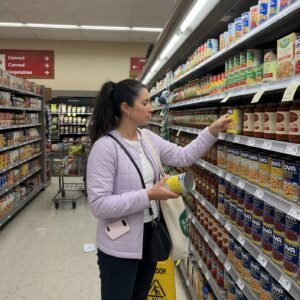
Since supermarkets deploy billions of dollars of data science and retail engineering against you, relying on simple willpower to save money is a losing strategy. You must combat their systems with a strict, rules-based system of your own.
Turning Retail Awareness Into Long-Term Capital Preservation
Supermarkets are marvels of modern commercial efficiency, but their profitability relies directly on your financial lack of awareness. They spend millions of dollars studying human behavior to ensure that you consistently deviate from your financial budget parameters.
Recognizing these psychological levers for what they are—predictable, structural retail mechanisms—completely strips them of their power over your wallet. The next time you spot a beautiful bakery display near the entrance, hear a slow ballad playing overhead, or see a bright red “10 for $10” tag on an eye-level shelf, do not view them as simple coincidences. Recognize them as highly coordinated corporate attempts to access your capital. By maintaining an emotionally detached, system-driven approach to food procurement, you can keep your money exactly where it belongs: compounding inside your personal investment portfolio.