How are stock trades settled?
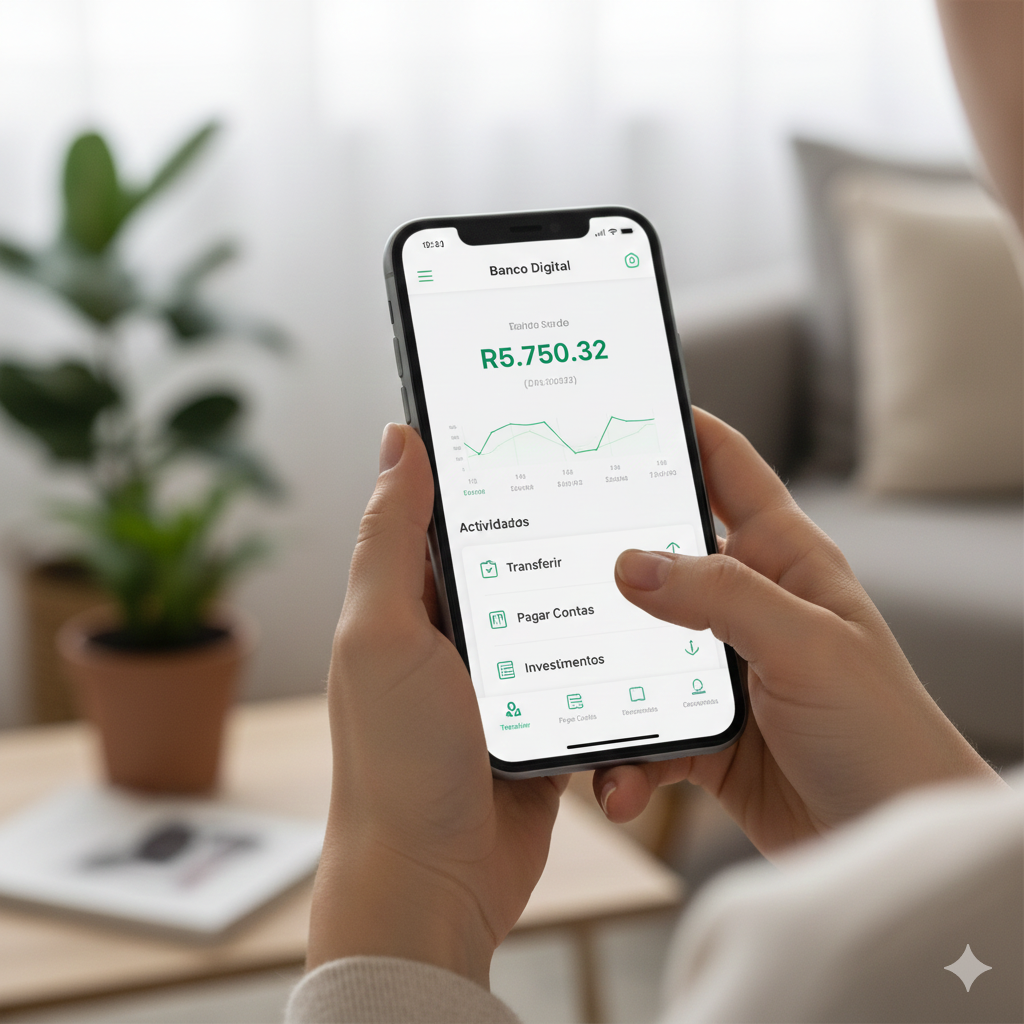
In the modern era of digital finance, trading stocks feels instantaneous. You open an app on your phone, look at a ticker symbol, tap “Buy,” and within milliseconds, a confirmation screen appears. Your portfolio updates, showing you now possess shares of Apple, Tesla, or an S&P 500 ETF. It feels like magic.
Because the front-end experience is so seamless, most investors assume the transaction is complete the moment it executes on screen.
However, what you see on your screen is just the beginning of a complex, highly regulated financial ballet. When you execute a trade, you haven’t actually exchanged money for ownership yet; you have simply entered into a binding agreement to do so. The actual exchange—the moment cash officially leaves your account and official ownership of the shares is transferred to your name—happens later, during a process called “settlement.”
For the average long-term investor, settlement might seem like mere technical jargon. But understanding this process is vital. It dictates when you can withdraw cash after a sale, how quickly you can reinvest funds, and why certain trading violations occur in cash accounts.
This guide will pull back the curtain on the brokerage back office, explaining in plain English how stock trades are cleared and settled in the United States financial system.
The Basics: What Exactly Is Trade Settlement and Clearing?

To understand stock market settlement, it helps to step away from the screen and think about a real-world transaction that isn’t instantaneous: buying a house.
When you sign a contract to buy a house, you don’t immediately get the keys and move in. There is a closing period. During this time, inspections happen, financing is finalized, and title companies ensure the seller actually has the right to sell the property. Only on “closing day” does the money wire to the seller, and the deed transfers to you.
Stock trading has a similar, albeit much faster, “closing” period.
Defining the Terms
There are two distinct phases that occur after you click the button:
-
Execution (The Trade): This is the “handshake.” Your broker finds a seller matching your buy order (or vice versa) on an exchange like the NYSE or Nasdaq. The price and quantity are agreed upon. This happens on the “Trade Date,” referred to as T.
-
Clearing and Settlement (The Closing):
-
Clearing is the administrative process of updating accounts and arranging for the transfer of money and securities. It involves validating the trade details.
-
Settlement is the final stage. It is the actual exchange of payment for assets between the buyer’s broker and the seller’s broker.
-
Until settlement is complete, the money you used to buy the stock is technically still yours (though “frozen”), and the stock you sold is technically still yours awaiting delivery.
The Key Players: Who Handles Your Money Behind the Scenes?
When you trade, you aren’t just dealing with your brokerage app. You are initiating a chain reaction involving several massive financial institutions that ensure the market functions without chaos.
If everyone just traded directly with each other, the risk of someone not paying up (counterparty risk) would be immense. The system uses trusted intermediaries to guarantee every trade completes successfully.
1. The Introducing Broker (Your Interface)
This is the company you know—Fidelity, Schwab, Robinhood, E*TRADE. They provide the platform for you to place orders and hold your assets. They are the “front end.”
2. The Exchanges (The Marketplace)
The New York Stock Exchange (NYSE) or Nasdaq are where the buyers and sellers are matched. They handle the execution phase.
3. The Clearing Firm (The Back Office)
Many smaller brokers don’t handle their own back-office paperwork. They hire a clearing firm to handle the logistics of trade processing. Larger brokers often self-clear.
4. The Ultimate Intermediary: The DTCC and NSCC
This is the most important player you’ve likely never heard of. The Depository Trust & Clearing Corporation (DTCC) is the engine room of the US capital markets.
Almost all stock trades in the US are cleared through a subsidiary of the DTCC called the National Securities Clearing Corporation (NSCC).
Think of the NSCC as the “Grand Central Station” for stock trades. Instead of Broker A trying to settle trades individually with Broker B, Broker C, and Broker D, everyone sends their trades to the NSCC. The NSCC steps in the middle of every trade, becoming the buyer to every seller and the seller to every buyer. This process, called “novation,” guarantees that if one brokerage goes bankrupt in the middle of the day, the trades will still settle.
The T+1 Evolution: Understanding the Current Settlement Cycle Timeline
For decades, the time between execution and settlement has been shrinking due to technological advancements.
In the mid-20th century, physical stock certificates had to be mailed via courier between different cities. Settlement could take up to five business days (T+5). As computers took over, it moved to T+3 in the 1990s, and then to T+2 in 2017.
The Shift to T+1 (May 2024)
In a significant modernization effort, the US Securities and Exchange Commission (SEC) mandated a shift to a T+1 settlement cycle for most securities transactions, effective May 28, 2024.
T+1 means “Trade Date plus one business day.”
If you buy shares of Microsoft on a Monday (Trade Date “T”), the transaction will settle on Tuesday (T+1).
-
Monday (T): You execute the trade. The price is locked in.
-
Tuesday (T+1): Before market open, money officially moves out of your brokerage account’s cash balance, and the shares are officially registered as belonging to your brokerage on your behalf.
Why Faster is Better
Why did regulators push for this speed? It isn’t just about impatience. The time between trade and settlement creates risk. Between Monday and Tuesday, markets can crash, a brokerage could fail, or global events could freeze liquidity. By shortening the window from two days to one, the financial system significantly reduces the amount of unsettled cash and securities floating in limbo, making the entire market safer and more efficient.
Note: Weekends and market holidays do not count as business days. A trade executed on Friday (T) will settle on the following Monday (T+1).
Step-by-Step: The Lifecycle of a Stock Trade from Click to Clearance

To fully grasp the complexity of settlement, let’s slow down time and walk through the lifecycle of a typical purchase of 100 shares of Company XYZ under the current T+1 system.
Step 1: The Order (Trade Date “T”, 10:03 AM)
You log into your brokerage account. You see Company XYZ trading at $50. You place a market order to buy 100 shares. Your broker checks that you have $5,000 available (or sufficient margin buying power) and routes the order to an exchange.
Step 2: Execution (T, 10:03:01 AM)
On the exchange, your buy order is matched with someone else’s sell order for 100 shares at $50. Execution is complete. Your app shows you own 100 shares. Your “available cash for withdrawal” immediately drops by $5,000, though the cash hasn’t actually left the building yet.
Step 3: The Data Handoff (T, Afternoon/Evening)
Throughout the trading day, your broker and the seller’s broker are accumulating thousands of trades. After markets close, brokers send records of all these transactions to the NSCC (the clearinghouse subsidiary of the DTCC).
Step 4: Continuous Net Settlement (CNS) (Night of T)
This is where the magic happens. The NSCC doesn’t want brokers sending thousands of individual wires back and forth. That would be inefficient and expensive.
Instead, they use a process called Continuous Net Settlement (CNS). The NSCC tallies up everything Broker A bought versus everything Broker A sold that day.
-
If Broker A’s clients bought 50,000 shares of Apple total, and sold 40,000 shares of Apple total, Broker A has a “net” obligation to receive 10,000 shares.
-
Simultaneously, the NSCC nets the cash. If Broker A’s clients bought $10 million in stock and sold $8 million, Broker A owes a net $2 million to the NSCC.
By “netting” these obligations down to one final number for shares and one final number for cash per broker, the system becomes incredibly efficient.
Step 5: The Exchange (Morning of T+1)
Before the market opens the next day, the final exchange occurs. Your broker’s settlement bank wires the net cash owed to the DTCC. Simultaneously, the DTCC’s depository subsidiary (DTC), which holds the electronic records of virtually all stock shares in the US, updates its ledger. They move the electronic ownership of 100 shares of XYZ from the seller’s broker’s account to your broker’s account.
Your broker then internally allocates those shares to your specific individual account. The trade is settled.
Why Settlement Times Matter to Everyday Investors
If you are a buy-and-hold investor who purchases stocks once a month and holds them for years, T+1 settlement rarely affects you directly. However, if you are an active trader or need access to your cash quickly, settlement rules are critical.
1. Accessing Your Cash
The most practical implication is withdrawing money. If you sell $10,000 worth of stock on Monday, your brokerage balance shows $10,000. But if you try to transfer that money to your checking account immediately, you won’t be able to.
The cash isn’t “settled funds” until Tuesday (T+1). Your broker cannot let you withdraw money they haven’t officially received yet.
2. Dividends and Record Dates
To receive a company dividend, you must be a shareholder of record on a specific date defined by the company, known as the “Record Date.”
Because of settlement times, you must purchase the stock before the “Ex-Dividend Date.” Under T+1, the ex-dividend date is usually the same day as the record date. To own the stock on the record date, you must buy it the day before the record date so that it settles in time.
Cash vs. Margin Accounts: How Settlement Affects Your Buying Power
How settlement affects your ability to continue trading depends entirely on whether you use a “Cash Account” or a “Margin Account.”
The Margin Account Advantage
A margin account is essentially a line of credit with your broker. Because the broker is willing to lend you money, they allow you to trade instantly on unsettled funds.
If you sell Stock A on Monday for $5,000, you can immediately use that $5,000 to buy Stock B on Monday afternoon, even though the cash from the first sale hasn’t arrived yet. The broker is effectively lending you the money for a day until settlement catches up.
The Cash Account Trap: Trading Violations
In a cash account, you can only trade with money you actually have. The regulators (specifically the Federal Reserve’s Regulation T) are very strict about this to prevent people from trading with money that doesn’t exist.
This leads to common violations for new traders who don’t understand settlement:
The “Freeriding” Violation
This occurs if you buy a stock and then sell it before paying for it in fully settled cash.
-
Example: You have $0 settled cash. On Monday, you sell Stock X for $1,000. Those funds won’t settle until Tuesday.
-
On Monday afternoon, you use that unsettled $1,000 to buy Stock Y.
-
On Tuesday morning (before Stock X settles), you sell Stock Y.
You bought and sold Stock Y without ever having fully settled cash to pay for the initial purchase. This is freeriding. The penalty is usually having your account restricted to buying only with settled cash for 90 days.
The Good Faith Violation (GFV)
This is similar but slightly different. It happens when you buy a stock with unsettled funds and sell it before the funds used to buy it have settled. Under T+1, these are harder to trigger than under T+2, but still possible if you are rapidly day-trading in a cash account.
Key Takeaway: If you trade actively in a cash account, you must track which percentage of your cash balance is “settled” versus “unsettled.”
What Are “Fails to Deliver” and Settlement Risks?

While the DTCC system is incredibly robust and handles trillions of dollars daily, things can occasionally go wrong.
A “Fail to Deliver” occurs on T+1 when the seller’s broker does not have the securities ready to hand over to the NSCC. This can happen due to administrative errors, or more commonly, in the context of short selling.
When an investor short-sells a stock, they are borrowing shares to sell them, hoping to buy them back lower. Sometimes, it becomes difficult to locate the shares to borrow. If the broker allows the short sale but can’t locate the shares by settlement day, it results in a fail to deliver.
The NSCC has rigorous procedures to handle these failures, usually forcing the delivery of the stock within a few days or charging penalties to the failing broker. For the average retail buyer, a fail to deliver on the other side is usually invisible; the NSCC guarantees your trade completes anyway, and they deal with the delinquent broker separately.
The Future Frontier: Moving Toward T+0 and Instantaneous Settlement
Now that the US market has successfully moved to T+1, the inevitable question is: Why not T+0? Why can’t settlement be truly instantaneous, just like the trade execution?
The technology for real-time gross settlement exists. We see it in cryptocurrency markets (though crypto has its own distinct set of risks and structures).
The Challenges of T+0
Moving to instant (T+0) settlement in the massive, highly regulated US equities market is incredibly difficult for several reasons:
-
No Time for Corrections: Currently, the time between T and T+1 allows brokers to fix trade errors. If you accidentally bought 10,000 shares instead of 1,000, there is a small window to address the mistake before cash permanently moves. Instant settlement removes this safety net.
-
Liquidity Stress: Brokers need time to gather the massive amounts of cash required for net settlement. Requiring all cash to be available instantly at the moment of any trade could strain the banking system and require brokers to hold much more capital, potentially increasing costs for investors.
-
Global Coordination: Many foreign investors trade US stocks. Time zone differences make instantaneous settlement very difficult for overseas institutions that might be closed when the US market is open.
Blockchain and the Future
Many industry experts believe the ultimate path to T+0 lies in distributed ledger technology (blockchain). If stocks were “tokenized” on a blockchain, the trade and the settlement could theoretically happen simultaneously in a single, immutable ledger entry, cutting out many intermediaries.
While pilot programs exist, a full-scale migration of the NYSE and Nasdaq to a blockchain-based T+0 system is likely still years, if not a decade, away due to the immense regulatory hurdles and the need to ensure absolute stability.
The ability to buy and sell pieces of the world’s largest companies with a tap on a smartphone screen is a modern marvel. But that simplicity is supported by a massive, complex infrastructure working furiously beneath the surface.
Understanding settlement—specifically the new T+1 reality—is crucial for financial literacy. It helps you understand the true mechanics of share ownership, manage your cash flow effectively, and avoid costly compliance violations in your brokerage account. The next time you click “buy,” take a moment to appreciate the financial machinery that gears up to turn your digital request into actual ownership.