If I had invested R$1,000 in stocks in 2010, how much would I have today?
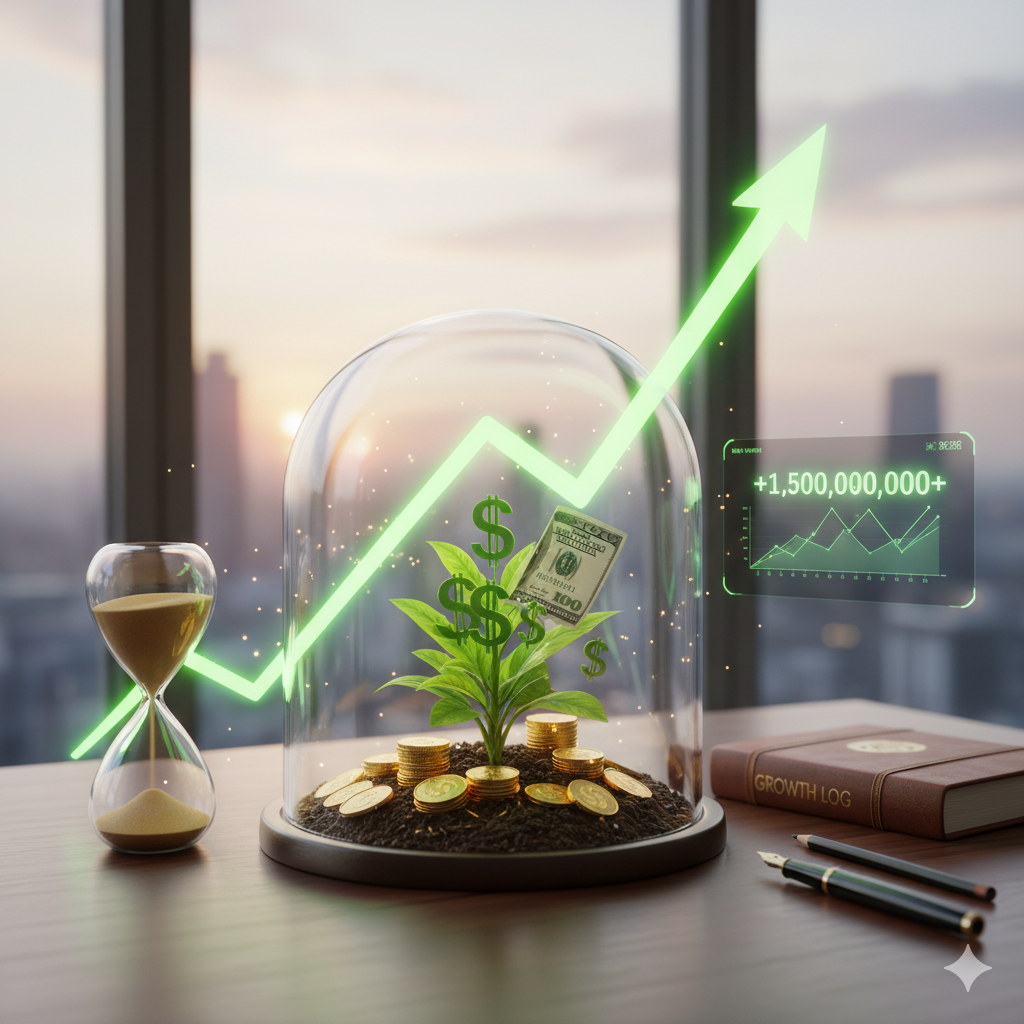
It’s a question that haunts every person who’s ever thought about investing: “What if?”
What if I had actually bought that stock my friend told me about? What if I hadn’t been so scared to start? What if, instead of buying that new gadget back in 2010, I had put that same money into the stock market?
We all play this “what if” game, and it’s often a painful reminder of what feels like a missed opportunity. But let’s turn that financial regret into a powerful, practical lesson.
We are going to run the actual numbers.
Let’s say you had $1,000 to invest in the fall of 2010. It’s been 15 years. You’re sitting here in late 2025, wondering what that $1,000 could have become.
The answer will likely shock you. More importantly, it will reveal the single most powerful force in personal finance—a force that is just as available to you today as it was 15 years ago.
The Simple Answer: What if You Invested in “The Market”?

First, let’s forget about picking a “lottery ticket” stock. Let’s say you did the simplest, most recommended thing: you bought the entire market.
The easiest way to do this is by investing in an S&P 500 index fund. This is a single fund that holds a tiny piece of the 500 largest and most successful companies in America (think Apple, Microsoft, Amazon, NVIDIA, etc.). It’s the ultimate “don’t put all your eggs in one basket” strategy.
So, what would have happened to your $1,000?
Let’s look at the data. We’ll use the Vanguard S&P 500 ETF (ticker: VOO) as our benchmark, which was launched in September 2010, making it the perfect yardstick.
From its inception on September 7, 2010, to October 2025, the VOO fund has delivered a cumulative total return of over 708%.
What does that mean for your money?
A $1,000 investment in the S&P 500 in 2010 would have grown to approximately $8,086 today.
Let that sink in. You would have done nothing. You wouldn’t have checked the stock prices. You wouldn’t have stressed about the news. You would have just bought, held, and let your money grow from $1,000 to over $8,000.
You would have multiplied your money eightfold, all while you were working, sleeping, and living your life. This wasn’t achieved through risky day-trading or complex strategies. It was achieved through one simple decision: to be in the market.
The “What If” Lottery: Investing in Today’s Giants
Okay, that $8,000 is fantastic. But we all know that the last 15 years have created some legendary, life-changing stocks. What if your $1,000 had landed on one of those?
The data here gets even more staggering. To keep the numbers consistent, let’s look at a 10-year period from October 2015 to October 2025. What if you had invested your $1,000 just 10 years ago?
What if you bought $1,000 of Apple (AAPL)?
- In October 2015, Apple was a giant, but its stock was trading at a split-adjusted price of around $25.
- By October 2025, that same stock is worth over $250.
- But that’s just price. With dividends reinvested, the total return on Apple over the last 10 years is an incredible 886%.
- Your $1,000 investment would be worth approximately $9,868 today.
What if you bought $1,000 of Amazon (AMZN)?
- In October 2015, Amazon was a $27 stock (split-adjusted). It was a huge company, but its cloud (AWS) and advertising businesses were just beginning to show their world-dominating potential.
- Today, it trades for over $213.
- The total return on Amazon over the last 10 years is 666%.
- Your $1,000 investment would be worth approximately $7,666 today.
The list goes on. Stocks like NVIDIA (NVDA) have produced returns that are almost unbelievable, turning $1,000 into well over $100,000 in the last 10 years alone as it became the backbone of the AI revolution.
These are the stories that create investing legends. They are also the stories that create the most financial regret.
The Secret Sauce: Why These Numbers Get So Big
How is it possible for $1,000 to turn into $8,000 or $9,000? The answer isn’t just “the stock price went up.” It’s two powerful, but simple, concepts.
1. The Eighth Wonder: Compounding (Your Money’s “Snowball”)
Albert Einstein supposedly called compound interest the “eighth wonder of the world.” Here’s why.
- Year 1: You invest $1,000. It earns a 10% return. You now have $1,100.
- Year 2: Your $1,100 earns a 10% return. You don’t just earn 10% on your original $1,000; you earn it on the full $1,100. So you make $110. You now have $1,210.
- Year 3: Your $1,210 earns 10%. You make $121. You now have $1,331.
Notice what’s happening? Your earnings are starting to have “babies.” Those babies are having their own babies. Your money isn’t just growing; it’s accelerating.
Over 15 years, that $1,000 in the S&P 500 wasn’t just earning returns on the original $1,000. It was earning returns on the $1,500, then the $2,000, then the $4,000. It’s a snowball rolling downhill, getting bigger and faster all on its own.
2. The Hidden Engine: Total Return vs. Price (Dividends)
This is a detail that most laypeople miss, but it’s where the real wealth is built. The numbers we’ve been using are “Total Return” numbers.
Total Return = Stock Price Growth + Reinvested Dividends
Many of the best companies (like Apple, Microsoft, and the 500 in the S&P) pay you a small portion of their profits every quarter. This is called a dividend.
You have two choices:
- Option A: Take the dividend as cash and spend it.
- Option B (The Wealth-Builder): Automatically reinvest that dividend to buy more shares.
When you choose Option B, you are putting your compounding snowball on steroids.
- Your 100 shares of a company pay you a dividend.
- That money buys you 1 more share. You now own 101 shares.
- Next quarter, you get paid a dividend on 101 shares.
- That money buys you even more shares.
- This cycle repeats, often for decades, creating a feedback loop of wealth that dramatically outperforms just “price” growth alone. The 708% return from the S&P 500 is only possible because of this automatic reinvestment.
A Dose of Reality: The Risk of Picking Single Stocks

This all sounds amazing. But there’s a crucial, responsible lesson here.
For every Apple or NVIDIA, there are thousands of “what ifs” that go the other way.
- What if you had invested your $1,000 in Sears, Blockbuster, or General Electric?
- What if you bought a “boring” but stable company?
Let’s look at a safe, classic American brand: Procter & Gamble (PG), the makers of Tide, Crest, and Pampers.
- A $1,000 investment in PG in October 2015 would be worth about $2,596 today.
- That’s a 159.6% total return.
Is that a bad return? Not at all! You more than doubled your money, and you were paid a safe, reliable dividend the entire time. But it’s not the 886% from Apple.
This is the risk of stock picking. When you buy a single stock, you are making a bet that its individual business will succeed.
- If you pick right (like Apple), you can outperform the market.
- If you pick wrong (like Sears), you can lose everything.
- If you pick an average, stable company (like PG), you’ll probably do just fine, but you might not get those explosive returns.
This is exactly why most experts, from Warren Buffett to John Bogle, have all said the same thing: For most laypeople, the smartest, safest, and most reliable way to build long-term wealth is to buy a low-cost S&P 500 index fund.
That $1,000 -> $8,086 S&P 500 return is your prize for not trying to be a hero. It’s the reward for diversification.
The “What If” vs. “What Now”: Turning Regret into Action
It’s normal to feel a pang of regret looking at these numbers. “If only…” is a powerful and paralyzing thought.
But that is the wrong lesson.
The real lesson is not about the 15 years you missed. It’s about the 15 years you have in front of you.
The magic of compounding doesn’t care about the past. The stock market doesn’t know you. It’s an impersonal engine of wealth creation that is available to anyone who wants to participate.
The person in 2010 who invested $1,000 was scared. They were worried about the 2008 financial crisis. They were worried about a “jobless recovery.” They had a million reasons to “wait for things to calm down.”
The people who made money were the ones who ignored the noise and started anyway.
The same is true today. In 2025, you have plenty of reasons to be scared: inflation, global tensions, a volatile market. It always feels like a “bad time to invest.”
Your $1,000 today is the new “what if.” What will that $1,000 be worth in 2040? You can’t know for sure, but history gives us a very compelling clue.
How to Start Investing Your First $1,000 Today
If this article has convinced you that “what if” is a terrible strategy, here is your simple, three-step plan to “what now.”
1. The Easy Way: Index Funds (ETFs)
You don’t need to pick the next Apple. Just buy the “whole market.” You can do this by buying an Exchange-Traded Fund (ETF) with a low “expense ratio” (the fee).
- S&P 500 ETF (like VOO or SPY): This buys you the 500 largest U.S. companies.
- Total Stock Market ETF (like VTI): This buys you everything—large, medium, and small U.S. companies.
- Total World Stock ETF (like VT): This buys you the entire world, including both U.S. and international stocks.
2. The “Set It and Forget It” Method: Dollar-Cost Averaging
The scariest part of investing is the “when.” What if I invest my $1,000 today and the market crashes tomorrow?
Solve this with Dollar-Cost Averaging (DCA).
- Instead of investing $1,000 all at once, invest $100 every month for 10 months.
- Sometimes you’ll buy when the price is “high.”
- Sometimes you’ll buy when the price is “low.”
- Over time, your purchase price “averages out,” and you completely remove the stress of trying to “time the market.”
3. Open the Right Account
You can’t buy stocks without an account.
- A Brokerage Account: This is a standard, taxable investment account from firms like Fidelity, Vanguard, or Charles Schwab. It’s the most flexible.
- A Roth IRA: This is a retirement account. You invest money you’ve already paid taxes on. The magic? All of your growth—all that compounding—is 100% tax-free when you retire. This is the best “first” account for most young investors.
- A 401(k): This is your employer-sponsored retirement plan. If your company offers a “match” (e.g., they match 100% of the first 3% you contribute), you MUST contribute at least that much. It is a 100% risk-free return on your money.
Time Is Your Greatest Asset
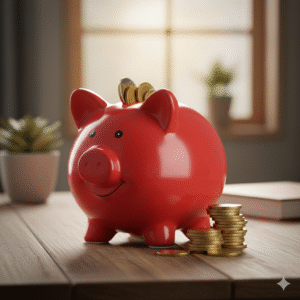
A famous proverb says: “The best time to plant a tree was 20 years ago. The second-best time is now.”
Looking back at 2010 is a fun exercise, but it’s not a strategy. The only variable you can control is what you do today.
The $1,000 you invest now is a seed. You may not see a forest tomorrow, or even next year. But by letting it grow, by reinvesting the dividends, and by leaving it alone to compound, you are giving yourself the chance to have your own “what if” story—only this time, you’ll be on the winning side.