Learn the difference between cryptocurrency, token, and stablecoin
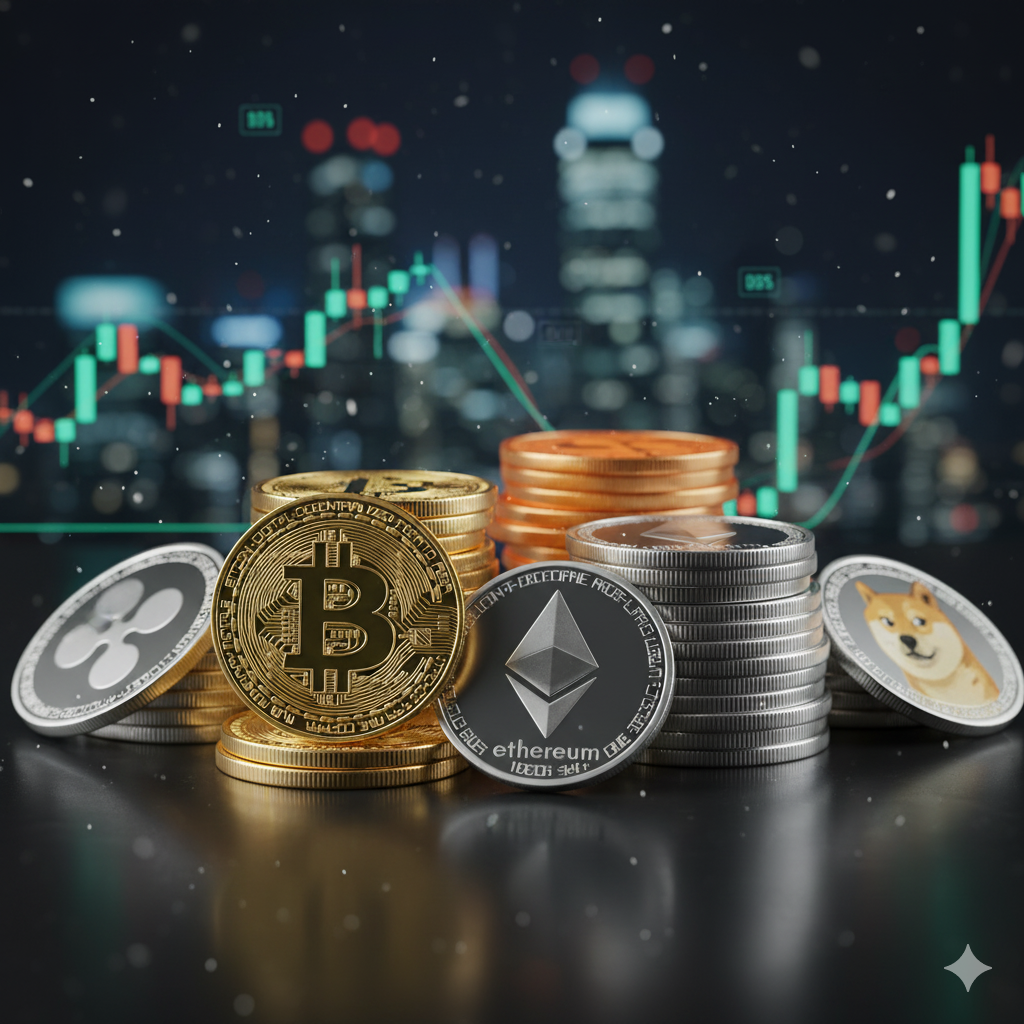
The world of digital finance is noisy. If you have spent even five minutes reading financial news, you have likely been bombarded with terms like “crypto,” “altcoins,” “utility tokens,” and “stablecoins.” To the uninitiated, these words are often used interchangeably, thrown into a single bucket labeled “Magic Internet Money.”
However, conflating these terms is a dangerous mistake for any investor.
Treating a Token like a Coin, or assuming a Stablecoin carries the same growth potential as Bitcoin, can lead to catastrophic portfolio errors. While they all live on the blockchain, they serve fundamentally different purposes, carry different risk profiles, and operate under different economic mechanics.
This guide will dismantle the jargon. We will peel back the layers of blockchain technology to explain exactly what these assets are, how they function, and why the distinction matters for your wallet.
1. What is a “Cryptocurrency” (The Native Coin)?
To understand the digital economy, you must start at the foundation. A Cryptocurrency (often just called a “Coin”) is the native asset of a specific blockchain network.
Think of a blockchain like a sovereign country. The “Coin” is that country’s official currency.
-
Bitcoin (BTC) is the native currency of the Bitcoin Blockchain.
-
Ether (ETH) is the native currency of the Ethereum Blockchain.
-
SOL is the native currency of the Solana Blockchain.
The Defining Characteristic: Its Own Blockchain
The litmus test for a coin is simple: Does it have its own independent blockchain? If the answer is yes, it is a coin.
Coins have two primary roles:
-
Store of Value/Medium of Exchange: They act as money. You can send them to someone else as payment.
-
Fuel for the Network: This is crucial. To process transactions on the network, you must pay a fee to the miners or validators who secure the system. This fee (often called “Gas”) must be paid in the native coin. You cannot pay for a Bitcoin transaction using Ethereum, just as you cannot pay your US taxes using Japanese Yen.
The Economic Model
Most coins, like Bitcoin, have a monetary policy written into their code. There is a limited supply (e.g., only 21 million Bitcoins will ever exist), which creates scarcity. This scarcity is why many investors view coins as “Digital Gold.”
2. What is a “Token”? (The Guest in the House)
If a Coin is the currency of the country, a Token is a ticket to a specific event within that country.
Tokens do not have their own blockchain. Instead, they are built on top of existing blockchains. The most common platform for this is Ethereum. Developers use “Smart Contracts” to create new assets that ride on the Ethereum rails.
The “Casino Chip” Analogy
Imagine you walk into a casino. To play the games, you exchange your cash (Fiat or Native Coins) for plastic chips (Tokens).
-
These chips have value inside the casino.
-
You can use them to play poker or buy drinks.
-
However, the casino doesn’t own the land it is built on; it is renting space.
-
If you leave the casino, those chips are just plastic unless you exchange them back.
In this analogy, the Casino is a dApp (Decentralized Application), and the chip is the Token.
The Different Flavors of Tokens
Tokens are incredibly versatile. Because they are programmable, they can represent almost anything.
A. Utility Tokens
These are the most common. They grant you access to a product or service.
-
Example: Chainlink (LINK) or Basic Attention Token (BAT). You use these tokens to pay for specific services within their respective ecosystems, like data retrieval or advertising.
B. Governance Tokens
These represent a slice of democracy. Holding these tokens gives you voting rights on how a protocol is run. It is similar to holding shares in a company, allowing you to vote at a shareholder meeting.
-
Example: Uniswap (UNI) or Maker (MKR). Holders vote on fee structures and software upgrades.
C. Security Tokens
These are the digital equivalent of traditional securities (stocks, bonds, real estate). They represent legal ownership of a physical or digital asset and are subject to strict government regulation.
D. Non-Fungible Tokens (NFTs)
While standard tokens are “fungible” (one token is identical to another), NFTs are unique. They represent ownership of a specific item, like digital art, a plot of virtual land, or a gaming skin.
3. What is a “Stablecoin”? (The Bridge to Reality)

Cryptocurrencies like Bitcoin and Ethereum are famous for one thing: Volatility.
It is difficult to use Bitcoin to buy a cup of coffee if the price of Bitcoin drops 10% by the time the barista pours the milk.
Enter the Stablecoin.
A stablecoin is a specific type of cryptocurrency designed to minimize price volatility. Its value is “pegged” to a stable asset, usually a fiat currency like the US Dollar (USD). The goal is for 1 Stablecoin to always equal $1.00.
Stablecoins are the bridge between the old financial world (Fiat) and the new world (Crypto). They allow traders to keep their money on the blockchain without being exposed to the wild price swings of the market.
How Do They Stay Stable? The Three Mechanisms
Not all stablecoins are created equal. They use different methods to maintain that $1.00 price tag.
1. Fiat-Collateralized (The Safe)
This is the simplest model. For every 1 digital coin issued, the company keeps $1 of real cash (or cash equivalents like Treasury bonds) in a bank vault.
-
Examples: Tether (USDT), USD Coin (USDC).
-
Risk: You have to trust that the company actually has the money in the bank.
2. Crypto-Collateralized (The Over-Loan)
These are decentralized. Instead of cash, they are backed by other cryptocurrencies like Ethereum. Because Ethereum is volatile, these stablecoins are “over-collateralized.” To get $100 of stablecoins, you might have to lock up $150 worth of Ethereum.
-
Example: DAI.
3. Algorithmic Stablecoins (The Math Experiment)
These are the riskiest. They are not backed by cash or crypto. Instead, they use complex algorithms and smart contracts to manipulate supply and demand to keep the price at $1.
-
Example: TerraUSD (UST).
-
Warning: As seen in the 2022 market crash, if the algorithm fails, the coin can lose its peg and crash to zero.
4. The “Gas Fee” Connection: How They Interact
To truly understand the difference, look at what happens when you try to send them.
-
Sending Bitcoin (Coin): You pay a transaction fee in Bitcoin.
-
Sending Ethereum (Coin): You pay a transaction fee in Ethereum.
-
Sending a Token (e.g., Shiba Inu on Ethereum): You do not pay the fee in Shiba Inu. You pay the fee in Ethereum.
This is the “Rent” concept. Because the Token lives on the Ethereum blockchain, it must pay “Gas” to the Ethereum network to move. This is why you must always have a little bit of ETH in your wallet if you want to trade ERC-20 tokens.
5. Investment Perspective: Risk vs. Reward
For the investor, categorizing an asset correctly is the first step in risk management.
The Growth Play: Coins & Protocol Layer
Investing in “Layer 1” Coins (BTC, ETH, SOL) is a bet on the adoption of the entire network. It is like investing in the internet infrastructure itself.
-
Risk: Moderate to High.
-
Potential: High. If the network grows, the coin becomes more valuable.
The Venture Capital Play: Tokens
Investing in Tokens is like investing in early-stage startups. You are betting that a specific app (a decentralized exchange, a game, a lending platform) will become popular.
-
Risk: Very High. Many tokens fail or turn out to be scams (“Rug Pulls”).
-
Potential: Massive. Successful tokens can outperform the underlying coins, but the failure rate is significant.
The Safety Play: Stablecoins
Investing in Stablecoins is not about growth; it is about preservation or yield. You won’t get rich holding USDC (it stays at $1). However, in the world of DeFi (Decentralized Finance), you can lend your stablecoins to earn interest, often at rates much higher than traditional banks.
-
Risk: Low (unless the peg breaks).
-
Potential: Yield generation (Interest), not capital appreciation.
6. The Regulatory Future: Why Definitions Matter

Governments are currently scrambling to regulate crypto, and they are drawing lines based on these definitions.
-
Commodities: Bitcoin is largely viewed as a commodity (like gold/oil) by US regulators.
-
Securities: Many Tokens are being investigated as unregistered securities (like stocks). If a token is labeled a security, it faces strict compliance laws that could delist it from exchanges.
-
Banking Laws: Stablecoins are coming under the microscope of central banks. Governments are worried that private stablecoins threaten their control over money, leading to the rise of CBDCs (Central Bank Digital Currencies)—government-issued stablecoins.
7. Building a Balanced Portfolio
The blockchain ecosystem is a diverse landscape. It is not just “Bitcoin and the others.”
-
Coins are the land and the currency of the realm.
-
Tokens are the businesses and applications built upon that land.
-
Stablecoins are the safe harbor that connects the digital economy to the real world.
Before you press the “Buy” button, ask yourself: What am I buying? Am I buying the network (Coin)? Am I buying a share in a project (Token)? Or am I parking my cash (Stablecoin)?
Understanding these distinctions is the difference between gambling and investing. As the market matures, the winners will be those who understand the mechanics, not just the hype.