What is FOMO and how does it hurt your wallet?

In the digital age, we are constantly bombarded by the highlight reels of others. Whether it is a friend posting from a luxury resort, a colleague bragging about a “ten-bagger” stock, or a social media influencer unboxing the latest high-end tech, the message is always the same: Everyone is doing something better than you, and you are being left behind.
This sensation has a name: FOMO, or the Fear Of Missing Out. While it sounds like a simple social anxiety, it has evolved into one of the most destructive forces in personal finance. FOMO is no longer just about missing a party; it is about the compulsive need to spend money to keep pace with a distorted reality. Understanding how this psychological trigger works is the first step toward protecting your savings and reclaiming your financial future.
What is FOMO? Understanding the Psychology of Scarcity and Social Comparison

To defeat FOMO, we must first understand its roots. FOMO is a pervasive apprehension that others might be having rewarding experiences from which one is absent. From an evolutionary perspective, our ancestors needed to stay “in the loop” with the tribe to survive. Being left out of a hunt or a gathering meant physical danger.
Today, that survival instinct has been hijacked by the digital economy. We are no longer comparing ourselves to the dozen people in our immediate village; we are comparing our “behind-the-scenes” reality to the curated “best-of” moments of billions of people globally.
The Dopamine Connection
When we see others achieving success or owning something new, our brain’s reward system is triggered. We crave that same spike of dopamine. When we cannot immediately satisfy that craving, we experience anxiety. Marketers and social media platforms know this, and they design interfaces specifically to keep us in a state of constant, low-level panic that we aren’t “enough.”
The Theory of Social Comparison
Psychologist Leon Festinger’s Social Comparison Theory suggests that humans have an innate drive to evaluate themselves by comparing themselves to others. In finance, this leads to “keeping up with the Joneses.” However, in 2026, the “Joneses” are no longer just your neighbors—they are billionaires and influencers with unlimited marketing budgets, making the comparison inherently unfair and financially dangerous.
The Financial Cost of FOMO: How Emotional Spending Drains Your Bank Account
FOMO manifests in our wallets in two primary ways: impulsive consumption and reckless investing. Both are driven by the fear that if we don’t act now, the opportunity (or the social status) will vanish forever.
Lifestyle Inflation and Peer Pressure
Have you ever bought a piece of clothing you didn’t need just because it was “trending”? Or booked a vacation you couldn’t afford because your social media feed was full of travel photos? This is lifestyle inflation fueled by FOMO.
When your spending is dictated by the perceived happiness of others, you lose control of your budget. You begin to prioritize “looking wealthy” over “being wealthy.” This leads to a cycle of debt where your income is entirely consumed by the interest payments on things you bought to impress people who aren’t even watching.
The Death of Intentionality
The biggest casualty of FOMO is intentionality. Financial success is built on a series of deliberate choices aligned with your long-term values. FOMO replaces that deliberation with reaction. Instead of asking, “Does this purchase bring me value?”, you ask, “Will I feel bad if I don’t have this?”
FOMO in the Stock Market: The High Price of “Chasing the Hype”
Nowhere is FOMO more visible—and more expensive—than in the world of investing. Whether it’s meme stocks, cryptocurrencies, or the “next big” AI startup, the fear of missing the “moon mission” leads to disastrous financial outcomes.
Buying at the Peak
The classic FOMO cycle in investing looks like this:
-
An asset begins to rise in value.
-
Early adopters make a profit and share it on social media.
-
Mainstream media picks up the story.
-
The FOMO Hit: You see the price skyrocketing and think, “I have to get in before it’s too late!”
-
You buy at the all-time high.
-
The “smart money” sells, the hype dies, and the price crashes.
By the time the average person feels the “urge” to buy based on FOMO, the real profit has usually already been made. Chasing green candles is a recipe for seeing red in your portfolio.
The Lack of Due Diligence
FOMO bypasses the logical part of the brain. When you are afraid of being left behind, you don’t take the time to read a company’s earnings report or understand a crypto project’s whitepaper. You invest based on “vibes” and social proof. This isn’t investing; it is gambling fueled by anxiety.
The Instagram Effect: How Social Media Distorts Financial Reality
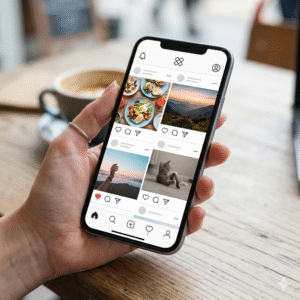
Social media is the primary engine of modern FOMO. Platforms are designed to be “comparison machines.” They provide a constant stream of high-definition evidence that your life is supposedly less exciting than everyone else’s.
The Illusion of “Easy” Success
Social media creates the illusion that everyone is rich, traveling, and successful. You don’t see the credit card debt behind the luxury handbag or the 80-hour workweeks behind the “passive income” guru. Because you only see the result and not the process, you feel a sense of failure. This leads to “revenge spending”—buying things to make yourself feel better about your perceived lack of success.
Influencer Marketing and “Deals”
Influencers have mastered the art of making an advertisement feel like a personal recommendation. They create a sense of intimacy and trust. When they say a product is “life-changing,” FOMO kicks in. You feel that to have a life like theirs, you need the products they use. This is a direct pipeline from your bank account to the retail industry, facilitated by psychological manipulation.
Marketing Tactics: How Brands Weaponize FOMO Against You

The retail industry has turned FOMO into a science. Marketing professionals use “Dark Patterns” and psychological triggers to force you into making split-second spending decisions.
Artificial Scarcity and Urgency
Have you ever seen a countdown timer on a website? Or a message saying “Only 2 items left in stock!” or “14 people are looking at this right now”?
These are often manufactured to trigger a “fight or flight” response in your brain. When you think a resource is scarce, your logical brain shuts down, and your impulsive brain takes over. You buy the item not because you need it, but because you are afraid of not being able to get it later.
The “Flash Sale” Trap
Flash sales like Black Friday or “Prime Day” are built entirely on FOMO. They create an environment of frenzied competition. You feel like you are in a race. In that high-pressure state, you are much more likely to buy things you never intended to purchase, simply because they are “on sale” for a limited time. Remember: Spending $100 to “save” $50 on something you don’t need is still losing $100.
The Hidden Danger of “Buy Now, Pay Later” (BNPL) and FOMO Spending
In recent years, the rise of “Buy Now, Pay Later” services has acted as a catalyst for FOMO-driven spending. By breaking a large purchase into four smaller payments, these services lower the “pain of paying.”
Decoupling the Purchase from the Cost
When you feel the FOMO urge to buy a $400 pair of shoes, your brain might hesitate at the price tag. But when the app says it’s only “four easy payments of $100,” the barrier drops. BNPL services are designed to facilitate impulsive, FOMO-driven decisions by making the financial consequence feel distant and manageable.
The Debt Snowball
The danger is that FOMO is never satisfied. One purchase leads to another. Suddenly, you have ten different BNPL plans running simultaneously. This “micro-debt” eats away at your monthly cash flow, leaving you with no room for savings or emergencies. You become a slave to your past impulsive decisions.
Long-Term Consequences: Opportunity Cost and the Erosion of Wealth
The true cost of FOMO isn’t just the price of the item you bought; it is the opportunity cost of what that money could have become if invested wisely.
The Math of Wasted Potential
Let’s say you spend $2,000 on a vacation you didn’t really want, just because of FOMO. If you had invested that $2,000 in a diversified index fund with a 7% average annual return, in 30 years, that money would be worth nearly $15,000.
Every FOMO-driven purchase is a trade-off. You are trading your future financial freedom for a temporary social “high” today. When you aggregate these small decisions over a lifetime, the difference can be the gap between retiring comfortably at 55 or struggling to make ends meet at 75.
How to Identify Financial FOMO: Warning Signs and Red Flags
Awareness is the first step toward recovery. Ask yourself these questions to determine if FOMO is driving your financial decisions:
-
Do I want this because I like it, or because I saw someone else with it?
-
Would I still buy this if I couldn’t post a picture of it on social media?
-
Am I checking my investment portfolio or crypto prices more than three times a day?
-
Do I feel “anxious” or “panicked” when I see a sale is about to end?
-
Am I buying this “just in case” the price goes up tomorrow?
If you answered “yes” to most of these, your wallet is being held hostage by FOMO.
Practical Strategies to Overcome Financial FOMO (And Save Thousands)

You don’t have to be a victim of your impulses. You can build a “financial firewall” that protects you from the Fear Of Missing Out.
1. The 72-Hour Rule
For any non-essential purchase, implement a mandatory 72-hour waiting period. Add the item to your cart, then close the browser. If you still feel the same level of desire after three days, you can consider it. Usually, the dopamine spike will subside, and you’ll realize you don’t actually need it.
2. Digital De-Cluttering
Your environment shapes your behavior. Unsubscribe from retail newsletters that send you “Flash Sale” alerts. Unfollow influencers whose content makes you feel inadequate or triggers the urge to spend. Use ad-blockers to reduce the number of targeted “scarcity” ads you see.
3. Curate Your Feed for Inspiration, Not Comparison
Instead of following people who flaunt their wealth, follow accounts that focus on financial education, minimalism, or long-term investing. Surround yourself with digital messages that reinforce your goals rather than your insecurities.
4. Create a “Fun Money” Bucket
Complete deprivation often leads to a “spending binge.” Instead, allocate a specific, small amount of your budget each month to “guilt-free” spending. This allows you to participate in some trends or treats without sabotaging your actual financial plan.
Developing the “JOMO” Mindset: The Joy of Missing Out
The ultimate cure for FOMO is its opposite: JOMO (The Joy Of Missing Out). This is the practice of finding peace and satisfaction in your own choices, regardless of what the “crowd” is doing.
The Freedom of Financial Discipline
There is a profound sense of joy in knowing that your bills are paid, your emergency fund is full, and your retirement is secure. This security provides a level of happiness that no “trending” product can offer. JOMO is the realization that by “missing out” on the hype, you are “opting in” to a life of freedom.
Focus on Your “Why”
Why are you working? Why are you saving? When you have a clear “Why”—whether it’s providing for your family, achieving early retirement, or starting a business—it becomes much easier to ignore the noise. FOMO only has power when you don’t have a clear destination of your own.
Reclaiming Your Wallet from the Hype

FOMO is a natural human emotion, but in the modern world, it has been weaponized into a financial trap. It exploits our deepest insecurities to keep us consuming and “chasing” a reality that doesn’t exist.
By understanding the psychology of scarcity, recognizing the tactics of marketers, and implementing practical “speed bumps” in your spending, you can break the cycle. Wealth isn’t built by following the crowd; it’s built by having the courage to stay behind while everyone else rushes off a cliff.
The next time you feel that familiar “panic” to buy or invest, take a deep breath. Remember that the best deal is the one you didn’t need to make, and the best investment is the one you understood completely. In the race for financial freedom, slow and steady doesn’t just win the race—it’s the only one who finishes it.