When doing nothing is the best investment decision

In almost every area of human endeavor, we are taught that hard work, constant motion, and quick reactions lead to success. If you want to be a better athlete, you train harder. If you want to climb the corporate ladder, you take on more projects. In most professions, “doing nothing” is seen as a sign of laziness or incompetence.
However, the world of investing is a strange and counterintuitive place. In finance, your greatest enemy is often your own desire to take action. The more frequently you “do something” with your portfolio—whether that’s buying, selling, or constantly shifting your asset allocation—the lower your long-term returns are likely to be.
Understanding when “doing nothing” is the most profitable decision you can make is the hallmark of a sophisticated investor. This is not about being passive; it is about strategic inactivity. It is the discipline of allowing your original plan to work without interfering with the miracle of compounding.
The Action Bias: Why Our Brains Force Us to Over-Trade

To understand why we struggle to sit still, we have to look at evolutionary psychology. For thousands of years, humans survived because they reacted quickly to threats. If you heard a rustle in the grass, you didn’t sit and analyze whether it was a predator; you ran. This “action bias” kept our ancestors alive.
In the modern stock market, however, this survival instinct is a liability. When the market dips or headlines turn negative, our brains scream at us to “do something” to protect our wealth. This leads to several destructive behaviors:
-
Panic Selling: Exiting the market during a downturn, effectively turning temporary price drops into permanent losses.
-
Chasing Returns: Buying into an asset class (like crypto or AI stocks) only after it has already skyrocketed, simply because everyone else is doing it.
-
Over-Analysis: Checking your portfolio multiple times a day, which increases the likelihood of making an emotional, short-term decision.
Successful investing requires a “system override” of these primal urges. You must learn to replace the impulse to act with the wisdom to wait.
Market Volatility and the Danger of Emotional Reactivity
The stock market is essentially a giant machine that transfers wealth from the impatient to the patient. Volatility is not a bug in the system; it is a feature. Prices fluctuate every second based on news, rumors, and global events.
If you view every market correction as a reason to change your strategy, you are essentially letting the market dictate your future. “Doing nothing” during a market crash is one of the hardest—yet most rewarding—financial decisions you will ever make.
The Cost of Missing the Best Days
Data from major financial institutions consistently shows that the best days in the market often occur immediately after the worst days. If you sell during a panic, you risk being on the sidelines when the recovery happens.
Consider this: If an investor stayed invested in the S&P 500 for the last 20 years, they would have seen substantial gains. However, if they missed just the 10 best days in that 20-year period because they were “waiting for things to settle down,” their total return would be cut nearly in half.
Strategic inactivity ensures you are always in the room when the gains happen.
The High Cost of Activity: Taxes, Fees, and Friction
Every time you “do something” in your investment account, it costs you money. Even if your brokerage offers “zero-commission” trades, there are hidden costs that erode your wealth over time.
1. The Tax Man Always Wins
When you sell an investment for a profit, you trigger a capital gains tax event. If you held the asset for less than a year, you are taxed at your ordinary income rate (Short-Term Capital Gains). If you hold for more than a year, you qualify for the much lower Long-Term Capital Gains rate. By “doing nothing” and holding long-term, you effectively keep 15-20% more of your money working for you.
2. The Bid-Ask Spread and Slippage
Even without commissions, there is a “bid-ask spread”—the difference between the price you pay and the price you sell for. For retail investors making frequent trades, these fractions of a percent add up, slowly bleeding your account of its growth potential.
3. Management Fees and Effort
Active trading requires time—a lot of it. If you spend 10 hours a week researching stocks and only match the returns of a “boring” index fund, you are essentially working a part-time job for a salary of zero dollars.
The Compounding Miracle: Letting Time Do the Heavy Lifting
The most powerful force in finance is compounding. But compounding is like a delicate plant; it needs to be left alone to grow. Every time you sell an investment and move to another, you are essentially pulling that plant out of the ground to check the roots.
The formula for compound interest is:
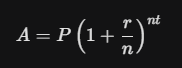
In this equation, $t$ represents time. Notice that $t$ is an exponent. This means that the amount of time you stay invested has a far greater impact on your final wealth ($A$) than the interest rate ($r$) or the principal ($P$).
When you decide to “do nothing,” you are maximizing $t$. You are giving your money the time it needs to grow exponentially. Small, consistent gains over decades beat spectacular, short-term gambles every single time.
Lessons from the World’s Greatest Investors: Patience as a Skill
If you look at the most successful investors in history, their greatest strength wasn’t their ability to predict the future; it was their temperament.
-
Warren Buffett: He famously said that his favorite holding period is “forever.” Buffett’s wealth didn’t come from brilliant high-frequency trading; it came from buying great businesses and then doing absolutely nothing for 40 years.
-
Charlie Munger: Buffett’s late partner often noted, “The big money is not in the buying and the selling, but in the waiting.”
-
Jack Bogle: The founder of Vanguard and the father of index investing gave this advice during market turmoil: “Don’t just do something, stand there!”
These legends understood that the market is a device for rewarding those who can tolerate boredom. If your investment strategy feels “exciting,” you are likely doing it wrong.
The “Coffee Can Portfolio”: A Lesson in Passive Success
There is an old financial concept called the Coffee Can Portfolio. In the old days, people would take their most valuable stock certificates and put them in a coffee can under their bed. They would then forget about them for decades.
Without the ability to check their prices every day on a smartphone, these “investors” were protected from their own emotions. By the time they opened the can 20 or 30 years later, they often found that their “accidental” wealth was far greater than that of professional traders who had been obsessively moving money around.
In the digital age, we must create a virtual “coffee can.” This means:
-
Automating your contributions.
-
Turning off “price alerts” on your phone.
-
Deleting your brokerage app if it tempts you to trade impulsively.
Recognizing When You Actually Should Take Action
While “doing nothing” is the best default setting, there are rare occasions where action is necessary. To be a successful investor, you must distinguish between “noise” (which requires no action) and “signals” (which do).
1. Rebalancing Your Portfolio
If you decided on a 60% stock and 40% bond split, and the stock market has a massive run, your portfolio might shift to 80/20. This makes you over-exposed to risk. Selling some stocks to buy bonds—rebalancing back to your target—is a healthy, mechanical action that should happen once or twice a year.
2. Major Life Changes
If you are retiring next year, your “time horizon” has changed. Moving money from volatile stocks to “safer” cash or bonds is a logical response to a life event, not a reaction to market fear.
3. A Fundamental Change in a Business
If you own an individual stock and the company’s business model is fundamentally broken (e.g., a massive fraud or a technological shift that makes them obsolete), selling is a logical decision based on data, not a panic reaction to a price drop.
Wealth is a Discipline of the Mind
The greatest irony of investing is that the harder you try to “beat the market” through constant activity, the more likely you are to lose. Real wealth is built through the quiet, unglamorous discipline of staying the course.
Doing nothing when the world is panicking is not a sign of weakness; it is the ultimate expression of financial strength. It shows that you trust your process, you understand history, and you have mastered your own emotions.
The next time the market takes a dive and you feel the itch to hit the “sell” button, take a deep breath, close your laptop, and remember: your silence is your greatest investment asset.