Who controls the stock market?
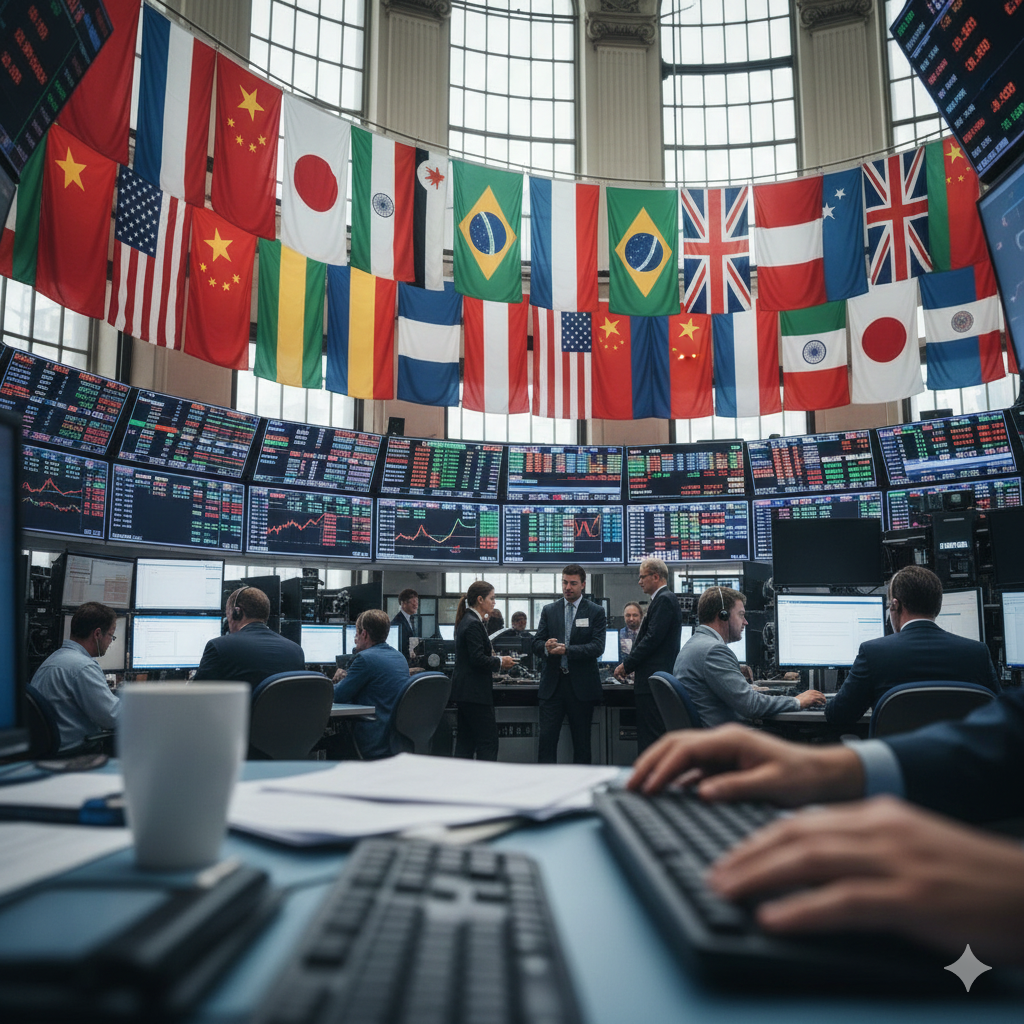
For many beginners, the stock market feels like a chaotic ocean where prices rise and fall based on invisible winds. You might hear news anchors say, “The market reacted to the news,” or “Investors are nervous,” but who are these “investors”? Is there a single entity behind the curtain pulling the levers, or is it a free-for-all?
Understanding who controls the stock market is essential for any savvy investor. It isn’t just one person or one company; it is a complex ecosystem of government regulators, massive financial institutions, high-speed algorithms, and everyday people like you.
In this comprehensive guide, we will pull back the veil and explore the different layers of control that keep the global financial gears turning.
The Government’s Watchful Eye: The Role of the SEC and Federal Regulators
In the United States, the primary “cop on the beat” is the Securities and Exchange Commission (SEC). While the SEC doesn’t decide if a stock price goes up or down, they control the rules of the game.
Their mission is three-fold:
-
Protecting Investors: Ensuring that companies don’t lie about their profits or hide risks.
-
Maintaining Fair Markets: Preventing “insider trading” (where people with secret information make unfair profits).
-
Facilitating Capital Formation: Making sure it is easy for honest companies to raise money.
Without the SEC, the stock market would be the “Wild West,” where fraud would be rampant, and public trust would vanish. When you see a company getting fined or a CEO being investigated, that is the SEC exercising its control to maintain market integrity.
Self-Regulatory Organizations (SROs): How the Market Polices Itself
Beyond the government, the market has “inner” layers of control. One of the most important is FINRA (the Financial Industry Regulatory Authority).
FINRA is not a government agency; it is a private, non-profit organization authorized by Congress to protect investors. They oversee more than 600,000 brokerage firms and millions of trades every single day. They use sophisticated technology to spot “spoofing” or “layering”—illegal tactics where traders try to manipulate prices through fake orders.
By having the industry police itself under government oversight, the market creates a double-layered shield of protection for the average consumer.
The “Big Boys”: How Institutional Investors Dictate Price Action
If you want to know who moves the needle on a daily basis, look no further than Institutional Investors. These are the “whales” of the financial ocean. They include:
-
Pension Funds: Managing the retirement savings of millions of workers.
-
Mutual Funds and ETFs: Like Vanguard or BlackRock, which manage trillions of dollars.
-
Hedge Funds: Private investment partnerships that use aggressive strategies to find “alpha” (market-beating returns).
-
Insurance Companies: Investing premiums to ensure they can pay out future claims.
When a massive fund decides to sell a million shares of Apple, the price will almost certainly drop. Because they trade in such high volumes, their collective sentiment effectively “controls” the short-term direction of individual stocks. This is why analysts pay so much attention to “institutional ownership”—if the big players are buying, it’s usually a signal of confidence.
The Invisible Hand: How Market Makers Provide Essential Liquidity
Have you ever wondered why you can click “Buy” on your phone and own a stock three seconds later? You aren’t usually buying it directly from another person; you are buying it from a Market Maker.
Market makers (like Citadel Securities or Virtu Financial) are high-volume trading firms that stand ready to buy or sell stocks at any time. They “control” the Liquidity of the market.
-
They provide a “Bid” (what they are willing to pay).
-
They provide an “Ask” (what they are willing to sell for).
-
The difference between the two is called the Spread, which is how they make their profit.
Without these entities, the stock market would be clunky and slow. You might want to sell your stock, but if no one is there to buy it at that exact second, you’d be stuck. Market makers ensure the “plumbing” of the financial system never gets clogged.
The Rise of the Machines: Algorithms and High-Frequency Trading (HFT)
In the modern era, the “who” is often a “what.” It is estimated that 60% to 75% of all trading volume in the U.S. is executed by computer algorithms.
High-Frequency Trading (HFT) involves computers executing thousands of trades in milliseconds. These algorithms react to news, price changes, and even social media sentiment faster than any human could blink.
Do they control the market? In a way, yes. They provide efficiency and tight spreads, but they can also cause “flash crashes”—moments where the market drops significantly in minutes because the algorithms all decide to sell at once. While they don’t “own” the market, they certainly dominate the speed at which it operates.
The Fed Factor: How Central Banks Influence Everything
While the SEC controls the rules, the Federal Reserve (The Fed) often controls the atmosphere. By raising or lowering interest rates, the Fed indirectly controls how much money is flowing into the stock market.
-
Low Interest Rates: Make “safe” investments like savings accounts boring. This pushes people to buy stocks to get better returns, causing the market to rise.
-
High Interest Rates: Make it more expensive for companies to borrow money and grow. It also makes bonds more attractive. This often causes the stock market to cool down.
Investors often say, “Don’t fight the Fed.” This is because the central bank has the power to inject trillions of dollars into the economy or pull it back, making them perhaps the most powerful “shadow controllers” of market valuation.
The Retail Revolution: The Power of the Crowd
For decades, the “little guy” (retail investors like us) was ignored. However, the rise of zero-commission apps like Robinhood and the “Meme Stock” craze of 2021 changed the narrative.
When millions of individual investors coordinate via social media (like Reddit’s WallStreetBets), they can create a “Short Squeeze” that bankrupts multi-billion dollar hedge funds. While retail investors don’t have the individual power of a BlackRock, their collective power is now a force that institutional players have to respect and monitor.
Corporate Insiders: The Internal Controllers
Finally, we cannot forget the people running the companies themselves. CEOs, CFOs, and Board Members have a unique form of control. Their decisions—to launch a new product, acquire a rival, or buy back shares—directly impact the value of the stock.
While they are heavily regulated to prevent them from taking advantage of their “inside” knowledge, their strategic vision is the ultimate driver of a stock’s long-term success.
A Balancing Act of Power
So, who controls the stock market? The answer is everyone and no one. It is a massive, self-correcting feedback loop. The SEC sets the rules, Market Makers provide the liquidity, Institutions provide the bulk of the capital, and the Federal Reserve sets the economic temperature. Meanwhile, individual investors and algorithms provide the constant movement that keeps the market alive.
Understanding these players helps you realize that the market isn’t just a “casino”—it’s a highly regulated, technologically advanced infrastructure designed to move capital to where it can be most productive.
As an investor, your goal isn’t to control the market, but to understand the forces at play so you can position yourself to ride the waves they create.