What the Color of Your Credit Card Really Says About You
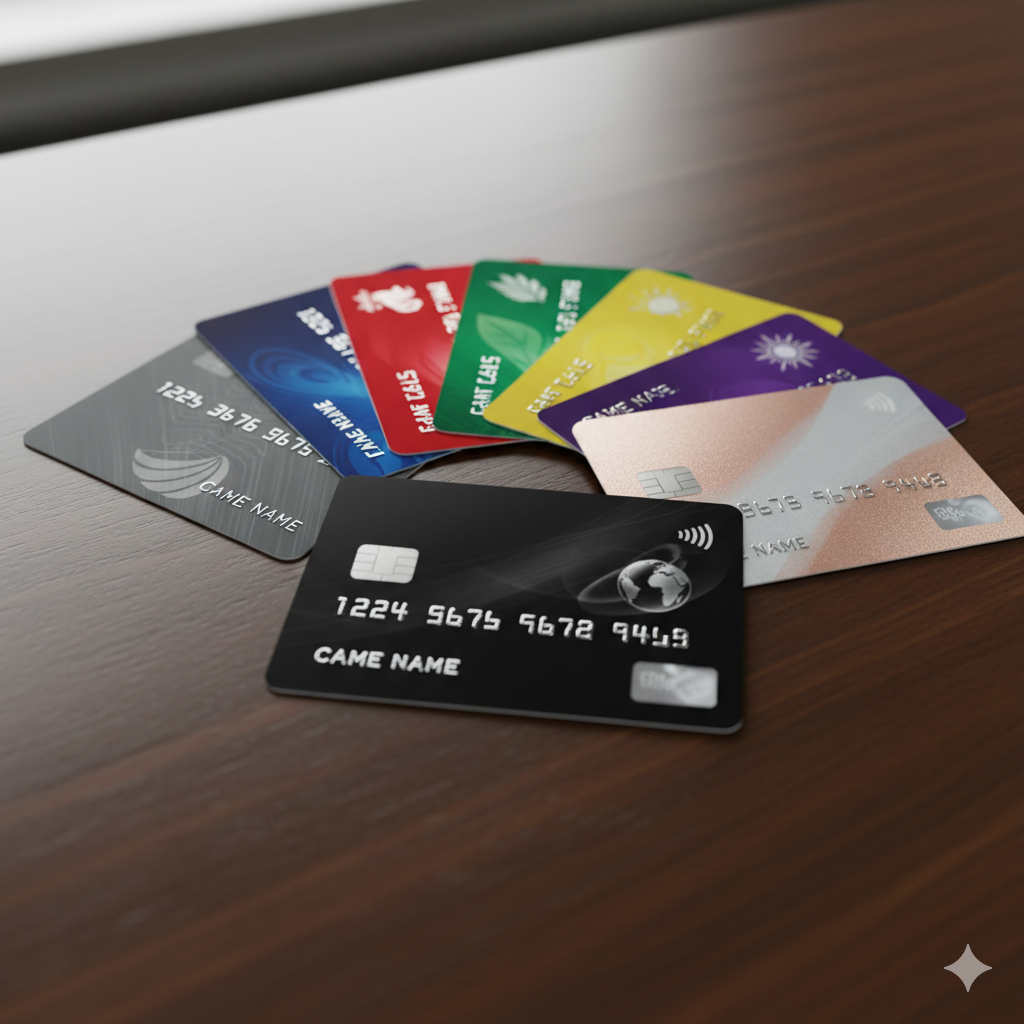
You’re at a restaurant, and the bill arrives. You hand the server your card. They glance at it. What did they just learn about you?
If you pull out a standard-issue blue or green plastic card, it gets a “thank you.” If you pull out a heavy, matte-black metal card, you might see a flicker of a different kind of acknowledgment.
In the world of personal finance, nothing is quite as steeped in myth and marketing as the color of a credit card. For decades, we’ve been trained to believe in a hierarchy: basic cards are plastic and colorful, while the cards of the rich and powerful are black and metal.
But is any of this true? Is the person with the “Black Card” actually wealthier than the person with the no-annual-fee “Blue Card”? Or are we all just falling for one of the most brilliant marketing ploys in history?
The truth is a fascinating mix of both. Your credit card’s color is a “visual shortcut” that tells a story—not necessarily about your bank balance, but about the type of financial product you’ve chosen. This guide breaks down what that color really says about you.
Why Do Credit Card Colors Even Matter?

First, let’s get one thing straight: the color itself is just dye and the material is just plastic or metal. But in a wallet crowded with competitors, a card issuer needs a way to stand out.
Color is a marketing tool. It’s a mental shortcut.
Banks use color and material to instantly signal a card’s “tier.” Each tier is a bundle of three specific things:
- Benefits: (e.g., cash back, travel points, lounge access)
- Fees: (e.g., no annual fee, $95 fee, $695 fee)
- Requirements: (e.g., the minimum credit score and/or income needed to qualify)
The color doesn’t make the card good; it just tells you what “level” of product it is.
The Psychology of Color in Your Wallet
The colors banks choose are almost never random. They are carefully selected to trigger a specific psychological response.
- Blue (e.g., Chase Sapphire, Amex Blue Cash): This is the color of trust, stability, and dependability. It’s the most common “good” card color because it feels safe, secure, and responsible.
- Gold (e.g., American Express® Gold Card): This is the classic color of prestige, success, and wealth. In the 1980s, the Amex Gold card was the original status symbol. It says you’ve “graduated” from the basics.
- Silver / Platinum (e.g., The Platinum Card® from American Express): As gold cards became more common, banks needed a new, “higher” tier. Since platinum is a rarer and more valuable metal than gold, “Platinum” became the next step up. It signals premium access and exclusivity.
- Black / Charcoal (e.g., Chase Sapphire Reserve®, Amex Centurion): The color of power, sophistication, and the ultimate in exclusivity. It’s the “absence of color” and implies a level of seriousness and mystery that other colors don’t.
- Red (e.g., (PRODUCT)RED cards, some airline cards): Red is the color of energy, action, and passion. It’s an attention-grabber, often used for co-branded cards or to support a cause.
- Green (e.g., American Express® Green Card): Green has two meanings. Historically, it meant “go” (like the classic Amex Green). Today, it’s also used to signal “eco-friendly” or “sustainability,” with cards made from recycled plastic.
The Classic Credit Card Hierarchy: A Tier-by-Tier Breakdown
While a bank can make a basic card any color it wants, decades of marketing have built a generally accepted hierarchy. Here’s what your card’s tier—signaled by its color—likely says about you.
Tier 1: The ‘Classic’ or ‘Blue’ Cards (The Foundation)
These are the workhorse cards of the financial world. They are often blue, green, or have a simple bank-branded design.
- Who Has Them: This is the broadest category. It includes students, people getting their first credit card, individuals rebuilding their credit, and—most importantly—financially savvy people who just want a simple, no-fee card.
- What the Color Signals: “I am responsible,” or “I am just starting my credit journey.”
- Common Features:
- $0 annual fee.
- Basic rewards, like 1% to 2% cash back on all purchases.
- Higher-than-average APRs (because the pool of users is riskier).
- What It Really Says About You: This person is not necessarily “basic” or “poor.” They might be extremely smart. They could be a “credit hacker” using a 2% cash-back card for all non-bonus spending. Or, they could be a student just learning the ropes. This card says, “I value simplicity,” or “I am building my foundation.”
Tier 2: The ‘Gold’ and ‘Silver’ Cards (The Serious Optimizer)
This is the first step-up in the rewards game, and it’s where “status” began. The original Amex Gold card was the card to have in the 80s and 90s.
- Who Has Them: People with “Good” to “Excellent” credit (670+ FICO) who have decided to get serious about earning rewards. They are often young professionals, foodies, and families.
- What the Color Signals: “I’ve graduated from the basics. I optimize my spending to earn points.”
- Common Features:
- A modest annual fee (typically $95 to $250).
- Powerful bonus categories. This is the key difference. (e.g., 4x points on dining and groceries, 3x on travel).
- They are “earning” cards, designed to rack up points on specific daily spending.
- What It Really Says About You: This person is a planner. They’ve done the math and know that the points they earn from their specific spending (like $500 a month on groceries) will be worth far more than the $95 annual fee. This card says, “I am financially savvy.”
Tier 3: The ‘Platinum’ and ‘Reserve’ Cards (The Frequent Traveler)
This is the “premium” tier. Here, the color (often platinum, silver, or charcoal-grey) becomes less important than the material. This is where metal cards became the standard.
- Who Has Them: Frequent travelers, business consultants, “perk” junkies, and high-earners. You need “Excellent” credit (720+) and often a solid income to be approved.
- What the Color/Material Signals: “I travel, and I value access and convenience over all else.”
- Common Features:
- A high annual fee ($395 to $695).
- A long list of “lifestyle” perks that offset the fee.
- Airport lounge access (Priority Pass, Centurion Lounges).
- Annual travel credits ($200 for hotels, $300 for travel).
- Credits for TSA PreCheck / Global Entry.
- Elite hotel status.
- What It Really Says About You: This person is an “arbitrage” expert. They don’t see a $695 fee; they see $200 in Uber credits, $240 in digital entertainment, $300 in travel credits, and “free” lounge access. They know that if they use the perks, the card pays them to own it. This card says, “I have a system, and I know how to use it.”
Tier 4: The ‘Black’ and ‘Invitation-Only’ Cards (The 1%)
This is the tier of myth and legend. This is the “Black Card.”
- Who Has Them: The ultra-high-net-worth. You cannot apply for these cards. You must be invited by the bank.
- What the Color Signals: Pure, unadulterated status. “I am in a different league. I don’t look at price tags.”
- The Legend: The American Express Centurion Card (the “Black Card”) is the most famous. It’s made of anodized titanium. You reportedly need to spend $250,000+ per year on another Amex card just to be considered for an invitation.
- Common Features:
- An astronomical annual fee ($5,000) plus an initiation fee ($10,000).
- A 24/7 personal concierge who can (supposedly) get you anything.
- Elite status at every airline and hotel.
- “Buy a building” levels of credit.
- What It Really Says About You: This person has moved beyond “rewards” and is paying for “service” and “access.” It’s a key that opens doors. It is 100% a status symbol, and it works.
The New Status Symbol: Why Metal Cards Took Over
For a while, every bank had a “Platinum” card, which diluted the meaning. So how did premium cards stand out again? By changing the material.
The “thud factor” (or “plunk factor”) is real.
When a heavy, 17-gram metal card “plunks” down on a table, it feels more valuable and substantial than a 5-gram plastic card. It has a tactile, physical presence.
Apple made this mainstream with its minimalist, titanium Apple Card. Now, many premium ($400+) and even mid-tier ($95) cards are made of metal. The weight of the card is the new “Black.” It’s a sensory signal of a premium product.
What About Niche Colors? (Pink, Purple, Red, etc.)

What if your card isn’t on this hierarchy? This is where branding takes over.
- Co-Branded Cards: Your Delta SkyMiles® Reserve Card is purple. Why? Because Delta’s brand color is purple. Your United Club℠ Infinite Card is a dark, slate-grey. These colors tell you about the brand partner, not your wealth.
- Cause-Based Cards: A pink card often signifies support for breast cancer research (like the Susan G. Komen card). A (PRODUCT)RED card signals a donation to AIDS research.
- Eco-Friendly Cards: A “green” card might be a marketing-savvy way to show it’s made from recycled ocean plastic.
In these cases, the color doesn’t say “I’m rich.” It says, “I am loyal to this brand,” or “I care about this cause.”
The Big Myth: Does Your Card Color Affect Your Credit Score?
Let’s be crystal clear on this, as it’s the most important takeaway for your financial health.
NO. Absolutely, unequivocally, no.
Your credit score (FICO, VantageScore) has zero knowledge of, or interest in, what color your card is. The credit bureaus do not see “Black Card” or “Blue Card” on their reports.
Your score is based only on your financial behavior:
- Payment History (35%): Do you pay your bills on time?
- Credit Utilization (30%): How much of your available credit are you using?
- Length of Credit History (15%): What’s the average age of your accounts?
- New Credit (10%): Have you applied for a lot of new credit recently?
- Credit Mix (10%): Do you have a healthy mix of different credit types (cards, mortgage, auto loan)?
The ‘Correlation vs. Causation’ Trap
This is the trap we all fall into.
- We think: “That man has a Black Card, so he must be rich and have a perfect 850 credit score.”
- The reality: “That man has perfect payment history, a high income, and a long credit file. Because of those things, he has an 850 score, and the bank invited him to get the Black Card.”
The good financial habits earn the score, which unlocks the premium card. The card is the result, not the cause.
What Your Credit Card Should Really Say About You

It’s fun to have a “cool” card. But chasing a color is a rookie mistake. Chasing status is how you end up paying a $695 annual fee for perks you never use.
The “smartest” card in the wallet is not the heaviest or the darkest.
The smartest card is the one that pays you back the most for your actual lifestyle.
- If you’re a foodie, the “smartest” card is the Amex Gold, which gives 4x points on dining.
- If you’re a busy parent, the “smartest” card is a simple 2% cash-back card for all your varied spending.
- If you’re a consultant who travels 40 weeks a year, the “smartest” card is the Amex Platinum, which gives you a quiet lounge to work in.
Don’t let a bank’s marketing department decide your self-worth. What your credit card should say about you is that you’re too smart to fall for a simple color scheme. It should say that you did the research and chose the financial tool that best serves you—not the one that impresses a waiter.