Is it too late to invest in crypto?

The year is 2026, and the financial landscape looks radically different than it did just a few years ago. You see Bitcoin mentioned on the evening news alongside gold prices and S&P 500 performance. Your local bank might even offer a “Digital Asset” savings sub-account. Naturally, the question that keeps millions of potential investors awake at night is: “Did I miss the boat?”
If you feel like you are late to the party, you are not alone. The “Fear Of Missing Out” (FOMO) is a powerful psychological driver. However, in the world of finance, being “late” is a relative term. To determine if it is truly too late to invest in cryptocurrency, we need to look past the price charts and examine the fundamental shifts in technology, regulation, and global adoption.
1. The Technology Adoption S-Curve: Where Are We in 2026?

One of the most effective ways to understand if you are “early” or “late” is to look at the S-Curve of Technology Adoption. This model tracks how new technologies—like the internet, smartphones, or electricity—are integrated into society.
In the early 2020s, crypto was in the “Innovators” and “Early Adopters” phase. By 2026, we have firmly entered the Early Majority phase. This means the extreme volatility and “Wild West” risks of the past are diminishing, but the massive growth that comes with global integration is still ahead of us.
-
Innovators (2009–2015): The era of cypherpunks and tech hobbyists.
-
Early Adopters (2016–2022): The rise of retail speculation and the first institutional interest.
-
Early Majority (2023–2026): The era of ETFs, government regulation, and corporate balance sheet integration.
-
Late Majority (Future): When crypto is used for daily payments by almost everyone without them even realizing it.
The Verdict: While you aren’t an “innovator” anymore, you are still ahead of the billions of people who will enter the market during the Late Majority phase.
2. Institutional Inflow: Why Wall Street’s Entry Changes Everything
For years, the biggest barrier to crypto growth was the lack of “Big Money.” That changed with the approval of Spot Bitcoin and Ethereum ETFs. In 2026, these financial products have matured, allowing pension funds, 401(k) providers, and sovereign wealth funds to allocate a portion of their trillions of dollars into digital assets.
The “Normalization” of Crypto
When a major bank like JPMorgan or Goldman Sachs offers crypto services, the “scam” narrative dies. Institutional adoption provides a valuation floor. Large institutions don’t buy assets to “flip” them in a week; they hold them for decades. This shift from speculative trading to long-term institutional holding reduces extreme price crashes and creates a more predictable upward trajectory.
The Scarcity Factor
Bitcoin’s supply is capped at 21 million. As institutions buy up the available supply to back their ETFs and investment products, the “circulating supply” on exchanges reaches historic lows. Basic economics tells us that when supply is low and demand (from millions of 401(k) holders) stays high, the long-term price pressure is upward.
3. Beyond Bitcoin: The Explosion of Real-World Utility (RWA)
If you think crypto is just about Bitcoin, you are looking at only 40% of the picture. In 2026, the hottest trend in finance is Real-World Asset (RWA) Tokenization.
What is Tokenization?
Tokenization is the process of putting traditional assets—like real estate, gold, or even private equity—onto a blockchain. This allows for:
-
Fractional Ownership: You can buy $100 worth of a luxury apartment building in New York.
-
24/7 Trading: No more waiting for the stock market to open on Monday morning.
-
Instant Settlement: No more 3-day waiting periods for bank transfers to clear.
By investing in the platforms that power this tokenization (like Ethereum, Solana, or Layer 2 networks), you aren’t just betting on a “digital currency”—you are betting on the new infrastructure of global finance.
4. Comparing 2020 vs. 2026: A Market Maturity Table
To see how much the market has improved, let’s look at the differences between the “Risky Era” and the “Modern Era.”
| Feature | 2020 (The Speculative Phase) | 2026 (The Mature Phase) |
| Regulation | Virtually non-existent; “Wild West.” | Clear guidelines (MiCA in EU, SEC/CFTC in US). |
| Accessibility | Hard to buy; required specialized exchanges. | Available in standard brokerage accounts and banking apps. |
| Volatility | 10–20% daily swings were common. | Volatility has decreased (though still higher than stocks). |
| Use Case | Mostly “Store of Value” or speculation. | Smart contracts, insurance, supply chain, and DeFi. |
| Security | High risk of exchange hacks. | Institutional-grade custody and insured products. |
5. The Role of Regulatory Clarity in 2026
Many people stayed away from crypto because they feared a “government ban.” By 2026, that fear has largely evaporated. Governments have realized that they cannot ban decentralized networks, so they have chosen to regulate and tax them instead.
While some purists dislike regulation, it is the “Green Light” that conservative investors were waiting for.
-
Consumer Protection: New laws ensure that if an exchange fails, customer assets are protected.
-
Standardized Reporting: Tax season is no longer a nightmare; platforms now provide automated 1099-DA forms (or their global equivalents).
-
Stablecoin Laws: Stablecoins (like USDC) are now treated as “digital cash,” providing a safe way to move in and out of the market without constant exposure to price swings.
6. How to Invest in 2026: Strategies for the “Late Majority”

If you decide to start today, you shouldn’t use the same “gambling” strategy people used in 2017. You need a professional approach.
Dollar-Cost Averaging (DCA)
Don’t try to “time the bottom.” In a mature market, the best strategy is DCA. By investing a set amount (e.g., $200) every month regardless of the price, you mathematically lower your average purchase price over time and remove the emotional stress of daily fluctuations.
The 5% Rule
Most financial advisors in 2026 now suggest a “Modern Portfolio Theory” approach. This involves allocating 1% to 5% of your total portfolio to crypto. This is enough to provide significant “alpha” (extra returns) if the market grows, but not enough to ruin your financial life if there is a temporary downturn.
Diversification Across Sectors
Don’t put all your eggs in one basket. Divide your crypto investment into three buckets:
-
Blue Chips (50%): Bitcoin and Ethereum (the “Gold” and “Oil” of the digital world).
-
Infrastructure/Layer 2 (30%): Networks that make blockchain faster and cheaper (e.g., Polygon, Arbitrum, Base).
-
Utility/Niche (20%): Projects focused on AI, Gaming, or Decentralized Physical Infrastructure (DePIN).
7. The Risks: It’s Not All “Up and to the Right”
Is it too late? No. Is it risk-free? Absolutely not. Even in a mature 2026 market, there are significant dangers:
-
Quantum Computing: A theoretical future risk where computers could “break” current encryption (though many blockchains are already working on “Quantum Resistance”).
-
Platform Risk: Even regulated exchanges can have bugs or operational failures.
-
The “Next Big Thing”: There is always a risk that a new technology could replace blockchain entirely.
8. Financial Products: Crypto-Backed Loans and Insurance
One reason it’s not too late is that crypto has become “productive.” You no longer just hold it and hope the price goes up.
Crypto-Backed Loans
In 2026, you can use your Bitcoin as collateral for a loan. If you need cash for a down payment on a house but don’t want to sell your Bitcoin (and trigger capital gains taxes), you can take out a loan against it. This is a strategy long used by the wealthy with stocks, and it is now available to the average crypto holder.
Decentralized Insurance
You can now buy insurance policies that live on the blockchain. These policies can protect you against smart contract failures or even flight delays. As these services grow, the demand for the underlying tokens that power these networks will naturally increase.
9. The Psychological Barrier: Overcoming the “High Price” Myth
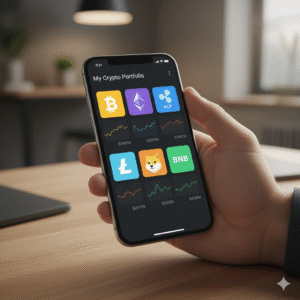
The biggest mistake beginners make is thinking, “Bitcoin is $100,000 (example price); I can’t afford one, so I shouldn’t buy it.”
Remember: Bitcoin is divisible by 100 million. You don’t buy “a” Bitcoin; you buy a dollar amount. Buying $500 of Bitcoin at $100,000 is the exact same as buying $500 of a stock at $10. What matters is the percentage of growth, not the nominal price of a single unit.
10. The Best Time Was 10 Years Ago, The Second Best Time is Now
So, is it too late to invest in crypto?
If your goal was to turn $100 into $1,000,000 in three months, then yes, that era of “lightning-strike” luck is mostly over. The market is too large and too regulated for those kinds of anomalies to happen to the average person.
However, if your goal is to:
-
Hedge against the inflation of traditional fiat currencies.
-
Invest in the future infrastructure of the internet and global finance.
-
Diversify your portfolio with an asset class that has historically outperformed every other category over 4-year cycles.
…then you are exactly on time.
In 2026, crypto has moved from a “maybe” to an “essential” part of a modern financial plan. The “easy money” has been made, but the sustainable wealth is just beginning to be built.