How to Use Credit Cards Without Getting Into Debt
Credit cards are often portrayed as the villains of the financial world. We’ve all heard the horror stories: a small purchase spirals into thousands of dollars in high-interest debt, leading to years of financial stress. Because of this, many people avoid credit cards altogether, fearing they’ll fall into a trap they can’t escape.
However, in the financial landscape of 2026, avoiding credit cards completely can actually hold you back. Without them, it’s harder to build a credit score, you miss out on valuable consumer protections, and you leave “free money” in the form of rewards on the table.
The secret isn’t to avoid the tool; it’s to master it. You can absolutely enjoy all the benefits of credit cards—the points, the travel perks, and the fraud protection—without ever paying a single cent in interest. This guide will show you exactly how to use credit cards responsibly, transforming them from a “debt trap” into your most powerful financial ally.
The Golden Rule: Treat Your Credit Card Like a Debit Card
The primary reason people fall into credit card debt is a psychological shift in how they view “available credit.” When a bank gives you a $5,000 limit, it’s easy to feel like you have $5,000 in your pocket.
You don’t.
To use a credit card without getting into debt, you must adopt this mindset: If you don’t have the cash in your checking account right now to buy it, you cannot afford to put it on the card.
The “Zero-Sum” Approach
Before you swipe, check your bank balance. If you are buying a $100 grocery haul, ensure you have $100 in your bank account. The credit card is simply the medium of the transaction, not a source of extra funding. By treating the card as a direct extension of your cash, you ensure that you never spend money that doesn’t exist.
Deciphering the Billing Cycle: Statement Date vs. Due Date

Understanding the mechanics of your credit card statement is essential for avoiding interest. Most laypeople get confused by the different dates on their dashboard, which can lead to late payments or accrued interest.
1. The Statement Closing Date
This is the end of your “billing month.” The bank totals up everything you bought during this period and creates a “Statement Balance.”
2. The Due Date
This is the deadline for you to pay back what you borrowed. Usually, the due date is 21 to 25 days after the statement closing date. This window is known as the Grace Period.
How to Pay $0 in Interest
As long as you pay the Full Statement Balance by the Due Date, the credit card company will not charge you a penny in interest. It is essentially an interest-free loan for 3 weeks.
Crucial Tip: Never just pay the “Minimum Amount.” The minimum payment is designed to keep you in debt for as long as possible while the bank profits from interest.
The Power of the Grace Period: How “Float” Works in Your Favor
The grace period is one of the most underrated benefits of a credit card. It allows you to keep your cash in your own High-Yield Savings Account (HYSA) for an extra few weeks, earning interest for you instead of the bank.
Imagine you spend $2,000 a month on living expenses.
-
With a Debit Card: That $2,000 leaves your account immediately.
-
With a Credit Card: That $2,000 stays in your HYSA for an extra 25 days.
While the interest earned on $2,000 for 25 days might only be a few dollars, over a lifetime, this “float” adds up. More importantly, it keeps your cash liquid and available for emergencies until the very last moment the bill is due.
The Psychology of Spending: Why We Spend More with Plastic
There is a neurological phenomenon known as “The Pain of Paying.” When you hand over a physical $20 bill, your brain registers a small “sting” of loss. You physically see your resources diminishing.
With a credit card, that “sting” is absent. You swipe, you keep the card, and you get the item. This “decoupling” of the purchase from the payment often leads to lifestyle creep and impulse buying.
How to Fight the “Plastic Effect”:
-
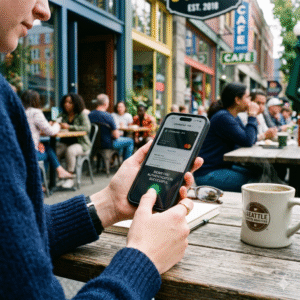
Set Up Instant Notifications: Enable push notifications on your phone for every transaction. Seeing the “You just spent $45 at Starbucks” alert immediately after the swipe brings back the “pain of paying.”
-
Review Transactions Daily: Don’t wait for the end of the month. Spend two minutes every morning reviewing your “Current Balance.” This keeps the reality of your spending front and center.
Establishing a Fail-Safe System: Automation is Your Best Friend
Human willpower is fickle. We get busy, we forget dates, and we make mistakes. To ensure you never fall into debt, you need to automate your responsibility.
1. Set Up Autopay for the “Full Statement Balance”
Don’t just set it for the minimum. Set it for the full amount. This ensures that even if you are on vacation or lose track of time, your bill is paid in full, and your credit score remains pristine.
2. The “Buffer” Method
Keep a small “buffer” of cash in your checking account (e.g., $500) that you never touch. This acts as a safety net for your autopay, ensuring you don’t accidentally trigger an overdraft fee if a bill is slightly higher than expected.
The “Rewards Trap”: How to Earn Points Without Overspending

Credit card rewards (cashback, miles, points) are the primary “hook” lenders use to get people to sign up. While these rewards can fund free vacations, they can also lead to a dangerous mindset: “If I spend more, I earn more.”
The Math Doesn’t Add Up:
If your card gives you 2% cashback, and you spend an extra $100 just to “earn more points,” you’ve spent $100 to get $2 back. You are still down $98.
The Savvy Strategy:
Only use credit cards for expenses you were already going to have.
-
Rent/Mortgage (if no fee)
-
Groceries
-
Utilities
-
Insurance
-
Gas
By putting your “fixed” expenses on the card, you earn rewards on money you were obligated to spend anyway. Treat rewards as a “nice bonus” at the end of the year, not a reason to increase your consumption.
Credit Utilization and Your Score: The 30% Rule
Even if you pay your bill in full every month, how much you spend on your card matters for your credit score. This is known as Credit Utilization.
Lenders calculate your utilization using this simple formula:

Why It Matters:
If you have a $1,000 limit and you spend $900, your utilization is 90%. Even if you pay it off the next day, the credit bureau might see that 90% and think you are over-leveraged and risky.
The Strategy: Aim to keep your reported balance below 30% (and ideally below 10%) of your limit. If you have a big purchase coming up, pay it off before the statement closing date so the high balance never even hits your credit report.
Advanced Technique: The “Two-Card” System for Ultimate Organization
If you find it difficult to track your spending, consider using two separate cards for different purposes.
-
The “Fixed Bill” Card: Use this card only for recurring monthly bills (Netflix, Gym, Internet, Electric). Set this to autopay and put the physical card in a drawer. You never have to think about it.
-
The “Daily Spend” Card: Use this for groceries, gas, and dining. Because this is the only card you carry, it’s much easier to keep a mental tally of your “Wants” spending.
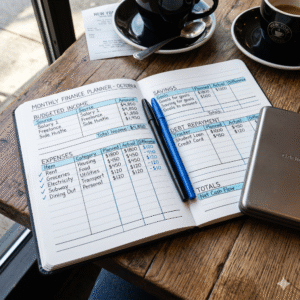
This separation prevents your “lifestyle” spending from getting mixed up with your “survival” spending, giving you a clearer picture of your monthly budget.
Common Pitfalls: The Fees That Feel Like Debt

Even if you pay your balance in full, you can still lose money to credit cards if you aren’t careful. Watch out for these “invisible” costs:
1. Annual Fees
If your card has a $95 annual fee but you only earn $50 in rewards, the card is costing you money. Ensure the “benefit” (lounge access, credits, points) significantly outweighs the fee. If it doesn’t, call the bank and ask for a “Downgrade” to a no-fee version of the card.
2. Cash Advances
Never use a credit card at an ATM. Cash advances usually have no grace period (interest starts immediately) and often carry a much higher APR than regular purchases.
3. Foreign Transaction Fees
If you travel abroad, ensure your card has $0 Foreign Transaction Fees. Otherwise, the bank will tack on a 3% fee to every single croissant or souvenir you buy.
What to Do if You Accidentally Overspend
We are all human. If you look at your balance and realize you spent more than you have in your checking account, you must act fast to prevent a “Debt Spiral.”
-
Stop Using the Card: Immediately switch to cash or debit until the balance is cleared.
-
The “Emergency Break” Budget: Cut all “Wants” (dining out, subscriptions, hobbies) for the next 30 days. Use every extra dollar to bridge the gap.
-
Call the Lender: If you absolutely cannot pay the full balance, call the bank before the due date. Ask if they can offer a one-time “interest waiver” or a temporary payment plan. It’s rare, but for loyal customers, it can happen.
Summary Table: Credit Cards vs. Debt Traps
| Feature | Using it as a Tool | Using it as a Trap |
| Payment Amount | Full Statement Balance | Minimum Payment |
| Spending Limit | Based on your Bank Balance | Based on the Credit Limit |
| Rewards | A side benefit of normal spending | A justification for extra spending |
| Interest Paid | $0 | 18% – 29% (Average) |
| Impact on Credit | Steady, long-term growth | Rapidly declining score |
The Goal is Financial Freedom
Credit cards are not inherently “good” or “bad.” They are neutral tools, much like a hammer. A hammer can help you build a house, or it can smash your thumb. The difference lies in the skill and discipline of the person holding it.
By following the strategies in this guide—treating the card like debit, automating your payments, and respecting the 30% utilization rule—you can harness the full power of the credit system. You will build a world-class credit score, protect your purchases from fraud, and enjoy free travel, all while keeping your bank account growing.
Master the card, and you master one of the most important pieces of the modern financial puzzle.