Tips for developing financial self-control

In an era of one-click ordering, targeted social media ads, and the constant pressure to “keep up with the Joneses,” financial self-control has become a rare and valuable superpower. For many, the bank account isn’t just a place where money sits; it’s a source of stress, a reflection of impulsive choices, and a barrier to the life they truly want to live.
Developing financial self-control isn’t about deprivation or living a life of “no.” Instead, it is about intentionality. It is the process of reclaiming your power from marketers and algorithms so that your money serves your long-term vision rather than your short-term impulses. Whether you’re looking to climb out of debt, save for a first home, or simply stop wondering where your paycheck went at the end of the month, this guide will provide you with the psychological tools and practical systems to master your spending habits.
The Psychology of Spending: Why We Lose Financial Self-Control

Before we can fix our spending, we have to understand why we spend in the first place. Human beings are not naturally wired for modern financial systems. Our brains evolved in environments where resources were scarce, and “getting while the getting was good” was a survival mechanism. Today, that same instinct is triggered by a “Limited Time Offer” on a pair of sneakers.
The Dopamine Reward Loop
Every time we make a purchase, our brain releases dopamine—a chemical associated with pleasure and reward. The catch? The highest spike of dopamine often happens before the purchase, during the anticipation phase. Once the item is bought and the novelty wears off, the dopamine levels crash, leading to “buyer’s remorse” and the urge to buy something else to regain that high.
The “Pain of Paying” Paradox
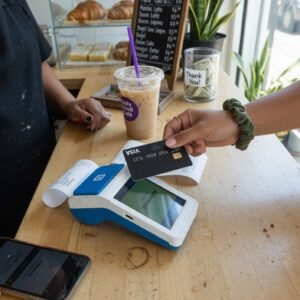
Neurological studies show that spending cash activates the same regions of the brain associated with physical pain. However, credit cards and digital wallets “insulate” us from this pain. When you swipe a card, you aren’t physically losing a resource in that moment; you are merely delaying the consequence. This lack of immediate “pain” is why people consistently spend significantly more when using digital payments compared to physical currency.
Identify Your Financial Triggers: The Key to Awareness
Self-control begins with self-awareness. You cannot change a habit that you haven’t identified. Most impulsive spending is a reaction to a specific emotional or environmental trigger.
Emotional Spending Categories
-
Stress Spending: Using shopping as a “treat” after a hard day at work.
-
Boredom Spending: Scrolling through Amazon or eBay because you have nothing else to do.
-
Social Spending: Feeling the need to spend money to “fit in” with a specific group or to maintain an image on social media.
-
Celebratory Spending: Using every minor win as an excuse to overindulge financially.
Tracking the “Urge”
To master your triggers, keep a “Spending Trigger Log” for one week. Every time you feel the urge to buy something non-essential, write down:
-
What you wanted to buy.
-
How you were feeling at that exact moment.
-
Where you were (physically or digitally).
By identifying these patterns, you can create “if-then” plans. For example: “If I feel stressed after work, then I will go for a 20-minute walk instead of looking at clothing websites.”
How to Stop Impulsive Buying Today
To rank well on search engines and provide value to your readers, we need to focus on actionable, high-intent strategies. Here is how to build a “firewall” around your finances.
The 24-Hour and 30-Day Rules
The most effective way to combat the dopamine-fueled impulse is to introduce time friction.
-
The 24-Hour Rule: For any purchase under $100, you must wait 24 hours.
-
The 30-Day Rule: For “wants” over $100, you must wait a full 30 days.
During this time, the emotional “heat” of the purchase cools down. You’ll often find that after a few days, you no longer even want the item, or you realize it doesn’t fit into your long-term goals.
The “Cost Per Use” Calculation
Before buying, calculate the item’s true value through the lens of longevity. A $100 pair of high-quality boots you wear 200 times ($0.50 per use) is a much better financial decision than a $20 fast-fashion shirt you wear twice ($10.00 per use). Shifting your mindset from “price” to “value over time” naturally increases self-control.
Digital Self-Control: Defeating the Algorithms

The modern consumer is fighting a war against the world’s most powerful AI. Retailers use your browsing data to follow you across the internet, showing you exactly what you’re most likely to buy when you’re most vulnerable.
1. Unsubscribe and Unfollow
Your inbox is a digital minefield of temptation. Spend 30 minutes unsubscribing from every retail newsletter. If you don’t see the “40% Off Sale,” you won’t feel like you’re missing out on a deal. Similarly, unfollow influencers or brands on social media that make you feel like your current life or wardrobe is inadequate.
2. Delete Saved Payment Information
The “One-Click” button is the enemy of self-control. Delete your credit card info from Amazon, Google Pay, and your favorite retail sites. Forcing yourself to walk across the room, find your wallet, and manually type in 16 digits provides a “speed bump” that allows your rational brain to override your impulsive brain.
3. Use “Incognito” for Browsing
Retailers use cookies to raise prices or show you specific targeted ads based on your history. Browsing in incognito mode (or using a privacy-focused browser) keeps the algorithms from building a psychological profile of your weaknesses.
Behavioral Finance Hacks: Trick Your Brain into Saving
Self-control is a finite resource; it’s like a muscle that gets tired. Instead of relying on willpower alone, use these behavioral hacks to make good choices automatic.
The “Hours Worked” Comparison
When you see a $200 gadget, don’t look at the price in dollars. Look at it in hours of your life. If you earn $25 an hour after taxes, ask yourself: “Is this gadget worth 8 hours of sitting at my desk?” Most of the time, the answer is a resounding no.
Visual Reminders of Your “Why”
We lose self-control when we lose sight of our goals. If you are saving for a trip to Italy, put a picture of the Amalfi Coast inside your wallet, wrapped around your credit card. That visual “interruption” forces you to choose between a temporary impulsive purchase and your long-term dream.
The “Anti-Budget” Strategy
If traditional budgeting feels too restrictive, try the Anti-Budget. As soon as your paycheck hits, automatically transfer your savings and bill money to separate accounts. Whatever is left in your checking account is yours to spend guilt-free. This creates a hard boundary—once the “fun money” account hits zero, the spending stops.
Building a Sustainable Budgeting Framework
To maintain self-control over months and years, you need a framework that allows for flexibility. Total deprivation always leads to a “spending binge” later on.
The 50/30/20 Rule
This is the gold standard for laypeople looking for simplicity:
-
50% for Needs: Rent, groceries, utilities, insurance.
-
30% for Wants: Dining out, hobbies, Netflix, “the fun stuff.”
-
20% for Financial Goals: Debt repayment, emergency fund, investments.
By allocating 30% to “wants,” you give yourself permission to enjoy your money, which actually makes it easier to stay disciplined with the other 70%.
The Comparison of Popular Budgeting Methods
| Method | Best For | Key Philosophy |
| Zero-Based | Perfectionists | Every single dollar has a specific job. |
| Envelope System | Impulse Spenders | Using physical cash for specific categories. |
| 50/30/20 | Beginners | High-level percentages for easy tracking. |
| Pay Yourself First | Busy Professionals | Automate savings first; spend the rest. |
Overcoming Lifestyle Creep and Social Pressure
Lifestyle creep occurs when your expenses rise alongside your income. You get a $5,000 raise, and suddenly you “need” a more expensive car or a bigger apartment. This is the ultimate killer of financial self-control.
The “One-Year Rule” for Raises
When you get a raise or a bonus, commit to living on your old income for at least six months to a year. Direct the entire raise into investments or debt. This prevents you from getting used to a higher lifestyle and keeps your “financial baseline” low.
Dealing with “The Joneses”
Social pressure is perhaps the hardest trigger to manage. We often spend money we don’t have to impress people we don’t even like.
-
The “No-Spend” Weekend: Challenge your friends to a weekend where no one spends money. Do a potluck, go for a hike, or have a movie night at home. You’ll realize that genuine connection doesn’t require a transaction.
-
Be Honest: If friends suggest an expensive dinner you can’t afford, be direct: “I’m focusing on some big financial goals right now, so that’s not in my budget. Can we do tacos or a park hang instead?” True friends will respect your discipline.
The Role of Mindfulness in Financial Discipline

Financial self-control is, at its core, a mindfulness practice. It’s about being present in the moment of a transaction.
The “HALT” Method
Before you buy anything, check if you are:
-
Hungry
-
Angry
-
Lonely
-
Tired
If you are any of those four things, your decision-making capacity is compromised. Close the tab, eat a snack, or take a nap. You’ll likely find the “need” to shop has vanished once your basic biological needs are met.
Practicing Gratitude
Impulsive spending is often driven by a sense of “lack”—the feeling that we need one more thing to be happy. Practicing gratitude for what you already own is a powerful antidote to consumption. Once a week, take stock of the items in your home that bring you genuine value. This reinforces the idea that you already have enough.
Recovering from a Financial “Slip-Up”
No one has perfect self-control 100% of the time. You will eventually have a moment of weakness and overspend. What matters is what you do next.
Avoid the “What the Hell” Effect
In psychology, the “what the hell” effect happens when you break a rule (like a budget) and then decide that since you’ve already failed, you might as well go all out. “I already spent $50 I shouldn’t have, so what the hell, I’ll buy the $200 shoes too.”
Stop the bleeding immediately. One bad purchase doesn’t ruin a financial life; the reaction to that purchase does. Forgive yourself, analyze the trigger that caused it, and get back on track the very next hour.
The Long-Term Rewards of Self-Discipline
Financial self-control is not a destination; it is a lifestyle. It is the daily practice of choosing your future self over your current impulse. When you master your spending, you aren’t just saving money; you are buying freedom. You are buying the ability to quit a job you hate, to travel without debt-fueled anxiety, and to provide security for your family.
In a world designed to keep you broke, being disciplined is a revolutionary act. Start small. Choose one strategy from this guide—perhaps the 24-hour rule or deleting your saved card info—and master it this week. Once that becomes a habit, move on to the next. Your future self will thank you for the discipline you show today.
Quick Summary Checklist for Financial Mastery
-
[ ] Unsubscribe from all retail and promotional emails.
-
[ ] Delete saved credit card information from your browser.
-
[ ] Implement the 24-hour rule for all non-essential purchases.
-
[ ] Calculate the “hours worked” for every major expense.
-
[ ] Automate your savings so you “Pay Yourself First.”
-
[ ] Identify your top three emotional spending triggers.