Understand how the brain reacts to money and risk
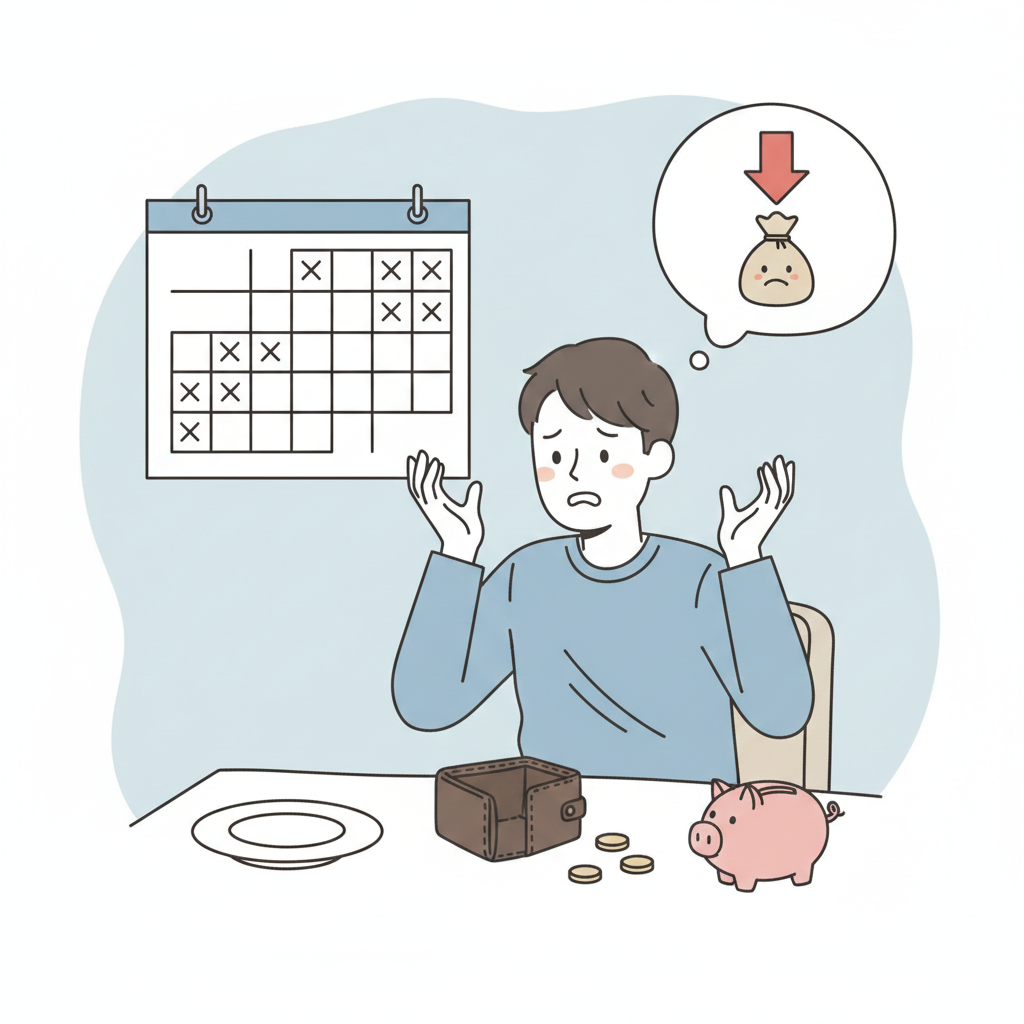
For decades, traditional economists operated under the assumption that humans are “rational actors.” They believed that when faced with a financial decision, we perform a quick mental calculation of the risks and rewards and choose the option that maximizes our utility.
However, anyone who has ever impulse-bought a luxury item they couldn’t afford, or panicked and sold their stocks during a market dip, knows that “rational” is rarely the word to describe our relationship with money.
The truth is that our financial decisions are not made by a calculator; they are made by a three-pound organ evolved for survival on the African savanna, not for trading options or managing a 401(k). To truly master your finances, you must first understand the “biological hardware” running the show. This is the world of Neuroeconomics—the study of how the brain processes economic choices.
Neuroeconomics 101: The Internal Battle Between Logic and Emotion

To understand how the brain reacts to money, we first have to look at its structure. Our brain isn’t one single computer; it is a collection of systems layered over millions of years of evolution.
The Limbic System: The “Impulsive” Ancestor
Deep within the brain lies the limbic system, often called the “reptilian” or “emotional” brain. This area is responsible for our most basic survival instincts: fear, pleasure, and the “fight or flight” response. When you see a “70% Off” sign or watch a crypto coin skyrocket, this part of your brain lights up. It wants the reward now.
The Prefrontal Cortex: The “CFO” of the Brain
Located just behind your forehead, the prefrontal cortex (PFC) is the newest part of the human brain. It is responsible for complex planning, logic, and long-term consequences. This is the part of your brain that knows you should save for retirement instead of buying that new car.
The Conflict: Every financial decision you make is a tug-of-war between the limbic system (immediate gratification) and the prefrontal cortex (long-term planning). When we “fail” financially, it’s usually because the emotional brain overwhelmed the logical one.
The Dopamine High: Why Making Money Feels Like a Drug
Why is it so hard to stop checking your investment portfolio or your bank balance? The answer lies in a neurotransmitter called dopamine.
Dopamine is often misunderstood as the “pleasure” chemical. In reality, it is the chemical of anticipation and motivation.
The Thrill of the Hunt
Neurological studies have shown that the brain’s reward centers are actually more active while you are waiting for a gain than when you actually receive it. This is why browsing a shopping site or watching a stock ticker can be so addictive. Your brain is releasing dopamine in anticipation of the “win.”
The “Satiation” Problem
Once you acquire the money or the product, the dopamine levels drop. This is why the “high” of a new purchase is so fleeting. To get that feeling back, your brain craves the next transaction. For the brain, money isn’t just a medium of exchange; it’s a primary reinforcer, much like food or social status.
The Amygdala and the Fear of Loss: Why Market Crashes Trigger Panic
If dopamine is the gas pedal for our spending, the amygdala is the brake—and it’s a very sensitive one. The amygdala is the brain’s “security guard,” constantly scanning the environment for threats.
Financial Loss as a Physical Threat
To your brain, losing money feels remarkably similar to a physical threat. When the stock market crashes or you lose your job, the amygdala sends out a high-priority alarm. It triggers the release of cortisol (the stress hormone) and adrenaline.
In this state, your prefrontal cortex—your logical CFO—is effectively taken offline. This is why people make “panic” decisions. Their brains are telling them they are in physical danger, and the only “survival” instinct they have is to run (or sell everything).
Why Risk Feels “Painful”
Interestingly, brain scans show that the anticipation of a financial loss activates the insular cortex, the same part of the brain that processes physical pain and disgust. When we say a financial loss “hurts,” we aren’t just using a metaphor; our brains are processing it through the same pathways as a broken bone.
Loss Aversion: The Psychological Math That Keeps You Broke
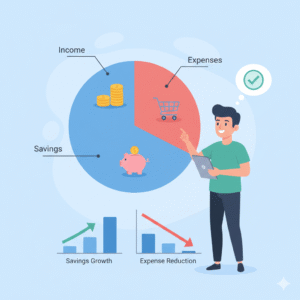
One of the most famous findings in behavioral economics is Loss Aversion, pioneered by Daniel Kahneman and Amos Tversky. Their research showed that the pain of losing $1,000 is roughly twice as intense as the joy of gaining $1,000.
The Disposition Effect
This biological quirk leads to a common investing mistake called the “Disposition Effect.” Because we hate “locking in” a loss (which would trigger that painful amygdala response), we tend to hold onto losing investments for far too long, hoping they will break even. Conversely, we sell our winners too early to “capture” the dopamine hit and avoid the risk of the gain turning into a loss.
The Status Quo Bias
Loss aversion also makes us terrified of change. Even if our current financial situation is mediocre, the brain views the potential loss of changing things as more significant than the potential gain of a new strategy. This is why so many people stay with bank accounts that offer 0% interest instead of moving to a high-yield option.
The Role of Hormones: How Testosterone and Cortisol Shape Your Portfolio
It isn’t just neurons; your hormones play a massive role in your “risk appetite.”
Testosterone and Overconfidence
Research on floor traders has shown that higher levels of testosterone are correlated with increased risk-taking. While this can lead to big wins in a “bull market,” it also leads to overconfidence bias. Traders with spiked testosterone levels often underestimate the probability of a crash and take on “excessive leverage,” leading to catastrophic failures when the trend reverses.
Cortisol and Risk Aversion
On the other hand, chronic stress leads to elevated cortisol. High cortisol levels make the brain hypersensitive to threats. If you have been under financial stress for a long time, your brain may become “risk-blind” in the other direction—refusing to take even healthy, calculated risks (like investing in a diversified index fund) because it is in a permanent state of “survival mode.”
The Herd Mentality: The Social Brain and Financial Bubbles
Humans are social animals. In our evolutionary past, being separated from the group meant certain death. As a result, our brains are hardwired to monitor what others are doing.
Mirror Neurons and “Keeping Up with the Joneses”
We have a system called mirror neurons that allows us to subconsciously “mimic” the emotions and actions of those around us. When you see everyone in your social circle buying a specific luxury brand or investing in a specific “meme stock,” your brain experiences a social pressure that is almost physical.
FOMO (Fear Of Missing Out)
FOMO is essentially a social survival mechanism gone wrong. If the “tribe” is moving in one direction and you are not, the brain triggers a sense of anxiety. This is how financial bubbles are formed. Even if the logic says “this is a bubble,” the social brain says “stay with the tribe.”
Neuromarketing: How Retailers Hack Your Biological Weaknesses
Modern retail and e-commerce are not just about selling products; they are about engineering brain responses. Every “Flash Sale,” “Limited Time Offer,” and “Only 2 Left” tag is a psychological weapon.
Creating Artificial Scarcity
When the brain perceives scarcity, the limbic system takes over. The “fear of losing out” on the deal creates a sense of urgency that bypasses the prefrontal cortex. You buy the item not because you want it, but because your brain wants to stop the “anxiety” of the potential loss of the deal.
The “Anchor” Effect
Retailers often show a high “Original Price” next to a “Sale Price.” Your brain “anchors” on the first number. Even if the sale price is still high, the PFC perceives it as a “win” because it is comparing it to the anchor. You feel like you are making money by spending it.
Temporal Discounting: The Battle for Your Future Self

Why is it so hard to save for a retirement that is 30 years away? The brain suffers from a phenomenon called Temporal Discounting.
To your brain, your “future self” feels like a stranger. Brain scans show that when people think about themselves in 20 or 30 years, the brain activity looks very similar to when they are thinking about a complete stranger.
The Reward of “Now”
Our ancestors didn’t know if they would be alive in 30 years. They prioritized immediate calories and immediate safety. This is why we choose the $5 latte today over the $50 it would be worth in our retirement account. We are rewarding a “friend” (our current self) while ignoring a “stranger” (our future self).
Summary: Emotional Brain vs. Rational Brain
| Feature | The Emotional Brain (Limbic) | The Rational Brain (PFC) |
| Primary Driver | Immediate Pleasure / Fear | Long-Term Goals / Logic |
| Chemicals | Dopamine, Adrenaline, Cortisol | Serotonin (Stability) |
| Reaction to Risk | Panic or Greedy Excitement | Calculated Assessment |
| Time Horizon | Today / Right Now | 5, 10, 30 Years |
| Best Used For | Quick Survival Reactions | Financial Planning / Investing |
Practical Strategies: How to “Outsmart” Your Own Biology
Now that you know how the brain works, you can build systems to protect yourself from your own instincts. You can’t change your evolution, but you can change your environment.
1. Automate Your Decisions
The best way to beat the limbic system is to remove the decision-making process entirely. Set up automatic transfers to your savings and investment accounts the day you get paid. If the money is gone before you can “feel” the urge to spend it, you’ve bypassed the dopamine trap.
2. Implement the “72-Hour Rule”
Before making any non-essential purchase, wait three days. This allows the initial dopamine spike to subside and gives the prefrontal cortex time to “re-engage.” You’ll often find that after 72 hours, the “must-have” feeling has completely vanished.
3. Change Your Narrative on Risk
Instead of viewing market volatility as a “threat” (which triggers the amygdala), try to reframe it as a “sale.” By consciously changing the words you use, you can reduce the cortisol response and make more logical decisions during downturns.
4. Visualize Your Future Self
To combat temporal discounting, make your future self feel “real.” Use age-progression apps to see what you might look like in 30 years, or write a letter to your 70-year-old self. The more you “know” that person, the more likely your brain is to treat their needs as a priority.
Financial Freedom is a Mental Game
True financial success has very little to do with how smart you are or how much you know about the stock market. It has everything to do with how you manage your emotions.
By understanding that your brain is hardwired for survival and short-term rewards, you can stop blaming yourself for “weak willpower” and start building systems that work with your biology instead of against it.
The goal isn’t to become a heartless robot; it’s to ensure that when it comes to your money, the “CFO” in your forehead is the one calling the shots, not the “caveman” in your lizard brain.