Stock Market vs Real Estate: Where Should You Invest?

It is the age-old debate that has divided dinner tables and financial seminars for decades: Stock Market vs. Real Estate. On one side, you have the “Wall Street” enthusiasts who swear by the power of compound interest and the ease of liquid assets. On the other, you have the “Property Moguls” who believe that if you can’t touch it, it isn’t a real investment.
As we navigate the economic landscape of 2026, the answer isn’t as simple as picking a side. Both asset classes have created more millionaires than almost any other venture, but they operate on completely different sets of rules. If you are a beginner looking to place your hard-earned capital, understanding these nuances is the difference between building a fortune and losing your shirt.
In this comprehensive guide, we will break down the pros, cons, and hidden realities of both markets to help you decide which path aligns with your financial DNA.
The Low Barrier to Entry: Why the Stock Market is the “Great Equalizer”

The most significant advantage of the stock market is its accessibility. In the past, you needed a broker and a thick wallet to get started. Today, the barriers have vanished.
Fractional Shares and Micro-Investing
In 2026, you don’t need $3,000 to buy a single share of a high-priced tech giant. Through “fractional shares,” you can invest as little as $5. This allows for a level of diversification that was historically impossible for the average person. You can own a piece of the 500 largest companies in the U.S. (via the S&P 500) for the price of a cup of coffee.
Unmatched Liquidity
Liquidity refers to how quickly you can turn an asset into cash without losing value. Stocks are the king of liquidity. If an emergency arises on a Tuesday morning, you can sell your shares and have the cash in your bank account by Thursday. As we will see, real estate offers no such luxury.
The Power of Tangible Assets: Why Real Estate Still Rules for Many
Real estate is often viewed as a “defensive” investment because it is a physical, limited resource. People will always need a place to live and a place to work.
The Psychological Comfort of “Dirt”
For many laypeople, the stock market feels like a “digital casino”—numbers on a screen that can vanish during a market crash. Real estate is tangible. Even if the market value of your home drops, the physical structure still exists. It provides a level of psychological security that a portfolio of ETFs simply cannot match.
Control Over the Asset
When you buy shares of a company like Apple or Disney, you have zero control over how the company is run. You are a passenger. When you own a rental property, you are the CEO. You decide when to renovate, how much rent to charge, and how to market the property. For those with an entrepreneurial spirit, this control is a massive draw.
Leveraging Other People’s Money (OPM): The Real Estate Edge
If there is one “magic trick” in finance, it is leverage. This is where real estate leaves the stock market in the dust for most individual investors.
How Leverage Works in Property
Imagine you have $100,000.
-
In the Stock Market: You buy $100,000 worth of an index fund. If the market goes up 10%, you make $10,000.
-
In Real Estate: You use that $100,000 as a 20% down payment on a $500,000 property. If the property value goes up by 10%, the asset is now worth $550,000. You’ve made $50,000 on that same $100,000 investment.
This is a 50% return on your cash, even though the market only moved 10%. This ability to use a mortgage to control a large asset with a small amount of cash is how most “ordinary” people become wealthy through real estate.
Volatility vs. Stagnation: Managing the “Stress” of Investing

The way you react to price changes is a major factor in determining where you should put your money.
The Visibility of Stock Market Volatility
The stock market is “loud.” Prices change every second. Every news outlet screams when the Dow drops 2%. This constant feedback loop can lead to “emotional trading”—selling at the bottom because you are scared.
The “Quiet” Nature of Real Estate
Real estate prices are “opaque.” You don’t know what your house is worth every second of the day. You only find out when you sell it. This lack of daily price updates acts as a “forced discipline.” It’s much harder to panic-sell a house than it is to panic-sell a stock.
Passive Income: Dividends vs. Rental Checks
Both assets can provide a steady stream of income, but the “work” required for each is very different.
Dividend Investing (Truly Passive)
If you own dividend-paying stocks or a Dividend ETF (like SCHD), the money simply appears in your account every quarter. You don’t have to talk to anyone, fix anything, or chase anyone for payment. It is the purest form of passive income.
Rental Income (Semi-Passive)
Rental income is often marketed as passive, but any landlord will tell you otherwise. Even with a property manager, you are dealing with:
-
Tenants: Who may pay late or damage the property.
-
Maintenance: Toilets, roofs, and HVAC systems that break at 3 AM.
-
Vacancies: Months where you have to pay the mortgage out of pocket because the house is empty.
For the layperson, real estate is often a part-time job, whereas stocks are a set-it-and-forget-it strategy.
Tax Advantages: A Deep Dive into the “Hidden” Returns
The government loves homeowners and investors, but they show their love in different ways.
Stock Market Tax Perks
-
Long-Term Capital Gains: If you hold a stock for more than a year, your tax rate is significantly lower than your regular income tax.
-
Step-Up in Basis: If you pass your stocks to your heirs, the “cost basis” resets, potentially saving them millions in taxes.
Real Estate Tax Perks
Real estate is arguably the most tax-advantaged asset class in the US and many Western economies.
-
Depreciation: You can “write off” the value of the building over 27.5 years, which can often cancel out the taxes you owe on your rental income.
-
1031 Exchange: This allows you to sell a property and buy a new one without paying any capital gains tax at the time of the sale, allowing your wealth to snowball tax-free for decades.
The Mathematical Breakdown: Calculating Your Returns
To compare the two fairly, we need to look at the math. The return on a stock is usually calculated by the compound interest formula:
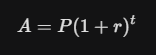
Where $r$ is the annual return (historically ~10% for the S&P 500) and $t$ is time.
In real estate, your return (ROI) is calculated as:

Because of the leverage mentioned earlier, the “Initial Cash Invested” is small compared to the total asset, which often makes the real estate ROI look much higher on paper—if you can manage the property effectively.
REITs: The “Middle Ground” for 2026 Investors
If you want the returns of real estate but the ease of the stock market, you should look into REITs (Real Estate Investment Trusts).
REITs are companies that own and manage portfolios of real estate (apartment buildings, hospitals, cell towers). They are traded on the stock exchange just like any other stock. By law, they must pay out 90% of their taxable income as dividends to shareholders.
Why choose REITs?
-
You get real estate exposure with as little as $100.
-
You can sell your “property” in one click.
-
Zero maintenance or tenant issues.
Comparison Table: At a Glance
| Feature | Stock Market | Real Estate |
| Entry Cost | Extremely Low ($5+) | High (Down payment + Closing costs) |
| Liquidity | High (Days) | Low (Months) |
| Effort | Low (Research only) | High (Active management) |
| Leverage | Low/Risky (Margin) | High/Standard (Mortgage) |
| Volatility | High (Visible daily) | Low (Hidden until sale) |
| Tax Perks | Good (Cap gains) | Excellent (Depreciation/Exchanges) |
How to Decide: Which Investor Are You?
Choosing between the two depends more on your personality than your bank account.
You should choose the Stock Market if:
-
You value your free time and don’t want a “side hustle.”
-
You are comfortable with seeing your net worth fluctuate daily.
-
You want to start small and grow your wealth over 30+ years.
-
You prefer “clean” math and zero physical labor.
You should choose Real Estate if:
-
You are “handy” or enjoy managing people and projects.
-
You want to use leverage to accelerate your wealth building.
-
You find comfort in physical, tangible assets.
-
You are looking for significant tax “hacks” to protect your income.
The “Wealthy” Approach is Both
If you study the world’s most successful investors, you will find that they rarely choose just one. They use the Stock Market to build liquid wealth and capitalize on tech innovation, and they use Real Estate to provide stability, tax shelters, and leveraged growth.
For a beginner in 2026, the smartest move is often to start with the Stock Market (due to the low entry cost) and use the profits and discipline gained there to fund your first Real Estate down payment later.
Diversification isn’t just about owning different stocks; it’s about owning different types of wealth. Whether you prefer the click of a mouse or the turn of a key, the best time to start is today.