Stock Market Basics: Everything Beginners Need to Know

The stock market is often portrayed in movies as a chaotic room full of people in suits screaming at each other while numbers flash on giant screens. While that makes for great cinema, it couldn’t be further from the reality of modern investing in 2026. Today, the stock market is a sophisticated, digital ecosystem that is accessible to anyone with a smartphone and a few dollars to spare.
If you’ve ever felt like the financial world is a “members-only” club designed to keep you out, this guide is for you. Investing is arguably the most powerful tool for building long-term wealth, but it requires a solid foundation. In this comprehensive deep dive, we will strip away the jargon and explain the stock market basics in a way that actually makes sense.
What is the Stock Market? (The Public Marketplace Concept)

At its core, the stock market is nothing more than a giant, digital marketplace. Think of it like a global mall, but instead of buying shoes or electronics, you are buying ownership in companies.
When a company wants to grow—perhaps by building new factories, developing a new AI tool, or expanding into a new country—it needs money (capital). One way to get that money is to “go public” by issuing shares of stock.
The Exchange System
Stocks are traded on exchanges. In the United States, the two heavyweights are the New York Stock Exchange (NYSE) and the Nasdaq.
-
NYSE: The “old guard” where many of the world’s most established companies (like Coca-Cola or Walmart) are traded.
-
Nasdaq: The tech-heavy home for innovators like Apple, Microsoft, and Nvidia.
When you “buy a stock,” you are using an exchange to facilitate a trade between you and a seller.
What Exactly is a Stock? (Understanding Your “Piece of the Pie”)
A stock (also called “equity”) represents fractional ownership in a corporation. When you buy a share of a company, you become a “shareholder.”
Even if you only own one share of a company that has billions of shares outstanding, you are a part-owner. This entitles you to:
-
A Claim on Assets: If the company grows and becomes more valuable, your “piece” becomes more valuable.
-
Voting Rights: Shareholders often get to vote on major company decisions, such as who sits on the Board of Directors.
-
A Share of Profits: Some companies distribute a portion of their earnings directly to shareholders in the form of dividends.
Why do Companies Issue Stock? (The IPO Process)
A company starts as a private entity, owned by its founders or a small group of early investors. As it grows, it may decide it needs a massive injection of cash to reach the next level. This is when they perform an Initial Public Offering (IPO).
Raising Capital vs. Taking Debt
A company could take out a bank loan, but then they would have to pay interest. By issuing stock, they get the money without the debt. In exchange, they give up a piece of their ownership to the public. For you, the investor, the IPO is the moment a company moves from the “private club” to the “public marketplace.”
How Stock Prices are Determined: The Law of Supply and Demand
Why is a stock worth $150 today and $155 tomorrow? It all comes down to the most basic rule of economics: Supply and Demand.
-
Demand: If a company releases a revolutionary product or reports record-breaking profits, more people will want to buy the stock. If more people want to buy than sell, the price goes up.
-
Supply: If a company is involved in a scandal or its sales are declining, shareholders may want to sell. If there are more sellers than buyers, the price goes down.
The Role of Expectations
In the stock market, prices aren’t just based on how a company is doing now; they are based on how the market expects the company to do in the future. This is why a company’s stock price can sometimes drop even if they made a profit—if that profit was less than what investors expected, the “demand” drops.
Key Market Terms Every Beginner Must Know
Before you place your first trade, you need to speak the language. Here is a “cheat sheet” of the most important terms:
| Term | Definition |
| Bull Market | A period when stock prices are rising and investor confidence is high. |
| Bear Market | A period when stock prices are falling (usually by 20% or more) and pessimism prevails. |
| Market Cap | The total value of a company (Price per share $\times$ Total number of shares). |
| Volatility | How much and how quickly a stock’s price swings up and down. |
| Liquidity | How easy it is to buy or sell a stock without affecting its price. |
| Blue Chip | A large, well-established, and financially sound company with a history of reliable growth. |
How to Profit from the Stock Market: Capital Gains and Dividends
There are two primary ways to make money in stocks. Successful investors usually utilize a mix of both.
1. Capital Gains (Buy Low, Sell High)
This is the most straightforward method. If you buy 10 shares of a stock at $100 (total $1,000) and sell them later at $150 (total $1,500), you have a “Capital Gain” of $500.
2. Dividends (The “Income” Method)
Some established companies share their profits with you on a regular basis (usually every quarter). For example, if a company pays a dividend of $1.00 per share and you own 100 shares, they will send you $100 every year just for holding the stock. This is a classic form of passive income.
Understanding Stock Market Indices: The S&P 500, Dow, and Nasdaq

When you hear the news say “The market was up today,” they are referring to Market Indices. An index is a “basket” of stocks used to track the performance of a specific sector or the entire economy.
-
The S&P 500: This tracks the 500 largest, most successful companies in the US. It is considered the best overall “pulse” of the American economy.
-
The Dow Jones Industrial Average (DJIA): A list of 30 “blue-chip” companies. It’s prestigious but less representative than the S&P 500.
-
The Nasdaq Composite: This tracks almost all stocks on the Nasdaq exchange, making it the primary indicator for the Tech Sector.
Types of Stocks: Value vs. Growth
Not all stocks are created equal. Investors typically categorize them into two main groups based on their goals.
Growth Stocks
These are companies that are expected to grow at a rate significantly above the average for the market. They usually don’t pay dividends because they reinvest all their profits into research, development, and expansion.
-
Examples: Amazon, Tesla, and high-growth AI startups.
-
Goal: Large capital gains over time.
Value Stocks
These are companies that are currently trading for less than they are “worth.” They are often older, established companies that are out of favor with the market but remain profitable.
-
Examples: Banks, utility companies, and major retailers.
-
Goal: Stability and consistent dividends.
The Difference Between Stocks, Bonds, and ETFs
A healthy portfolio is usually a mix of different types of assets. Beginners often confuse these three:
-
Stocks (Equity): High risk, high reward. You are an owner.
-
Bonds (Debt): Lower risk, lower reward. You are a “lender” to a government or corporation. They pay you interest.
-
ETFs (Exchange-Traded Funds): A “bundle” of stocks. Instead of buying one stock, you buy an ETF (like one that tracks the S&P 500) and instantly own a tiny piece of 500 different companies. This is the recommended starting point for most beginners.
The Power of Compound Interest: Your Greatest Financial Ally
The reason the stock market works so well for wealth building isn’t just about picking “winners”; it’s about time.
Compound interest is the process where your earnings earn their own earnings. The formula for the future value of an investment is:
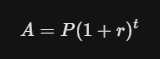
Where:
-
A = the final amount.
-
P = the principal (initial investment).
-
r = the annual interest rate (return).
-
t = the number of years the money is invested.
Because t (time) is an exponent, it has a massive impact. Investing $100 a month starting at age 20 will lead to much more wealth than investing $500 a month starting at age 45.
Managing Risk: The Rule of Diversification

In investing, there is a saying: “There is no such thing as a free lunch.” Every potential reward comes with a risk. The way you protect yourself is through Diversification.
Diversification is the act of spreading your money across different companies, industries, and asset classes. If you put all your money into one “hot” tech stock and it fails, you lose everything. But if you own an ETF that holds 500 companies across tech, healthcare, energy, and retail, a failure in one company is barely a “blip” on your radar.
How to Place Your First Trade: Market vs. Limit Orders
When you are ready to buy your first stock or ETF through a brokerage app, you will be asked what “type” of order you want to place.
Market Order
This tells the broker: “Buy this stock immediately at whatever the current price is.” This is the fastest way to trade, but you might pay slightly more than you expected if the price is moving fast.
Limit Order
This tells the broker: “Only buy this stock if the price hits $X or lower.” This gives you more control over the price you pay, but if the stock never hits that price, your order won’t be filled.
Common Pitfalls: Why Most Beginners Lose Money
The stock market isn’t a “scam,” but it is a place where emotional people often lose money to disciplined people. Avoid these traps:
-
Chasing the Hype: If everyone on social media is talking about a stock, you are likely too late. Buying at the “top” because of FOMO (Fear Of Missing Out) is the fastest way to lose capital.
-
Emotional Trading: Selling your stocks because the market dropped 5% in a day is a mistake. The market is volatile in the short term but trends upward in the long term.
-
Lack of Patience: Most people want to be rich in six months. Wealth building takes decades. If you don’t have a 5-to-10-year horizon, the stock market might not be the right place for that specific cash.
Step-by-Step: How to Start Investing Today
If you have your first $100 or $1,000 ready to go, follow this simple roadmap:
-
Build an Emergency Fund: Never invest money that you might need for rent or food next month.
-
Open a Brokerage Account: Choose a reputable platform (like Vanguard, Fidelity, or Charles Schwab).
-
Choose Your “Vehicle”: For most beginners, a low-cost S&P 500 Index Fund (ETF) is the smartest first move.
-
Set Up Automatic Transfers: Consistency beats “timing the market.” Set a specific amount to be invested every month, regardless of whether the market is up or down (Dollar-Cost Averaging).
The Best Time to Start was Yesterday

The stock market is the great equalizer. It allows a school teacher to own a piece of the same companies as a billionaire. You don’t need a finance degree to succeed; you just need a basic understanding of the mechanics, a diversified strategy, and the discipline to let time do the work.
Remember, the goal of the stock market isn’t to “win” a game against other traders. The goal is to provide yourself with the financial freedom to live life on your own terms. Start small, stay consistent, and keep learning.