The Difference Between Looking Rich and Being Wealthy

In the age of Instagram filters, luxury car leases, and “quiet luxury” TikTok trends, the line between appearing successful and actually being financially secure has never been blurrier. We are constantly bombarded with images of the “good life”—designer handbags, five-star vacations, and pristine suburban mansions.
But here is the staggering reality that most people ignore: A high income does not equal wealth, and a flashy lifestyle is often a mask for financial fragility.
Understanding the psychological and mechanical differences between “looking rich” and “being wealthy” is the single most important lesson in behavioral finance. This article will deconstruct why we feel the need to show off, the hidden costs of status signaling, and how you can pivot your mindset to build a life of true, invisible, and lasting wealth.
Defining the Great Divide: What Does it Mean to Be Rich vs. Wealthy?

To the average person, the words “rich” and “wealthy” are synonyms. In the world of financial education, however, they are polar opposites.
What is “Rich”?
Being rich is usually defined by current income and current spending. A “rich” person is someone who earns a high salary—perhaps a doctor, a lawyer, or a high-level executive— and spends it on visible status symbols. If you see someone driving a $120,000 sports car, you can assume they are rich (or at least have a rich person’s debt). Richness is noisy. It is the money that is being spent.
What is “Wealthy”?
Wealth, on the other hand, is invisible. It is the money that has not been spent. Wealth is the net worth accumulated in brokerage accounts, real estate equity, retirement funds, and private businesses. Wealth is the “Millionaire Next Door” who drives a five-year-old Toyota but has $3 million in an S&P 500 index fund. Wealth is the ability to walk away from a job you hate because your assets provide for your lifestyle.
Key Takeaway: Richness is about your current paycheck; wealth is about your future freedom.
The Psychology of Status Signaling: Why We Spend Money to Impress People We Don’t Like
If being wealthy is clearly better than just looking rich, why do so many people fall into the trap of overspending? The answer lies in evolutionary psychology and “Social Proof.”
The Need for External Validation
Humans are social animals. For thousands of years, our survival depended on our status within a tribe. High status meant better access to resources and protection. In the modern world, we use “luxury goods” as a shortcut to communicate high status to our peers. We buy things we don’t need with money we don’t have to impress people we don’t even like.
The Dopamine Hit of the Purchase
When you buy something new—a shiny watch or a brand-new SUV—your brain releases dopamine. It’s a temporary “high.” However, this is quickly followed by Hedonic Adaptation. The new car becomes just “the car” within a few weeks, and you need a new, more expensive purchase to get that same feeling back. This is the “Hedonic Treadmill,” and it is the primary reason why people with six-figure salaries still live paycheck to paycheck.
The High Cost of Looking Rich: How Lifestyle Inflation Destroys Your Future
“Looking rich” is one of the most expensive hobbies a person can have. It isn’t just about the price tag on the item; it’s about the opportunity cost.
The Opportunity Cost of a Car Payment
Let’s look at a common example: the $800 monthly car payment.
To a person focused on looking rich, $800 is a manageable monthly expense. To a person focused on being wealthy, $800 is a missed opportunity.
If you invested that same $800 a month into a diversified stock market portfolio with an average 7% annual return, after 30 years, you would have approximately $900,000. By choosing to drive a “rich” car today, you are essentially choosing to be $900,000 poorer in your retirement.
The Debt Trap
Most people who “look rich” are actually “leveraged.” They don’t own their lifestyle; the bank does. High-interest credit cards, 72-month car loans, and massive mortgages create a “Fragile Rich” state. If they lose their job for even two months, the whole house of cards collapses.
Assets vs. Liabilities: The Secret Language of the Wealthy
In his landmark book Rich Dad Poor Dad, Robert Kiyosaki simplified the path to wealth with one core concept: the difference between an asset and a liability.
-
A Liability: Anything that takes money out of your pocket (cars, designer clothes, expensive hobbies, your primary residence’s maintenance).
-
An Asset: Anything that puts money into your pocket (stocks, bonds, rental properties, royalties, businesses).
The person trying to look rich fills their life with liabilities that look like assets. The person trying to become wealthy aggressively acquires assets that are often boring and invisible to the public.
The Millionaire Next Door: Why True Wealth is Often Invisible

In the late 1990s, researchers Thomas J. Stanley and William D. Danko conducted an extensive study of America’s millionaires. What they found shocked the public. The majority of millionaires didn’t live in Beverly Hills or drive Ferraris. They lived in modest neighborhoods, wore inexpensive watches, and avoided luxury brands.
Stealth Wealth
This concept is known as “Stealth Wealth.” By living below their means, these individuals were able to invest the surplus. They prioritized financial independence over social display.
When you see a person in a beat-up truck, you might assume they are struggling. In reality, they might have a higher net worth than the person in the Porsche next to them who is one bad month away from repossession.
Compound Interest: The Unseen Force That Makes Wealth Possible
The biggest advantage the wealthy have over the “rich” is their understanding of time and compound interest.
If you spend $1,000 on a designer jacket, that money is gone. If you invest that $1,000, it becomes a “money soldier” that works for you 24/7.
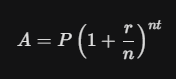
This formula represents the power of compounding. The “rich” person sees $1,000 as a spending limit. The “wealthy” person sees $1,000 as a seed that can grow into a forest if left alone for twenty years.
Behavioral Finance: Overcoming the Urge to Spend
How do you transition from a mindset of consumption to a mindset of wealth? It requires re-wiring your brain’s response to money.
1. The 24-Hour (or 30-Day) Rule
Before making any “luxury” purchase, wait 24 hours. For larger purchases, wait 30 days. This allows the emotional dopamine spike to subside, giving your logical “wealthy” brain time to evaluate if you actually need the item or if you are just seeking a temporary status boost.
2. Automate Your Wealth
If you wait until the end of the month to save what is “left over,” you will never save anything. The wealthy “Pay Themselves First.” Set up an automatic transfer from your paycheck to your investment account. If the money never hits your checking account, you won’t feel the urge to spend it on looking rich.
3. Change Your Peer Group
If your friends are constantly bragging about their new purchases and going to expensive dinners they can’t afford, you will feel pressured to do the same. Surround yourself with people who value ideas, health, and financial freedom more than brand names.
Financial Independence: Buying Back Your Time
The ultimate goal of being wealthy isn’t to buy better things; it’s to buy back your time.
When you have wealth, you have options. You can choose to leave a toxic work environment. You can choose to spend a year traveling. You can choose to be present for your children’s milestones.
The person who “looks rich” but has no wealth is a slave to their lifestyle. They must work that high-stress job to make the payments on the “rich” things they bought. They are essentially trading their freedom for a facade.
The Choice is Yours

Looking rich is easy. Anyone with a decent credit score can lease a BMW and put a vacation on a credit card. But being wealthy is hard. It requires discipline, the ability to delay gratification, and the courage to be “normal” while everyone else is trying to be “extraordinary.”
As you move forward in your financial journey, ask yourself this question every time you pull out your wallet: “Am I trying to look rich for others, or am I building wealth for myself?”
True wealth is the silence of a paid-off home, the security of a robust investment portfolio, and the peace of mind that comes from knowing you own your time. Everything else is just noise.
Summary Checklist for Building Real Wealth:
-
Audit your spending: How much of your monthly budget goes toward “status” items?
-
Invest the difference: Take the money you would have spent on a luxury upgrade and put it into a low-cost index fund.
-
Focus on Net Worth: Stop tracking your income and start tracking your total assets minus liabilities.
-
Practice Gratitude: Contentment is the greatest enemy of the “rich” trap. If you are happy with what you have, you don’t need to buy things to prove your worth to others.
Start building your invisible empire today. The best time to start was ten years ago; the second best time is now.