The Daily Behaviors of Financially Successful People

Most people view financial success as a singular event—a lottery win, a massive inheritance, or a lucky stock pick. However, if you study the world’s most consistently wealthy individuals, you will find that their success is rarely the result of a “big break.” Instead, it is the cumulative result of small, disciplined behaviors repeated every single day.
Wealth is a lagging indicator of your habits. Your current net worth is a scorecard of your past financial behaviors. If you want to change your financial future, you must change your daily routine. This guide explores the behavioral science and practical habits that separate the financially successful from the rest of the world.
The Morning Power Hour: Why Financial Success Starts Before 8 AM
For the financially successful, the morning is not a time for “reactivity.” Most people wake up and immediately check their emails or social media, essentially letting the world dictate their priorities. Wealthy individuals, however, use the first hour of the day to set their own agenda.
1. Goal Visualization and Planning
Success starts with clarity. High-net-worth individuals often spend their first few minutes of the day reviewing their long-term goals and identifying the “One Big Thing” that will move the needle today. This prevents them from getting bogged down in “busy work” that doesn’t build wealth.
2. Eliminating Decision Fatigue
Decision fatigue is a real psychological phenomenon. Every choice you make—from what to wear to what to eat—depletes your mental energy. By the time you need to make a high-stakes investment decision in the afternoon, your brain might be exhausted. Successful people automate their mornings (uniform wardrobes, set breakfasts) to save their “cognitive gold” for financial decisions.
Practicing Intentional Consumption: The Death of the Impulse Buy
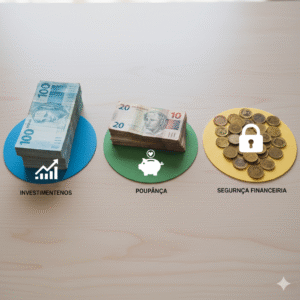
There is a profound difference between being a consumer and being an owner. Financially successful people are masters of their impulses. They understand that every dollar spent on a depreciating asset (like a new car or trendy clothes) is a dollar that cannot be put to work in an appreciating asset (like stocks or real estate).
The “Cost-Per-Use” Mindset
When a wealthy person considers a purchase, they don’t just look at the price tag; they look at the value. They might spend $300 on a pair of high-quality shoes that will last ten years rather than $60 on a pair that falls apart in six months.
The 24-Hour Cooling-Off Period
One of the most effective daily behaviors is the 24-hour rule for non-essential purchases. By forcing a buffer between the “desire” and the “transaction,” you allow the dopamine spike of the impulse to subside. Often, by the next morning, the “must-have” item feels unnecessary.
Continuous Learning: The Highest ROI Investment is Between Your Ears
Warren Buffett famously reads 500 pages a day. Bill Gates reads 50 books a year. This isn’t just a hobby; it is a core financial strategy. In a rapidly changing global economy, your knowledge is your only truly inflation-proof asset.
Daily Micro-Learning
You don’t need to read a book a day to be successful. However, successful people dedicate at least 30 to 60 minutes daily to learning something new about their industry, macroeconomics, or personal psychology.
Understanding the “Why” of the Market
While average investors look for “hot tips,” successful investors study the underlying mechanics of how money works. They read financial reports, listen to earnings calls, and try to understand the behavioral biases that drive market cycles.
Automating the Future: How Success is Coded into Your Banking
Willpower is a finite resource. If you have to “decide” to save money every month, you will eventually fail. The financially successful remove the human element from their wealth-building process.
The “Pay Yourself First” Principle
In the daily life of a wealth-builder, the first person who gets paid is their “future self.” They have automated transfers set up so that a portion of every dollar earned is immediately diverted into investment accounts before they ever see it in their checking account.
The Magic of Compound Interest
Wealthy people understand the math behind their money. They know that a small amount invested daily or monthly is far more powerful than a large amount invested later in life.

In this formula, time (t) is the most powerful variable. By starting early and being consistent, the “daily behavior” of automated investing turns into an exponential snowball of wealth.
The Health-Wealth Synergy: Why Physical Vitality Impacts Your Net Worth
It is no coincidence that a vast majority of self-made millionaires exercise at least four days a week. Financial success requires high levels of focus, stamina, and emotional regulation.
Energy Management over Time Management
If you are physically sluggish, your brain cannot function at its peak. Poor health leads to “brain fog,” which leads to poor financial decisions or missed opportunities. Successful people view exercise and a clean diet as “business expenses.”
Reducing Healthcare Costs
On a practical level, maintaining health is a long-term cost-avoidance strategy. In the United States, medical debt is a leading cause of bankruptcy. Daily exercise is essentially an insurance policy for your portfolio.
Social Circles and Net Worth: The Power of Proximity
You have likely heard the phrase, “Your network is your net worth.” This is not just a cliché. The people you interact with daily shape your “financial thermostat.”
The “Five People” Rule
If your five closest friends spend every weekend at the mall and complain about their debt, you will likely adopt those same behaviors. If your five closest friends talk about real estate, tax strategies, and business growth, your baseline for what is “normal” shifts upward. Successful people are extremely protective of their time and energy, choosing to spend it with those who challenge them to grow.
Risk Management and the “Sleep at Night” Factor

Financially successful people are not “gamblers”; they are calculated risk-takers. Their daily behavior includes a constant, quiet assessment of their “downside.”
The Emergency Fund Habit
Wealthy people don’t live on the edge. They maintain a liquid cash reserve (usually 6 to 12 months of expenses) that allows them to remain calm when the market crashes. This “peace of mind” is what allows them to stay invested while everyone else is panic-selling.
Diversification as a Daily Rule
They don’t put all their eggs in one basket. Their daily check-ins (if they do them at all) are focused on ensuring their asset allocation remains balanced.
The Evening Reflection: Reviewing Finances and Setting Tomorrow’s Intention
The day doesn’t end when the sun goes down for the financially successful. They use the evening to “audit” their progress.
Tracking the Numbers
Many millionaires keep a daily or weekly log of their spending and net worth. “What gets measured gets managed.” By simply looking at where your money went today, you subconsciously adjust your behavior for tomorrow.
Practicing Gratitude
There is a deep connection between gratitude and financial success. When you are grateful for what you have, you are less likely to seek “happiness” through impulsive consumption. Successful people often end their day by reflecting on what went well, which reinforces an abundance mindset rather than a scarcity mindset.
Turning Behaviors into Destiny

Financial success is not a destination; it is a way of traveling. You do not wake up one day and suddenly become “wealthy.” You become wealthy by making a series of invisible, “boring” decisions every day for a decade.
If you want to join the ranks of the financially successful, start today.
-
Automate one investment.
-
Read ten pages of a financial book.
-
Cancel one subscription you don’t use.
-
Walk for thirty minutes.
These are the bricks that build the mansion of financial freedom. The math is simple, but the discipline is hard. Master your daily behaviors, and your net worth will eventually have no choice but to follow.