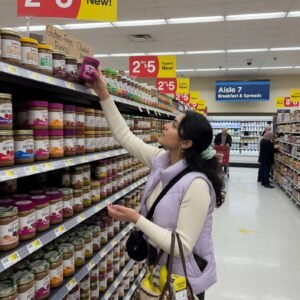
How to Save Money on Grocery Shopping

For the vast majority of households, grocery shopping represents one of the largest monthly variable expenditures, trailing closely behind fixed obligations like housing and transportation. However, unlike structural expenses such as monthly rent or mortgage payments, your food budget is highly elastic. It is an expense over which you maintain direct, day-to-day operational control.
Despite this flexibility, millions of consumers find themselves consistently overspending at the supermarket. This financial leakage rarely stems from a lack of intent; rather, it is the result of sophisticated retail environment designs, invisible psychological triggers, and a lack of systematic systems for meal planning and food management.
To structurally reduce your grocery expenditures without compromising nutrient density or culinary quality, you must look past basic couponing tips. Instead, it is necessary to deploy an advanced, data-driven framework that treats food acquisition as an exercise in microeconomic optimization.
Beyond the Grocery List: Mastering the Psychological Framework of Strategic Meal Planning

Many consumer finance publications suggest that simply writing a grocery list is enough to curb overspending. In reality, a static list is insufficient if it is compiled without structural strategy. High-performance budget optimization requires a process known as reverse meal planning.
Traditional meal planning involves selecting recipes from a cookbook or website, writing down the required ingredients, and purchasing them at retail prices regardless of market conditions. This approach leaves you entirely vulnerable to seasonal price spikes and store-specific margin expansions.
[Traditional Planning]  Select Recipes ──> Build Component List ──> Buy at Retail Price (High Cost)

[Reverse Planning]      Audit Current Inventory ──> Check Store Sales ──> Build Recipes Around Discounts (Low Cost)
The Architecture of Reverse Meal Planning
Reverse meal planning flips the traditional script by prioritizing what already exists within your household ecosystem and combining it with highly discounted market opportunities.
-
The Household Inventory Audit: Before drafting a single menu item, audit your pantry, refrigerator, and deep freezer. Identify perishable proteins, grains, and spices that are approaching their expiration horizons. Your primary goal is to build meals that utilize these existing assets first, thereby reducing capital depreciation through food spoilage.
-
The Loss-Leader Circular Assessment: Supermarkets frequently utilize “loss leaders”—highly advertised items sold below cost or at razor-thin margins to attract foot traffic into the retail location. By reviewing the store’s weekly digital circular before choosing your recipes, you can anchor your weekly macro-nutrients (such as chicken breast, pork loin, or block cheese) around these deeply discounted items.
-
Menu Flexibility and Component Swapping: A optimized meal plan is modular. If your recipe calls for fresh asparagus but broccoli is currently on sale for half the price per pound, a systematic budget-conscious shopper executes an immediate component swap.
By allowing market pricing to dictate your menu structure rather than letting an arbitrary recipe dictate your spending, you instantly slash your baseline grocery costs.
Decoding Supermarket Layouts: How Grocery Stores Use Psychology to Trigger Impulse Spending
Supermarkets are not neutral warehouses designed for consumer convenience. They are highly optimized sensory environments engineered by retail psychologists to maximize basket size (the total dollar amount spent per transaction) and reduce your cognitive resistance to spending.
Understanding the behavioral design of a grocery store allows you to remain emotionally detached and execution-focused during your shopping trips.
[Store Entrance] ──> Slow Tempo Music & Floral Smells ──> Lowers Heart Rate & Increases Stay Time
        │
        ▼
[Perimeter Aisles] ──> High-Margin Fresh Goods located far apart (Forces walking through center)
        │
        ▼
[Center Aisles] ──> Eye-Level Placement of Premium Brands (Eye Level = Buy Level)
        │
        ▼
[Checkout Lane] ──> Micro-Sized High-Margin Impulse Items (Candy, Magazines, Single Servings)
1. The Perimeter Trap and Essential Dispersion
Notice that essential grocery staples—such as milk, eggs, fresh meats, and produce—are almost universally located along the back and side perimeters of the store layout. Furthermore, these items are strategically placed far away from one another.
This design choice forces you to traverse the maximum physical distance inside the store to gather your daily essentials. As you navigate from the dairy section to the meat counter, you are forced to pass through multiple high-margin center aisles filled with highly processed, branded convenience foods.
2. “Eye Level is Buy Level” Dynamics
Within the shelving units of the center aisles, product placement is strictly tiered based on profitability and corporate slotting fees:
-
The Eye-Level Zone: Positioned roughly 4 to 5 feet from the floor, this prime real estate contains premium name-brand products with the highest profit margins.
-
The Kids’ Zone: Positioned lower down on the shelving array, this area features brightly colored, heavily sugared breakfast cereals and snack foods designed to catch the attention of children.
-
The Bargain Zones: The absolute highest and lowest shelves host bulk goods, generic store brands, and unbranded essentials. Retailers place these items here because they require physical effort to reach, keeping consumer focus on more expensive alternatives.
3. Sensory Manipulation and Cart Economics
The slow-tempo background music played in supermarkets is calculated to slow your walking speed, which correlates directly with an increase in impulse item evaluation.
Even the physical size of the shopping cart acts as a psychological anchor: larger carts trick your brain into feeling that your food supply is insufficient, subtly encouraging you to add more volume to achieve a visual sense of abundance.
Brand Name vs. Store Brand: The Math Behind Switching to Generic Groceries
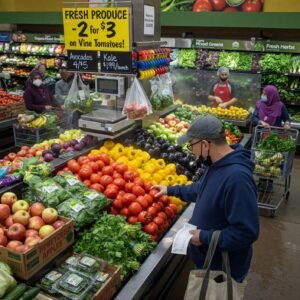
One of the fastest mechanisms to permanently lower your food overhead is the systematic elimination of name-brand loyalty. Private label goods (commonly referred to as store brands or generics) consistently deliver identical utility at a steep structural discount.
Analyzing the Sunk Costs of Food Marketing
The price differential between a national brand and a store brand has nothing to do with food safety, nutritional profiles, or base ingredient quality. Instead, national brands must bake their massive corporate advertising budgets, television commercials, celebrity endorsements, and premium packaging design costs directly into the retail price of the item.
When you purchase a national brand, you are not paying for better wheat, sugar, or dairy; you are paying a premium to subsidize their marketing apparatus. Store brands bypass these advertising expenditures entirely, passing the structural savings directly to the consumer.
| Product Category | Average Brand Name Price | Average Store Brand Price | Potential Structural Savings |
| Canned Vegetables & Beans | $1.89 | $0.99 | 47% |
| Baking Essentials (Flour, Sugar) | $4.49 | $2.79 | 37% |
| Dairy (Block Cheese, Butter) | $5.99 | $3.99 | 33% |
| Over-the-Counter Medicine / Spices | $9.99 | $4.99 | 50% |
| Dried Pasta and Grains | $2.29 | $1.29 | 43% |
The “Co-Packing” Manufacturing Reality
A hidden truth of the food manufacturing supply chain is that national name-brand corporations frequently utilize the exact same production facilities, farming cooperatives, and canning lines to package store-brand items.
This process, known as co-packing, means that the exact same batch of tomatoes or oats may be divided down two assembly lines—one receiving a brightly colored national label and a 40% markup, and the other receiving a minimalist store label. Switching to generics allows you to exploit this manufacturing overlapping without sacrificing the quality of your meals.
Navigating the Center Aisles: How to Analyze Unit Pricing to Avoid Hidden Food Inflation
When inflation forces commodity prices upward, consumer packaged goods companies frequently deploy a deceptive strategy known as shrinkflation. Rather than raising the visible retail price of an item—which triggers immediate consumer resistance—manufacturers quietly reduce the physical volume, net weight, or liquid ounces of the product inside the packaging.
To insulate your household budget from this hidden inflation, you must stop looking at the retail price tag and learn to evaluate the unit price.
The Mathematical Formula for Real Cost Evaluation
The unit price breaks down the total cost of an item into a standardized metric, such as per ounce, per pound, per pint, or per 100 counts. This metric is usually displayed in small font in the corner of the shelf pricing sticker.
       Retail Price of the Package
Unit Price = ─────────────────────────────
               Total Net Weight / Ounces
Consider this real-world operational example when evaluating two packages of long-grain white rice on the shelf:
-
Option A (Branded Package): Retails for $3.49 with a net weight of 14 ounces.
-
Option B (Bulk Store Brand): Retails for $5.29 with a net weight of 32 ounces.
At a glance, Option A appears cheaper because it requires a lower absolute cash outlay at the register ($3.49 vs. $5.29). However, executing the unit calculation reveals the financial truth:
-
Option A Real Cost: $3.49 divided by 14 ounces = $0.249 per ounce.
-
Option B Real Cost: $5.29 divided by 32 ounces = $0.165 per ounce.
Choosing Option B yields an immediate 33.7% savings per unit of food consumed. By training your eyes to focus exclusively on the unit price during your store runs, you invalidate the visual illusions created by shrinkflation and clever packaging geometry.
The Economics of Bulk Buying: When Purchasing in Volume Saves Money (and When It Destroys Your Budget)
Warehouse clubs and bulk-buy grocery store models offer incredible financial upside, but they can also act as a double-edged sword for uncoordinated budgets. Buying in volume is only economically viable if the entirety of the asset is consumed before it experiences depreciation or spoilage.
The True Candidates for Warehouse Bulk Purchasing
Bulk procurement should be strictly limited to shelf-stable commodities, non-perishable household goods, and items with multi-year preservation windows.
-
Optimal Bulk Goods: Dried lentils, white rice, whole-bean coffee, rolled oats, spices, toilet paper, trash bags, and high-quality cooking oils.
-
High-Risk Bulk Goods: Large tubs of fresh hummus, industrial-sized bags of salad greens, fresh berries, condiments with short opened shelf-lives, and massive sacks of whole wheat flour (which can oxidize and spoil faster than refined flour).
The Spoilage Penalty Rule: If you purchase a massive 5-pound tub of spinach at a magnificent 50% discount compared to the standard grocery store size, but you end up throwing away half of the container because it turns to liquid in your crisper drawer, your real unit price instantly doubles. You haven’t saved money; you have simply paid a premium to transport waste to your trash bin.
Before purchasing anything in bulk, ensure your household possesses the storage real estate, climate control, and baseline consumption habits to use the item to completion.
Fresh vs. Frozen Produce: Maximizing Nutrient Density While Slashing Your Grocery Bill
A pervasive cultural myth suggests that fresh produce harvested from the display misting racks is inherently superior to the frozen food section. From both a nutritional and financial standpoint, this belief is frequently incorrect.
The Logistics of Fresh Produce Depletion
Fresh fruits and vegetables are often harvested long before they reach peak physiological ripeness so they can survive global shipping timelines. As they sit in cargo holds, distribution centers, and retail displays, their nutritional profiles naturally degrade through exposure to light and air.
Furthermore, because fresh produce is highly perishable, retailers must factor the cost of predictable inventory spoilage directly into the consumer price tag. You are effectively paying a premium to cover the cost of the produce that rots on the shelves before anyone can buy it.
[Fresh Supply Chain]   Harvested Early ──> Shipped Long Distance ──> Degrades on Shelf ──> Premium Price Cover Spoilage

[Frozen Supply Chain]  Harvested at Peak Ripeness ──> Flash Frozen Instantly ──> Zero Waste ──> Low Structural Price
The Financial and Structural Perks of Flash-Freezing
Frozen produce is typically harvested at peak nutritional maturity and flash-frozen directly on-site within hours of leaving the field. This flash-freezing locks in both the micro-nutrients and the structural integrity of the food item, arresting degradation completely.
-
Zero Waste Yield: When you buy fresh broccoli, a significant percentage of the weight you pay for consists of dense, fibrous stalks that are often cut off and thrown away. With frozen broccoli florets, you pay exclusively for usable, ready-to-consume food mass.
-
Decoupled From Seasonal Spikes: Frozen food pricing remains incredibly stable throughout the calendar year, insulating your budget from the massive price fluctuations that strike out-of-season fresh agricultural goods during winter months.
Eliminating Food Waste: How Advanced Kitchen Preservation Strategies Compound Your Financial Savings

According to data compiled by environmental and economic research agencies, the average American household discards roughly 20% to 30% of the food they procure. Financially, this is the equivalent of walking out of a grocery store with five bags of groceries, immediately throwing one bag directly into the dumpster, and driving home.
Reducing food waste is arguably the highest-ROI optimization move you can make within your personal micro-economy.
Advanced Preservation Implementations
Transforming your kitchen from a site of consumption into a highly organized preservation system requires clear, intentional storage protocols.
Fintech and Grocery Shopping: Leveraging Cash-Back Apps, Rebates, and Credit Card Rewards
In the digital era, paying with traditional cash or a basic debit card represents an opportunity cost loss. By layering modern financial technology tools onto your grocery runs, you can shave an additional 3% to 8% off your total annualized food expenditures.
1. Maximizing Credit Card Reward Multipliers
Certain credit cards offer dedicated merchant category multipliers that yield anywhere from 3% to 6% cash back on purchases made explicitly at traditional supermarkets.
The Structural Optimization Warning: This strategy is exclusively viable if you treat your credit card like a debit card, paying the balance down to zero dollars every single week. If you carry a balance and accrue interest charges at a 20%+ APR, you completely destroy any marginal cash-back points you earned, transforming a budget asset into a major financial liability.
2. Strategic Grocery Store Gift Card Cascading
If your credit card does not offer high-tier grocery store rewards but offers a 5% multiplier on office supply stores, gas stations, or home improvement centers, check their retail gift card displays.
You can frequently buy gift cards for your preferred local grocery store at these secondary locations using your high-yield multiplier card, effectively securing a permanent 5% discount on all future grocery runs through a simple, legal optimization loop.
3. Digital Rebate App Integration
Before recycling your paper or digital receipt, upload the metadata to prominent consumer rebate platforms and store loyalty apps. These digital platforms track consumer trends and reward users with direct cash payouts or gift cards for buying specific everyday essentials.
Digital Grocery Pickup and Delivery: The Modern Strategy to Eradicate In-Store Temptation
While grocery delivery services used to be viewed as an expensive luxury for high-net-worth individuals, modern curbside pickup programs have evolved into an incredible tool for budget discipline.
The Financial Benefits of Digital Cart Optimization
The greatest threat to a grocery budget is the impulse purchase—that unplanned box of cookies, premium cheese wedge, or limited-edition beverage that finds its way into your cart simply because you walked past it while hungry. Digital grocery shopping completely removes this environmental risk.
In-Store Shopping ──> Sensory Triggers ──> Decision Fatigue ──> High Impulse Spending

Digital Curbside ──> Strict Search Mode ──> Live Cost Tracking ──> Zero Impulse Spending
-
Real-Time Running Total Visibility: When shopping inside a physical retail store, keeping track of the exact dollar value of your cart requires continuous mental calculation. Online, your running balance is calculated down to the penny in real time on the right side of your browser or app interface. If you see your total creeping past your weekly budget cap, you can easily remove items from your digital cart with a single click before checking out.
-
The Eradication of Decision Fatigue: Physical shopping environments wear down your willpower through a process called cognitive load. The longer you wander the aisles making micro-decisions between brands, the more tired your brain becomes, making you highly susceptible to impulse buying at the checkout lane. Digital shopping operates via direct keyword search, keeping you targeted, fast, and entirely immune to sensory marketing.
Most major supermarkets now offer curbside pickup entirely for free if you cross a modest minimum spend threshold. The time you save by not walking the aisles, combined with the absolute elimination of impulse spending, easily outweighs any minor price variations or convenience fees.
Turning Everyday Savings Into Long-Term Wealth Assets

Slashing your grocery budget by $50 to $100 every single week may not feel like a life-altering financial milestone on a random Tuesday afternoon. However, when viewed through the lens of compounding interest and long-term asset building, these micro-savings transform into serious wealth generators.
If you systematically optimize your food procurement through reverse meal planning, unit price evaluation, generic brand adoption, and waste elimination, you can easily reclaim hundreds of dollars in lost cash flow every single month.
Do not allow this newly recovered capital to sit idle in a standard checking account where it will inevitably be absorbed by other lifestyle creep categories. Instead, route these monthly grocery savings automatically into a high-yield savings account or a low-cost index fund. By shifting your capital from depreciating consumer food assets into appreciating wealth-building vehicles, you transform a basic housekeeping chore into a powerful pillar of your long-term financial independence.