How to Eat Healthy on a Grocery Budget
There is a pervasive narrative in modern consumer culture that eating a clean, nutrient-dense diet is a luxury reserved exclusively for the wealthy. We are bombarded with images of high-end wellness influencers promoting exotic superfoods, expensive organic boutiques, and cold-pressed juices that cost more than a standard hourly wage. This has led millions of budget-conscious consumers to a false, discouraging conclusion: unhealthy food is cheap, and healthy food is unaffordable.
From both a nutritional science and a personal finance perspective, this dichotomy is entirely inaccurate. The belief that clean eating requires a massive financial outlay stems from a confusion between nutrition and marketing. While luxury health food brands charge a premium for aesthetics, convenience, and trendiness, the foundational building blocks of human health—macronutrients, micronutrients, vitamins, and minerals—are remarkably affordable when procured strategically.
Optimizing your diet on a budget requires shifting your approach from passive consumerism to rigorous microeconomic optimization. By treating your kitchen as a high-efficiency production system and your food acquisitions as capital allocations, you can maximize your nutritional intake while driving your grocery expenses to historic lows. Here is the advanced, data-driven framework to achieve peak physical health without compromising your financial independence.
The Micronutrient-per-Dollar Equation: Identifying High-Yield Whole Foods

To build a high-efficiency grocery budget, you must stop looking at food through the lens of pure caloric volume or superficial branding. Instead, evaluate your purchases using the Nutrient-per-Dollar metric.
Many processed, low-cost foods provide high caloric density (masses of cheap sugar and hydrogenated oils) but completely lack micronutrient density (essential vitamins, minerals, antioxidants, and fiber). This creates a hidden financial trap: processed foods digest rapidly, spike blood glucose, and fail to trigger long-term satiety hormones like leptin and peptide YY. As a result, you feel hungry again within hours, driving higher consumption volume and increasing your overall food expenditures over time.
In contrast, unrefined whole foods provide a massive volume of fiber, complex carbohydrates, and high-quality proteins. These components stabilize blood sugar, prolong satiety, and naturally lower the total volume of food you need to purchase each week.
Evaluating Key Budget Staples Across Asset Classes
When we break down the financial and biological yield of whole foods, several unsung heroes emerge as champion capital allocators for your body.
| Food Asset | Primary Nutritional Value | Cost Profile | Long-Term Budgetary Benefit |
| Dried Brown Lentils | High iron, folate, complex fiber, and plant-based protein. | Extremely Low (Bulk) | Massive satiety index; stabilizes gut microbiome to prevent sugar cravings. |
| Whole Eggs | Complete amino acid profile, choline, lutein, healthy fats. | Low to Moderate | Highly bioavailable protein that suppresses ghrelin (the hunger hormone). |
| Oatmeal (Rolled/Steel-Cut) | Beta-glucans (soluble fiber), magnesium, slow-release carbs. | Minimal | Lowers LDL cholesterol; eliminates the need for expensive boxed cereals. |
| Canned Sardines / Tuna | Omega-3 fatty acids, high-density clean protein, selenium. | Low | Provides critical brain and heart health assets without fresh seafood premiums. |
| Sweet Potatoes | Vitamin A (beta-carotene), potassium, low-glycemic index carbs. | Low | High shelf-life stability; replaces expensive processed side dishes. |
By anchoring your weekly shopping cart around these high-yield whole foods, you set a structural foundation where your body receives optimal cellular fuel for pennies on the dollar.
The Frozen and Canned Produce Blueprint: Maximizing Micro-Nutrients While Beating Retail Spoilage
One of the largest financial leaks in a household budget is food waste, particularly the premature spoilage of fresh fruits and vegetables. Millions of well-intentioned shoppers fill their carts with fresh spinach, berries, and avocados on Sunday, only to toss them into the trash on Friday because they softened before consumption. This represents a literal destruction of capital.
To secure your micronutrients without paying the hidden “spoilage tax” factored into fresh retail pricing, you must master the mechanics of the frozen and canned food sections.
The Nutritional Superiority of the Flash-Freezing System
A common cognitive bias leads consumers to believe that fresh produce on a supermarket display is always healthier than frozen alternatives. However, agricultural logistics reveal a different reality.
Fresh produce is often harvested before reaching peak nutritional maturity so it can survive days or weeks of cross-country shipping, warehouse storage, and display handling. During this transit timeline, light and air exposure continuously degrade volatile nutrients like Vitamin C and various B vitamins.
Conversely, frozen produce is harvested at absolute peak biological ripeness and immediately routed to a processing facility where it is flash-frozen within hours. This process locks the nutritional profile in place, halting degradation entirely.
-
Financial Efficiency: Frozen fruits and vegetables suffer zero household spoilage. You use exactly the ounces you need for a meal and return the remainder to the freezer, ensuring a 100% consumption yield.
-
Decoupled Pricing: Frozen assets are immune to seasonal price spikes caused by shifting weather patterns or off-season transport costs, providing a predictable baseline for your monthly cash flow.
Navigating Canned Goods Safely and Economically
Canned beans, chickpeas, and diced tomatoes are incredible budget assets, but they require basic structural adjustments to maintain optimal health profiles:
-
The Sodium Rinsing Protocol: Canned vegetables and legumes are often preserved in a high-sodium brine. By dumping canned beans into a colander and rinsing them thoroughly under cold water for 60 seconds, you can reduce the residual sodium content by up to 40%, protecting your cardiovascular health without increasing your financial costs.
-
Look for Clean Packaging: Ensure you select cans explicitly labeled as BPA-free to eliminate exposure to endocrine-disrupting chemicals often found in older industrial can linings.
High-Density Plant Proteins: Securing Macro Targets Without Premium Meat Margins

Protein is historically the most expensive macronutrient component of any human diet. If you rely exclusively on fresh, pre-cut animal proteins—such as boneless skinless chicken breasts, grass-fed beef, or fresh salmon—your grocery budget will naturally balloon.
To optimize your protein budget, you do not need to adopt a dogmatic lifestyle change. Instead, apply basic diversification principles: implement a hybrid approach that integrates high-density, low-cost plant proteins alongside your preferred animal inputs.
[Traditional High-Cost Diet]  ──> 100% Animal Protein (Steaks, Fresh Chicken, Salmon) ──> Premium Capital Outlay
                                               │
                                               ▼
[Optimized Capital Diet]       ──> 50% High-Density Plant Protein + 50% Strategic Animal Inputs ──> 60% Budget Reduction
The Financial Power of Legumes and Pulse Amalgamation
Legumes (beans, lentils, chickpeas, and split peas) represent the most cost-effective protein delivery mechanism on the planet. For instance, a single pound of dried lentils costs a fraction of the price of a pound of beef, yet it delivers a massive payload of protein alongside complex fiber.
To match the complete amino acid profile found in meat, plant proteins simply need to be combined across your day’s meals. Amalgamating legumes with whole grains (such as brown rice, oats, or whole wheat) creates a complete protein containing all nine essential amino acids required for muscle synthesis and cellular repair.
Smart Animal Protein Sourcing: Lowering the Processing Tax
When you do purchase animal protein, stop paying the supermarket a premium to process the meat for you. Every step of retail preparation—deboning, skinning, pre-marinating, or slicing—adds a massive markup to the per-pound cost of the food item.
-
Buy the Whole Asset: Purchase whole chickens rather than isolated breasts. A whole chicken typically costs significantly less per pound. You can roast the entire bird for multiple meals, utilize the dark meat for rich nutrient density, and boil the remaining carcass to create homemade, mineral-rich bone broth.
-
Leverage Canned Marine Seafood: Canned wild-caught pink salmon, sardines, and mackerel are often priced well below fresh fish counters. Because these small marine fish reside low on the oceanic food chain, they also accumulate significantly fewer heavy metals and microplastics than large predator fish like swordfish or premium tuna, offering a cleaner biological profile for less capital.
Advanced Meal Prep Architecture: How to Scale Clean Eating and Eliminate Financial Leaks
Relying on daily willpower to maintain a healthy diet while protecting your wallet is an unreliable long-term strategy. When you return home from a grueling workday exhausted and mentally drained, your brain suffers from decision fatigue. In this vulnerable state, the high transactional friction of cooking from scratch clashes with the low friction of food delivery apps, resulting in expensive, high-sodium choices.
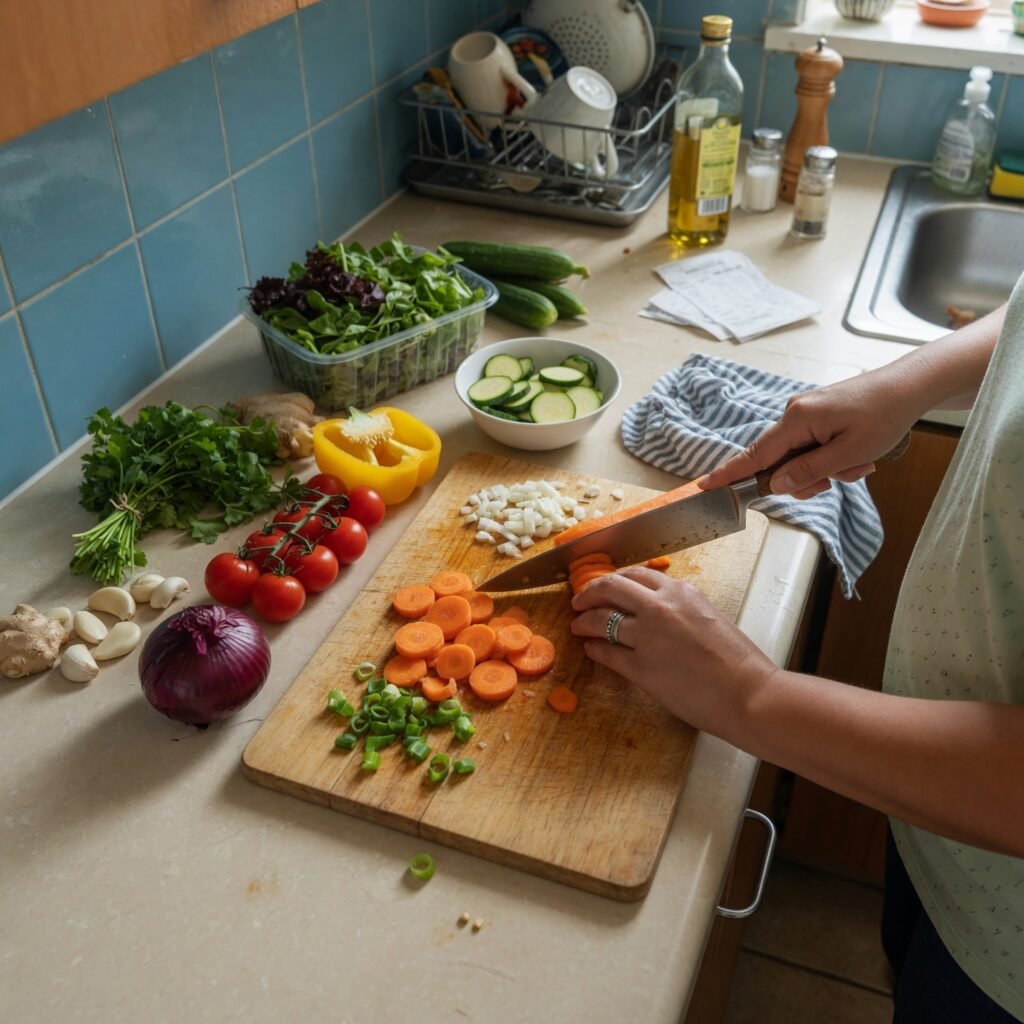
The solution is to treat meal preparation as a centralized, systematic production run. By dedicating a single block of time each week to bulk cooking, you lower your average unit cost of labor and ensure that healthy choices become the path of least resistance.
Dismantling the Organic Myth: Making Scientific Food Choices Free From Marketing Fear
One of the most effective ways supermarkets and luxury health brands convince consumers to overspend is by leveraging marketing labels that induce psychological guilt. The most prevalent example of this is the aggressive promotion of the “Organic” certification.
Many shoppers believe that if they cannot afford a cart filled entirely with certified organic produce, they are poisoning their families with toxic chemicals, so they choose to skip buying vegetables altogether. This is a profound logical error that harms both personal health and financial growth.
The Scientific Reality of Pesticide Residue
Comprehensive peer-reviewed studies in toxicology and agricultural science consistently demonstrate that the trace pesticide residues found on conventionally grown fruits and vegetables are microscopic—falling hundreds of times below the strict safety thresholds established by global regulatory agencies.
Furthermore, extensive epidemiological research tracking thousands of human subjects over decades shows that individuals who consume high amounts of conventional produce experience identical reductions in chronic disease, cancer, and cardiovascular risk as those who consume organic options. The physiological benefit of the fiber, vitamins, and antioxidants in a vegetable completely overrides any hypothetical risk from trace agricultural residues.
The Budgetary Strategy: If you want to optimize your peace of mind without destroying your budget, consult the Clean Fifteen and Dirty Dozen guidelines published by independent research groups annually.
-
The Clean Fifteen: Items with thick protective skins (such as avocados, sweet corn, pineapples, onions, and cabbage) show virtually zero pesticide residue when grown conventionally. Buying these organic is a complete waste of capital.
-
The Smart Allocation: Save your organic budget exclusively for items with ultra-thin membranes (like strawberries or spinach) if you are highly risk-averse—otherwise, buy conventional with absolute confidence and rinse them thoroughly under running water for 30 seconds.
Deconstructing the “Superfood” Hoax: Replacing Luxury Labels with Affordable Everyday Equivalents

The wellness market frequently invents premium packaging and historical narratives around specific foreign crops to label them as exotic “superfoods.” This branding allows companies to apply massive retail markups to basic nutrients.
By deconstructing these foods down to their core chemical profiles, you can swap them for everyday, low-cost alternatives available at any local discount grocery store.
[Exotic Luxury Input]  Açaí Bowls / Goji Berries ──> $12.00 per serving (High Marketing Premium)
                                          │
                                          ▼ (Nutritional Equivalence Swap)
[Budget Whole Asset]   Frozen Wild Blueberries   ──> $0.85 per serving (Identical Antioxidant Payload)
1. Quinoa vs. Brown Rice and Lentils
Quinoa is celebrated because it is a plant-based food that contains all essential amino acids. However, it often retails at a premium price per pound. You can achieve an identical amino acid delivery and similar fiber metrics by mixing standard brown rice with green lentils—a combination that costs a fraction of the price of premium imported quinoa.
2. Chia Seeds and Hemp Hearts vs. Whole Flaxseeds
Chia seeds are heavily promoted for their high concentration of alpha-linolenic acid (plant-based Omega-3). You can secure an identical nutritional payload by purchasing whole brown flaxseeds in bulk. Simply grind them in a cheap coffee grinder or blender before consumption to unlock their bioavailability.
3. Kale and Exotic Greens vs. Standard Green Cabbage
While kale and organic microgreens command premium prices in the produce aisle, the humble green cabbage is actually one of the most chemically powerful cruciferous vegetables in existence. Cabbage is packed with glucosinolates (compounds linked to cellular detoxification and cancer prevention), possesses a massive shelf-life, and remains incredibly inexpensive year-round.
The Danger of Health Food Aisles: Avoiding the Processed “Fit-Wash” Financial Trap
When entering a grocery store, be highly alert to the dedicated “Health and Wellness” aisle. This section is often filled with items that have undergone a marketing process known as fit-washing.
Manufacturers take highly processed, low-nutrient convenience foods, package them in minimalist earth-toned cardboard, and slap on buzzwords like Gluten-Free, Keto-Friendly, Non-GMO, Vegan, or All-Natural.
The Financial and Biological Cost of Health Snacks
Consider the ubiquitous protein bar or keto cookie. These items routinely retail for $3.00 to $5.00 per individual serving. When you read the ingredient matrix, you frequently discover that they are composed of isolated whey protein, artificial sweeteners, seed oils, and chemical stabilizers.
Processed Protein Bar ($4.50) ──> Synthetic Isolates + Artificial Fillers + High Margin Markup
                                               vs.
Three Hard-Boiled Eggs ($0.60) ──> Whole Bioavailable Protein + Choline + Zero Processing Tax
For the price of a single processed protein bar, you could buy an entire dozen whole eggs or a massive bag of dried black beans. The eggs will provide a superior, cleaner biological response with zero synthetic additives, while keeping your capital safely inside your bank account. Avoid the center wellness aisles entirely; true health is found in the basic, single-ingredient whole foods that line the exterior perimeters of the store.
Reframing Nutritional Budgeting as High-Yield Personal Finance
Achieving peak physical vitality and building long-term financial wealth are not conflicting goals; they are deeply connected disciplines. When you systemize your grocery shopping through unit-price analysis, generic brand adoption, frozen asset leveraging, and component meal preparation, you strip emotion out of food procurement.
Stop viewing your grocery budget as an arena of painful deprivation. Instead, reframe it as a high-yield investment strategy. Every dollar you recover from the deceptive marketing traps of the modern supermarket industry is capital that can be automatically redirected into your retirement accounts or low-cost index funds. By shifting your financial resources from overpriced consumer food packaging into appreciating investment vehicles, you secure a double victory: fueling your body with clean, unadulterated whole foods today while compounding the financial independence of your future self.