Discover 5 strategies for entering the stock market

Entering the stock market for the first time is often described as a mix of excitement and sheer terror. We live in a world where financial information is blasted at us 24/7 through social media, news apps, and AI-driven alerts. For a layperson, it feels like everyone else has a secret manual that you missed out on.
However, the “secret” isn’t a complex algorithm or insider information. Success in the stock market is built on strategy. Without a plan, you aren’t investing; you are gambling. In 2026, the barriers to entry have never been lower, but the noise has never been louder.
This guide will break down five of the most effective, time-tested strategies for entering the stock market. Whether you want to be a passive observer or an active hunter of undervalued companies, one of these paths is right for you.
Why You Need a Defined Strategy Before Making Your First Trade

Most beginners fail because they buy a stock based on a “gut feeling” or a recommendation from a friend. When the stock price drops, they panic and sell at a loss. A strategy acts as your emotional anchor. It tells you when to buy, why to hold, and—most importantly—when to ignore the headlines.
Before we dive into the strategies, ensure your foundation is solid. You should never invest money that you need for rent, bills, or an emergency. The stock market is a vehicle for wealth creation, not a replacement for a savings account.
1. The “Buy and Hold” Strategy: The Power of Long-Term Ownership
The Buy and Hold strategy is the cornerstone of many of the world’s greatest fortunes, including that of Warren Buffett. The philosophy is simple: you buy high-quality companies and you keep them for years, or even decades, regardless of how the market fluctuates.
Why Buy and Hold Works in 2026
In an era of high-frequency trading and AI bots that trade in microseconds, the human advantage is patience. The stock market is designed to reward those who stay the course. Historically, the S&P 500 (an index of the 500 largest US companies) has recovered from 100% of its crashes and gone on to reach new all-time highs.
The Mathematics of Time
The engine behind this strategy is compound interest. When you hold a stock for a long time, you aren’t just gaining from the price going up; you are gaining from the returns on your returns.
The formula for compound interest is:
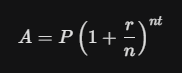
By leaving your money alone, you allow this exponential curve to do the heavy lifting. A person who starts with $10,000 and adds nothing else could see that amount grow significantly over 30 years at an 8% average return, simply by doing nothing.
2. Dollar-Cost Averaging (DCA): The Mathematical Solution to Market Timing
One of the biggest fears beginners have is: “What if I buy today and the market crashes tomorrow?” Dollar-Cost Averaging (DCA) is the perfect antidote to this fear.
How DCA Functions
Instead of investing $10,000 all at once (a “Lump Sum”), you break it into smaller amounts. For example, you invest $500 every month for 20 months.
-
When the market is high, your $500 buys fewer shares.
-
When the market is low (on “sale”), your $500 buys more shares.
Psychological Benefits for Laypeople
DCA removes the stress of “timing the market.” You no longer care if the market is red or green today. In fact, for a long-term investor using DCA, a market crash is a good thing—it means your monthly contribution is buying more of your favorite companies at a discount. In 2026, most brokerage apps allow you to automate this process, making it a “set it and forget it” wealth-building machine.
3. Index Fund and ETF Investing: The “Lazy” Path to Outperforming the Pros
If researching individual companies like Apple or Tesla sounds like a chore, this strategy is for you. Exchange-Traded Funds (ETFs) and Index Funds allow you to buy the “whole market” in a single transaction.
Diversification: Your Safety Net
Diversification is the only “free lunch” in finance. If you put all your money into one tech company and that company has a scandal, you lose everything. But if you buy an S&P 500 Index Fund (like VOO or IVV), you own a tiny piece of 500 different companies across every sector—healthcare, energy, retail, and tech.
Why Most Investors Can’t Beat the Index
Studies consistently show that over a 15-year period, more than 90% of professional fund managers fail to beat the S&P 500. By simply buying the index and holding it, you are likely to perform better than the “experts” who spend all day analyzing charts. This strategy is highly recommended for beginners because it requires zero specialized knowledge.
4. Dividend Growth Investing: Building a Passive Income Stream

Many people want the stock market to pay their monthly bills. This is where Dividend Investing shines. Dividends are essentially a “thank you” check that profitable companies send to their shareholders.
Creating a “Snowball” of Cash
When you own shares of “Dividend Aristocrats”—companies that have increased their dividends for at least 25 consecutive years—you receive regular cash payments.
-
You receive a dividend.
-
You use that cash to buy more shares (this is called a DRIP: Dividend Reinvestment Plan).
-
Now you own more shares, which pay even more dividends.
-
The cycle repeats until the income alone is enough to cover your lifestyle.
Stability in Volatile Times
Dividend-paying companies are usually well-established, “boring” businesses like Johnson & Johnson or Procter & Gamble. Because they have consistent cash flow, their stock prices tend to be less volatile during market crashes than high-growth tech stocks.
5. Value Investing: Finding Bargains in a Crowded Market
This is the strategy for those who enjoy a bit of research. Value Investing is the art of buying stocks for less than they are actually worth. Think of it as “grocery shopping when there’s a massive sale.”
The Concept of Intrinsic Value
Value investors look for the “Intrinsic Value” of a company—what it’s worth based on its assets, earnings, and future potential. If a company is worth $100 per share, but the market is panicking and the price drops to $70, the value investor buys as much as they can.
The Margin of Safety
The key to this strategy is the “Margin of Safety.” By buying a stock at a significant discount to its true value, you protect yourself against the risk of being wrong. If the company struggles, you already bought it at such a low price that your downside is limited.
Common Mistakes to Avoid When Entering the Stock Market
Even with a perfect strategy, beginners often fall into “traps” that can wipe out their progress. In 2026, the most common mistakes are:
-
Chasing Hype: Buying a stock because it’s trending on social media or an AI chatbot mentioned it. By the time it’s “news,” the big move has already happened.
-
Over-Trading: If you buy and sell every day, you will lose a huge portion of your gains to taxes and fees.
-
Emotional Selling: The market will crash at some point. It is a natural part of the cycle. Selling when you are scared is the only way to turn a “paper loss” into a real loss.
-
Ignoring Fees: A 1% management fee might sound small, but over 30 years, it can eat up to one-third of your total wealth. Always look for low-cost ETFs.
Choosing the Right Brokerage Account for 2026

To implement these strategies, you need a brokerage account. For an international or US-based audience, look for these features:
-
$0 Commission Trades: You should never pay a fee to buy or sell a stock.
-
Fractional Shares: This allows you to buy $10 worth of a stock even if the share price is $3,000.
-
Robust Security: Ensure they use Two-Factor Authentication (2FA) and have insurance (like SIPC in the US).
Which Strategy is Right for You?
The “best” strategy is the one you can stick to during a crisis.
-
If you want to be completely hands-off, choose Strategy 3 (Indexing).
-
If you have a small amount of money but want to be consistent, choose Strategy 2 (DCA).
-
If you want a monthly paycheck in retirement, focus on Strategy 4 (Dividends).
The stock market is the greatest engine of wealth in human history. It doesn’t care about your background, your IQ, or your job title—it only rewards discipline. Choose your strategy, start small, and let time work its magic.