How to Start Investing in Cryptocurrency as a Beginner
The world of digital assets can feel like a “Wild West” of finance. One day, you hear about a teenager making millions off a digital cat, and the next, you see headlines about market crashes and “rug pulls.” It’s enough to give any rational person pause. However, beneath the noise of the hype cycles lies a revolutionary technology that is fundamentally changing how the world thinks about money, ownership, and trust.
If you’ve decided to move from the sidelines into the game, you’re in the right place. Investing in cryptocurrency isn’t just about “getting rich quick”—it’s about understanding a new asset class. This guide will walk you through the essential steps, from understanding the “why” to securing your very first Satoshi.
Understanding the Foundation: What is Cryptocurrency and Blockchain?
Before you put a single dollar into the market, you need to understand what you are actually buying. At its simplest, cryptocurrency is digital money that doesn’t require a bank or government to manage it. It’s decentralized.
The Magic of Blockchain Technology
Think of a Blockchain as a digital ledger that is shared across thousands of computers globally. When a transaction happens, it’s recorded on this ledger. Once it’s there, it cannot be erased or changed. This creates a “trustless” system where you don’t need to trust a middleman (like Chase or Wells Fargo) because you can trust the math and the network.
Why Does It Have Value?
Cryptocurrencies like Bitcoin are often called “Digital Gold” because they have a finite supply. There will only ever be 21 million Bitcoins. Unlike the US Dollar, which can be printed by the trillions, Bitcoin is mathematically scarce. This scarcity, combined with its utility as a global, censorship-resistant payment system, is what drives its value.
How to Choose the Best Cryptocurrency Exchange for Beginners in 2026
To buy crypto, you need a bridge between your traditional bank account and the digital world. This bridge is called an Exchange. For a beginner, the user experience and security of the exchange are more important than having 5,000 different coins to choose from.
What to Look for in a Platform:
-
Regulatory Compliance: Ensure the exchange is licensed to operate in your jurisdiction.
-
Security Features: Look for platforms that offer “Cold Storage” for user funds and mandatory Two-Factor Authentication (2FA).
-
Fee Structure: Some exchanges charge a flat fee, while others charge a percentage. Be wary of “hidden fees” in the spread (the difference between the buy and sell price).
-
Liquidity: You want an exchange where there are plenty of buyers and sellers so you can move in and out of positions quickly.
Popular Entry-Level Exchanges
Platforms like Coinbase, Kraken, and Gemini are often recommended for North American users because of their focus on security and regulatory transparency. They offer “Simple Buy” interfaces that feel no different from using a banking app.
Step-by-Step: Setting Up and Securing Your First Crypto Account
Once you’ve chosen an exchange, the onboarding process is your first “security hurdle.” Treat your crypto account with more gravity than your social media profiles—this is your bank.
The KYC Process (Know Your Customer)
Because of anti-money laundering laws, any legitimate exchange will require you to verify your identity. You will likely need:
-
A government-issued ID (Driver’s License or Passport).
-
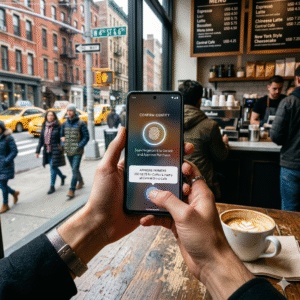
A smartphone for facial recognition (a “selfie” check).
-
A proof of residence (utility bill or bank statement).
Implementing “Ironclad” Security
Do not skip these steps. If a hacker gets into your exchange account, the transactions are irreversible.
-
Avoid SMS 2FA: Hackers can “SIM swap” your phone number. Instead, use an app like Google Authenticator or a physical hardware key like a Yubikey.
-
Unique Passwords: Use a password manager to create a complex, unique password that you don’t use anywhere else.
-
Whitelisting: Many exchanges allow you to “whitelist” withdrawal addresses, meaning funds can only be sent to pre-approved wallets.
Decoding the Market: Bitcoin, Ethereum, and the World of Altcoins
Walking into a crypto exchange for the first time is like walking into a grocery store with 10,000 brands. To keep it simple, we categorize them into three main groups:
1. Bitcoin (The King)
Bitcoin is the original. It is the most secure and most widely adopted. For most beginners, Bitcoin should be the “anchor” of their portfolio. Its primary use case is a Store of Value.
2. Ethereum (The World Computer)
If Bitcoin is digital gold, Ethereum is digital oil. It’s a platform that allows developers to build “Smart Contracts” and decentralized apps (dApps). Most of the innovation in the space, like NFTs and Decentralized Finance (DeFi), happens on the Ethereum network.
3. Altcoins and Stablecoins
-
Altcoins: This refers to “Alternative Coins” (everything that isn’t Bitcoin). Some are highly innovative (like Solana or Cardano), while others are “Memecoins” (like Dogecoin) that trade mostly on social media hype.
-
Stablecoins: These are digital tokens pegged 1:1 to a stable asset like the US Dollar (e.g., USDC or USDT). They allow you to stay in the crypto ecosystem without being exposed to the wild price swings.
The Golden Rule of Crypto: Not Your Keys, Not Your Coins
When you buy crypto on an exchange, they are technically holding it for you. If the exchange goes bankrupt or gets hacked, your assets could disappear. This is why experienced investors use Wallets.
Hot Wallets vs. Cold Wallets
-
Hot Wallets (Software): These are apps on your phone or computer (like MetaMask or Exodus). They are convenient for frequent trading but are still connected to the internet, making them slightly vulnerable to malware.
-
Cold Wallets (Hardware): These are physical devices (like a Ledger or Trezor) that store your “Private Keys” offline. This is the gold standard for security. Unless someone physically steals the device and your PIN, your funds are virtually unhackable.
Important Note: When you set up a wallet, you will be given a “Seed Phrase” (usually 12–24 words). This is the master key to your money. Never type this into a computer, never take a photo of it, and never share it with anyone. Write it on paper and hide it in a safe.
Advanced Investment Strategies for the Cautious Beginner
Most beginners lose money because they try to “time the market.” They buy when the price is at an all-time high (FOMO) and sell when it crashes (Panic). To avoid this, use professional strategies.
Dollar-Cost Averaging (DCA)
DCA is the practice of investing a fixed amount of money at regular intervals (e.g., $50 every Friday), regardless of the price.
-
When the price is high, your $50 buys less.
-
When the price is low, your $50 buys more.
Over time, this lowers your average entry price and removes the emotional stress of watching daily charts.
The “Core and Satellite” Portfolio
A balanced crypto portfolio for a beginner might look like this:
-
70% Core: Bitcoin and Ethereum (Lower risk, proven track record).
-
20% Satellite: Established Altcoins (Higher growth potential).
-
10% Speculative: New projects or “Moonshots” (High risk, high reward).
Navigating the Emotional Rollercoaster: Psychology and Volatility
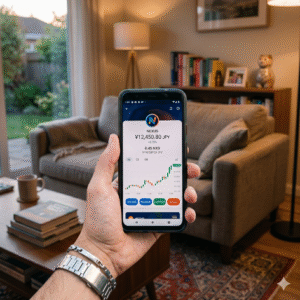
Cryptocurrency is famous for 10% or 20% price swings in a single day. To survive this, you need a “HODL” mentality (a typo for “Hold” that became a crypto mantra: Hold On for Dear Life).
Understanding Market Cycles
Crypto markets generally move in 4-year cycles, largely influenced by the Bitcoin Halving—an event where the reward for mining new Bitcoins is cut in half, reducing the new supply.
-
Accumulation Phase: Prices are flat, and everyone is bored. (Best time to buy).
-
Bull Market: Prices skyrocket, and your “uncle at Thanksgiving” starts asking how to buy Bitcoin. (Time to be cautious).
-
Distribution: The peak where big players sell to latecomers.
-
Bear Market: Prices crash 70–90%, and the media declares “Crypto is dead.” (Time to stay disciplined).
Avoiding Common Crypto Scams and “Rug Pulls”
Because crypto is unregulated and transactions cannot be reversed, it is a playground for scammers. Protect yourself by following these rules:
-
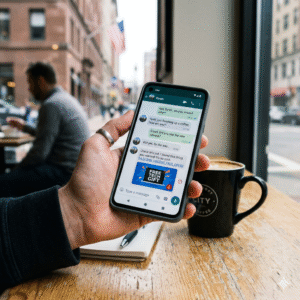
No “Giveaways”: If someone on Twitter or YouTube says they will “double your Bitcoin” if you send it to them, it is a 100% scam.
-
Beware of DMs: No legitimate exchange support person will ever DM you on Telegram or Discord.
-
Check the URL: Scammers create “phishing” sites that look exactly like Coinbase or Binance to steal your login. Always bookmark the official site.
-
The “Too Good to Be True” Rule: If a project promises 1% guaranteed daily returns, it’s likely a Ponzi scheme.
The Tax Man Cometh: Understanding Crypto Regulations
In many countries, including the United States, cryptocurrency is treated as Property, not currency. This means every time you sell crypto for a profit—or even trade one coin for another—it is a “Taxable Event.”
Capital Gains Tax
You are required to report your gains and losses to the IRS (or your local tax authority).
-
Short-term Capital Gains: If you held the crypto for less than a year, it’s taxed at your normal income rate.
-
Long-term Capital Gains: If you held for more than a year, you usually get a lower tax rate.
Keep meticulous records or use a software tool like CoinTracker or Koinly that syncs with your exchange to generate tax reports automatically.
Your Journey to Financial Sovereignty

Investing in cryptocurrency is a marathon, not a sprint. The technology is still in its infancy, and we are essentially in the “1995 dial-up internet” phase of digital finance. By starting small, prioritizing security, and focusing on education rather than hype, you are positioning yourself at the forefront of a global shift.
The most important step you can take today isn’t buying a whole Bitcoin—it’s simply buying $10 worth to see how the process works. Experience is the best teacher in the crypto space. Stay curious, stay skeptical, and most importantly, stay “HODLing.”
Beginner’s Checklist:
-
Educate: Read the Bitcoin Whitepaper (it’s shorter than you think!).
-
Choose: Sign up for a reputable, regulated exchange.
-
Secure: Set up 2FA (non-SMS) immediately.
-
Buy: Start with a small amount of BTC or ETH using DCA.
-
Self-Custody: Buy a hardware wallet once your portfolio exceeds $1,000.
-
Track: Record your transactions for tax season.
Welcome to the future of money. How will you build your digital wealth?