Why foreign investors move the market
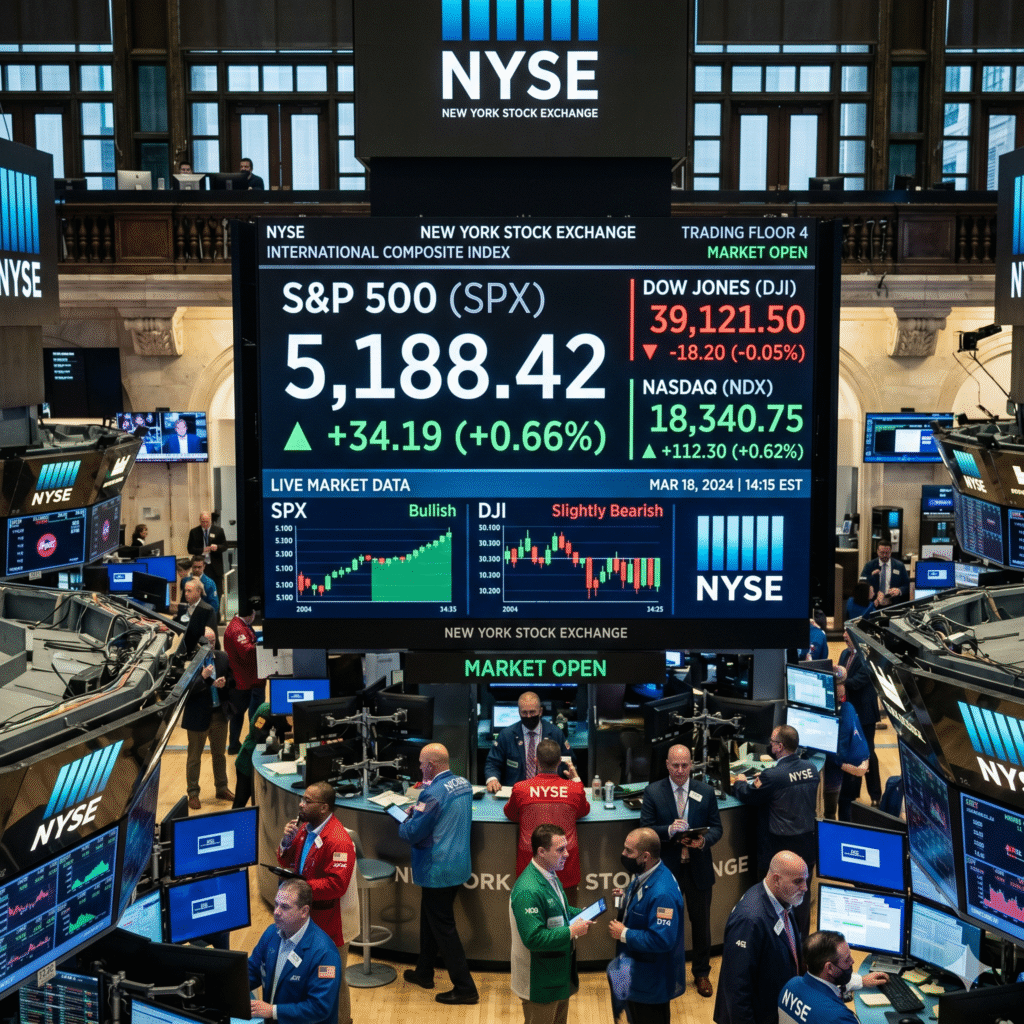
Have you ever watched a stock chart suddenly violently spike or plummet without any major corporate news dropping? You check the earnings reports, search for executive scandals, and scan for product launches, yet find absolutely nothing.
What you are likely witnessing is the invisible hand of international finance. Behind the daily fluctuations of stock prices lies a complex network of cross-border capital managed by sovereign wealth funds, multinational asset managers, and global hedge funds.
For many everyday retail investors, the stock market feels like a localized event. It is easy to think that a country’s stock market is driven entirely by its own citizens buying and selling shares of familiar domestic brands.
The reality is vastly different. In our hyper-connected digital age, capital knows no borders. Money moves across continents at the speed of a fiber-optic pulse, chasing the highest risk-adjusted returns available on the planet.
When massive waves of foreign capital flood into a stock exchange, asset prices soar, corporate valuations inflate, and currency values shift. Conversely, when those same international giants decide to pack up and pull their money out, they leave behind financial droughts characterized by falling prices and dry liquidity.
Understanding why foreign investors possess the immense power to shift markets is a critical milestone for any investor who wants to transition from guessing market directions to truly understanding global financial mechanics.
Defining the Giants: What Are Foreign Investors in the Global Economy?

To understand how global money moves markets, we must first identify who these international players actually are. In financial media, you will frequently see them referred to as Foreign Institutional Investors (FIIs) or Foreign Portfolio Investors (FPIs).
These are not wealthy individuals buying a few hundred shares on a smartphone app. These are mega-scale institutions that manage pools of capital so large they dwarf the entire gross domestic product (GDP) of many mid-sized nations.
The Categories of Cross-Border Capital
When international capital crosses a border, it generally falls into one of two major categories. For stock market investors, understanding the operational differences between these two flows is essential.
| Capital Type | Definition | Investment Horizon | Market Impact |
| Foreign Direct Investment (FDI) | Purchasing physical assets, setting up factories, or acquiring controlling stakes in corporate operations. | Multi-year or multi-decade commitments. | Low short-term price volatility; builds long-term economic foundations. |
| Foreign Portfolio Investment (FPI) | Buying liquid financial assets like individual stocks, corporate bonds, and mutual funds on public exchanges. | Highly liquid; can shift in minutes or days based on market sentiment. | High short-term price volatility; acts as a primary driver of daily price trends. |
The Core Players Moving the Market
Within the realm of Foreign Portfolio Investment, a small handful of institutional archetypes control the vast majority of global wealth:
-
Global Asset Managers: Entities like BlackRock, Vanguard, and Fidelity manage trillions of dollars in mutual funds and exchange-traded funds (ETFs). A simple portfolio rebalancing by one of these firms can trigger billions of dollars entering or exiting a market overnight.
-
Sovereign Wealth Funds (SWFs): State-owned investment funds funded by national surpluses or resource revenues (such as Norway’s Government Pension Fund Global or Saudi Arabia’s Public Investment Fund). These entities seek long-term stability and yield across global markets.
-
Global Hedge Funds: High-velocity investment vehicles that utilize complex strategies, leverage, and algorithmic trading to profit from short-term market inefficiencies worldwide.
-
Pension and Endowment Funds: Massive, risk-averse pools of capital representing retirement savings or university endowments that systematically allocate capital across international borders to diversify their long-term risk.
The Sheer Scale of Capital: Why International Volume Overwhelms Domestic Retail Trading
The primary reason foreign investors move markets comes down to a simple, unyielding mathematical truth: the sheer, staggering size of their capital pools.
Think of the stock market as a large swimming pool. Everyday retail investors are splashing around with small buckets of water, adding or removing small amounts of liquidity with their trades.
A major foreign institutional investor, on the other hand, is a massive tidal wave. When they decide to empty their contents into the pool, or pump water out, the entire water level shifts instantly.
The Retail Disadvantage in Volume
While the rise of commission-free trading apps has empowered millions of individual retail traders, their individual purchasing power remains microscopic. A typical retail trade might range from a few hundred dollars to a few thousand dollars. Even when millions of retail traders band together around a viral stock trend, their collective capital is often scattered, disorganized, and short-lived.
In stark contrast, a single international pension fund or global ETF provider managing $500 billion might decide to allocate just 0.5% of its portfolio to a specific sector or foreign market. That minor fractional shift equates to $2.5 billion of concentrated buying or selling pressure.
When a broker is tasked with executing a $2.5 billion buy order, they cannot simply fill it in a single second. The order is systematically broken down into large blocks that pound the market hour after hour, day after day. This relentless, concentrated buying pressure completely absorbs the available supply of shares, forcing the stock price to climb steadily higher.
Cross-Border Liquidity Flows: Jet Fuel for Asset Appraisals
In finance, liquidity refers to the ease with which an asset can be bought or sold without causing a dramatic shift in its price. A highly liquid market has a deep, dense order book packed with eager buyers and sellers. A dry, illiquid market has a thin order book where even a small order can cause a violent price jump.
Foreign investors function as the ultimate suppliers and consumers of global liquidity. Their presence—or absence—acts as the foundational jet fuel for corporate valuations.
+-----------------------------------------------------------------------+
|                    THE LIQUIDITY AMPLIFICATION LOOP                   |
+-----------------------------------------------------------------------+
|  Foreign Capital Inflow  --> Narrower Spreads --> High Volume Trading |
+-----------------------------------------------------------------------+
|                                                                       |
|  [Result: Increased investor confidence, driving valuations up.]      |
+-----------------------------------------------------------------------+
How Inflows Compress Spreads and Lift Prices
When international fund managers view a country’s stock exchange favorably, they don’t just buy three or four specific companies. They typically buy broad market index baskets. This influx of capital does something remarkable to the mechanics of the market:
-
Bid-Ask Spread Compression: The massive volume of incoming orders narrows the gap between what buyers want to pay and what sellers want to accept. This makes trading highly efficient for everyone involved.
-
Valuation Multiple Expansion: As foreign funds continuously bid for shares, the price-to-earnings (P/E) ratios of the entire market expand. Companies are suddenly appraised at higher valuations purely because there is more global money competing for a fixed supply of corporate equity.
When foreign investors turn off the faucet and liquidity dries up, the reverse happens. The order book becomes thin, the bid-ask spread widens, and even standard domestic selling can cause stock prices to slide down rapidly because there are no deep institutional pockets waiting at the bottom to absorb the blow.
The Exchange Rate Domino Effect: How Currency Fluctuations Guide Global Wealth
You cannot analyze the behavior of foreign investors without looking directly at the foreign exchange (FX) market. When a domestic investor buys a stock, they only have to worry about one variable: Does the stock price go up or down?
When an international investor buys a stock in another country, they are executing a complex, multi-layered wager. They have to worry about two separate variables:
-
Does the stock price go up or down?
-
Does the local currency strengthen or weaken relative to their home currency?
The Currency Calculation: A Double-Edged Sword
Imagine a major global investment fund based in New York decides to invest $10 million into a foreign stock market. To buy those foreign stocks, the fund must first sell its U.S. Dollars and purchase the local currency of that foreign nation.
This initial step creates massive buying pressure on the local currency, causing it to appreciate in value.
Let’s assume the foreign stock market performs beautifully, climbing 10% over the year. The fund manager is thrilled. However, during that exact same year, the foreign country’s local currency plummets by 15% against the U.S. Dollar due to shifting central bank policies.
When the fund manager sells the stocks and converts the local currency back into U.S. Dollars to return capital to their investors, they find that their stock gains have been completely wiped out by the currency devaluation. They have actually lost money on the trade.
The Strategic Hunt for Currency Aligned Assets
Because currency trends can make or break an institutional fund’s annual performance, global portfolio managers track exchange rates meticulously.
The Capital Allocation Rule: When global macro-economists project that a specific nation’s currency is set to strengthen, foreign capital will proactively flood into that country’s stock market to capture a dual return: the growth of the underlying stocks plus the appreciation of the currency.
This defensive positioning creates a self-fulfilling prophecy. The rush of foreign money trying to buy the local currency causes it to strengthen even faster, while their buying pressure simultaneously drives the local stock market to new record highs.
Macroeconomic Catalysts That Trigger Sudden International Capital Shifts

Global fund managers do not move billions of dollars across borders randomly. They act on shifting macroeconomic data, continuously hunting for countries that offer the most compelling combination of safety, growth, and yield.
When major macroeconomic indicators shift, it can trigger an instantaneous rebalancing, sending shockwaves through the global financial ecosystem.
1. Central Bank Interest Rate Differentials
The monetary policy decisions made by central banks—such as the Federal Reserve or the European Central Bank—are the ultimate steering wheels of global capital.
When a major central bank raises its benchmark interest rates, it increases the yields available on ultra-safe government bonds within that currency zone.
Global fund managers react instantly. Why take on the high risk of investing in volatile international stock markets when they can secure a safe, guaranteed return sitting in short-term government debt at home?
High interest rates in developed markets act like a powerful vacuum cleaner, sucking capital out of international stock exchanges and hauling it back to domestic safe havens.
2. Inflationary Pressures and Real Yields
Investors look closely at real yields—the nominal interest rate minus the inflation rate. If a country has high stock market growth but is suffering from rampant, out-of-control inflation, the purchasing power of an investor’s returns is destroyed.
Foreign institutional investors will aggressively flee markets with rising inflation risks, seeking refuge in economies with stable pricing and predictable fiscal policies.
3. Geopolitical and Regulatory Stability
Capital is incredibly cowardly; it craves stability, predictability, and the rule of law above all else. If an international market experiences a sudden shift in political leadership, introduces unexpected regulatory crackdowns on corporate sectors, or gets entangled in regional conflicts, foreign investors will not wait around to see how things play out.
They will immediately click the sell button and move their wealth to safer jurisdictions, leaving the domestic market in a state of sudden capitulation.
Carry Trade Dynamics: The Hidden Engine Behind Global Market Swings
One of the most powerful, sophisticated mechanisms that foreign investors utilize to move global stock markets is known as the Carry Trade. While it sounds complex to a layperson, the underlying mathematical premise is incredibly straightforward.
A carry trade involves borrowing capital in a currency with very low interest rates, immediately converting that borrowed cash into a foreign currency, and investing it into a high-yielding asset class—such as a fast-growing foreign stock exchange or higher-interest sovereign bonds—somewhere else in the world.
+-----------------------------------------------------------------------+
|                       THE CARRY TRADE MACHINE                         |
+-----------------------------------------------------------------------+
|  Step 1: Borrow money in Currency X at a 1% interest rate.            |
|  Step 2: Convert capital to Currency Y.                               |
|  Step 3: Buy stocks yielding 8% in Market Y.                          |
+-----------------------------------------------------------------------+
|     Result: Capturing a clean 7% structural spread on free leverage. |
+-----------------------------------------------------------------------+
The Unwinding Phase: When the Machine Breaks
The carry trade functions beautifully during calm, predictable economic environments. It acts as a massive pipeline pumping continuous liquidity from low-rate countries directly into international stock exchanges, inflating stock prices globally.
But what happens when the economic landscape changes? If the country where the money was borrowed suddenly decides to raise its interest rates, or if the value of that borrowed currency begins to spike, the carry trade math instantly breaks.
The strategy becomes toxic. To avoid catastrophic losses, thousands of hedge funds and institutional players will simultaneously run for the exit.
They must sell their international stocks all at once (crashing the foreign stock market), convert the proceeds back into the initial currency, and pay off their debt. This rapid, panicked process is called an unwinding of the carry trade, and it is historically responsible for some of the sharpest, most violent single-day market crashes in global history.
Market Psychology and the “Smart Money” Halo Effect
Outside of pure financial metrics, foreign investors exercise a massive psychological influence over stock markets. In the world of retail investing, international institutional managers are often perceived as the ultimate “Smart Money.”
They possess vast resources, armies of data analysts, supercomputing trade infrastructure, and direct access to corporate management teams.
Because of this deeply ingrained perception, domestic retail investors watch the movements of foreign funds like a hawk. Their behavior creates a massive, rolling psychological domino effect.
The Stampede Effect in Real Time
When monthly exchange data reveals that foreign investors have turned into net buyers of a specific domestic sector, local investors take notice. They interpret this institutional activity as a stampede of approval.
The psychology shifts from fear to absolute greed:
-
The Local Reaction: Retail investors think, “If the massive Wall Street funds are buying our local tech stocks, they must know something we don’t! We need to buy right now before prices get out of hand.”
-
The Compounding Result: A massive wave of local retail buying floods into the market right alongside the foreign institutions, compounding the upward momentum and inflating asset prices into full-blown market rallies.
The exact same herd behavior manifests on the downside. If rumors circulate that foreign funds are liquidating their positions in a country, local retail traders panic, assuming a major economic crisis is unfolding behind closed doors. They dump their shares in a desperate attempt to front-run the institutions, turning a minor institutional portfolio rebalancing into a chaotic, full-scale market panic.
Emerging Markets vs. Developed Markets: Who Feels the Shock Most?
While foreign capital influences every financial exchange on earth, the severity of the market impact is not distributed evenly. There is a profound structural contrast between how Developed Markets (DMs) and Emerging Markets (EMs) experience global capital flows.
Developed Markets: The Deep Ocean
Developed markets—such as the United States, Japan, or the United Kingdom—possess massive, highly mature, and incredibly deep financial systems. The total market capitalization of these exchanges runs into the tens of trillions of dollars.
Because these markets are so deep, they can absorb massive inflows and outflows of foreign capital with relative ease. If a large European pension fund decides to sell $5 billion worth of U.S. equities, the American market will barely blink. The volume is easily absorbed by thousands of other liquid participants trading on the exchange simultaneously.
Emerging Markets: The Shallow Glass of Water
Emerging markets represent fast-growing, developing economies. While their corporate sectors offer incredible growth potential, their financial exchanges are structurally small and suffer from lower baseline volumes.
+-------------------------------------------------------------------------+
|                    THE SHALLOW LIQUIDITY PROFILE                        |
+-------------------------------------------------------------------------+
|  Developed Market: A massive ship sailing through a deep ocean.         |
|  Emerging Market:  A speed boat dropping into a shallow glass of water.  |
+-------------------------------------------------------------------------+
|  Result: A tiny splash from a global fund creates a massive, turbulent  |
|  tidal wave across a smaller nation's stock market.                    |
+-------------------------------------------------------------------------+
When a global titan like BlackRock rebalances a single international emerging market ETF, shifting just a fraction of a percent of its portfolio out of a developed nation and into an emerging country, that concentrated capital injection can represent a significant percentage of the entire country’s daily stock exchange volume.
The result? The emerging stock market skyrockets into a massive bull market within a matter of weeks. However, if global economic conditions tighten, that same capital can evaporate just as fast, sending the local stock index into a brutal tailspin. Emerging markets are structurally amplified by the movements of international wealth.
The Danger of “Hot Money” and Sudden Capital Flight
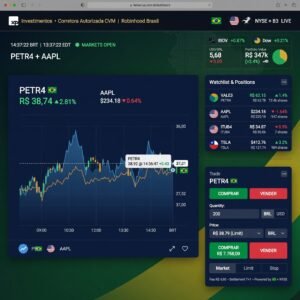
From the perspective of national economic health, foreign portfolio investment is a double-edged sword. Economists frequently refer to short-term, cross-border equity capital as “Hot Money.”
Hot money gets its name because it behaves like high-temperature fluid: it flows into high-yield environments with intense speed, but it can vaporize and disappear at the first cold sign of trouble.
The Vulnerability of Sudden Liquidity Flight
When an economy relies too heavily on foreign portfolio capital to drive its stock market higher, it leaves itself highly vulnerable to a phenomenon known as Capital Flight.
Imagine a scenario where a developing country is performing perfectly. Its corporations are profitable, its citizens are working, and its stock market is climbing steadily due to international FPI inflows.
Suddenly, a completely unrelated financial crisis breaks out on the other side of the planet—perhaps a banking collapse in Europe or a surprise debt default in North America.
Global fund managers, facing massive financial losses and panicked redemption requests from their investors at home, are forced to raise cash immediately to stabilize their core business.
To do this, they look at their global portfolio and locate their liquid assets. They systematically liquidate their investments in the healthy developing country, pulling billions of dollars out of that local stock exchange overnight.
The local stock market collapses, not because the domestic companies did anything wrong, but simply because international investors needed a liquid ATM to cover their losses somewhere else in the world. This systemic vulnerability is the real cost of being tightly integrated into the global financial web.
How Retail Investors Can Track and Navigate Foreign Capital Movements
Now that you understand the immense power that foreign institutional investors exert over global asset prices, you can use this knowledge to your advantage. You do not have to trade blindly. By learning how to monitor global capital flows, you can use the movements of these institutional giants as a macroeconomic compass for your own portfolio.
1. Track Net Foreign Inflow Disclosures
Most central banks and national stock exchanges release public records detailing monthly or weekly trading flows. These reports specifically categorize trading volume into “Domestic Retail,” “Domestic Institutional,” and “Foreign Institutional.”
Make it a routine habit to study these data sets. If you notice that foreign institutional investors have quietly transitioned from net sellers to net buyers over three consecutive months, it signals that the “Smart Money” is building structural positions.
Positioning your portfolio in alignment with that institutional wave allows you to ride their massive coattails as their multi-month buying pressure steadily drives stock prices higher.
2. Monitor the Balance of Payments and FX Reserves
A country’s Balance of Payments (BoP) tracks the total economic transactions between its citizens and the rest of the world.
If a country is running a healthy surplus and its central bank is steadily accumulating foreign currency reserves (like U.S. Dollars or Euros), it signals that the nation has an ironclad cushion to withstand a sudden capital flight event. This provides an exceptional safety buffer for long-term equity investors.
3. Keep a Close Eye on Major Global Index Rebalancings
Global stock exchanges are heavily influenced by index compilation firms like MSCI (Morgan Stanley Capital International) or FTSE Russell. These firms build benchmark indexes that global mutual funds are legally required to clone.
Once or twice a year, these providers execute an official index rebalancing. They might announce that they are increasing a specific country’s weighting within their Emerging Markets Index from 4.2% to 4.8%.
This minor mathematical adjustment sounds trivial, but it forces thousands of passive index funds around the world to automatically purchase billions of dollars of that country’s stocks on a specific calendar date to keep their funds perfectly aligned with the index. Knowing these dates ahead of time allows you to anticipate predictable, massive institutional buying windows.
Embracing the Macro Reality of Investing
To help you synthesize these global capital drivers at a single glance, let’s review the core mechanical concepts we have explored throughout this guide:
-
Volume Dominance: Foreign institutional capital pools are so massive that their automated block trades easily overwhelm localized retail trading pressure.
-
Dual Bet Structure: International investors are always playing a two-part game: tracking individual stock performance alongside the fluctuating strength of the foreign exchange currency market.
-
Liquidity Sensitivity: Global wealth functions as the ultimate driver of market liquidity, dictating whether a stock exchange enjoys tight, efficient spreads or suffers from volatile, empty order books.
-
Amplified Shockwaves: Because emerging market stock exchanges have smaller overall capitalizations, a minor asset rebalancing by a global fund manager creates disproportionately massive bull or bear markets locally.
-
The Hot Money Risk: Portfolio capital is highly liquid and mobile, meaning it can exit an economy instantly during a global crisis to cover losses elsewhere, creating localized capital flight.
For the modern retail investor, keeping your eyes glued exclusively to localized corporate earnings reports is no longer sufficient. We live and invest in a completely borderless financial reality.
The stocks in your portfolio are deeply connected to interest rate decisions made by foreign central banks, currency shifts executed by international currency traders, and portfolio rebalancings automated by multi-trillion-dollar asset managers.
By shifting your perspective away from a localized vacuum and mastering the patterns of global capital flows, you can cut through the daily noise of the market. You can spot major institutional trends before they fully manifest, protect your portfolio from sudden liquidity drains, and align your personal wealth roadmap with the unstoppable momentum of global institutional capital.