Why is doing nothing worse than doing something and failing?

In the world of personal finance and entrepreneurship, we are often taught to be cautious. We are told to “save for a rainy day,” to “look before we leap,” and to avoid unnecessary risks. While this advice comes from a good place, it often leads to a paralyzing condition: stagnation. Many people spend their entire lives waiting for the “perfect” moment to invest, the “perfect” business plan to launch, or the “perfect” market conditions to buy a home. They believe that by staying on the sidelines, they are keeping their money safe. But in reality, doing nothing is often the most expensive mistake you can make.
Doing something and failing provides you with data, experience, and resilience. Doing nothing provides you with nothing but a guaranteed loss of time and purchasing power. This article explores the deep psychological and mathematical reasons why inaction is the ultimate silent killer of wealth.
The Hidden Cost of Inaction: Why Your Savings Account is Losing Money

Most laypeople view a savings account as the ultimate “safe” haven. They see a balance that never goes down and feel a sense of security. However, this is a financial illusion caused by a lack of understanding of inflation.
Inflation is the invisible tax on doing nothing. If you leave $10,000 in a standard savings account earning 0.01% interest while inflation is running at 3% or 4%, you aren’t “saving” money; you are losing purchasing power every single day.
The Erosion of Purchasing Power
Think of your money like a battery. If you don’t use it to power an “engine” (an investment), the charge slowly leaks out. Twenty years from now, that same $10,000 will buy significantly less than it does today. By “doing nothing” to avoid the risk of the stock market or a business venture, you have accepted a 100% guaranteed risk of losing value over time.
Analysis Paralysis: The Psychological Trap of Waiting for the Perfect Moment
Psychologically, the human brain is wired to avoid “loss” more than it is wired to seek “gain.” This is known in behavioral economics as Loss Aversion. We feel the pain of losing $100 twice as intensely as we feel the joy of gaining $100.
This survival mechanism kept our ancestors safe from predators, but it keeps modern humans broke. It leads to Analysis Paralysis—the state of over-thinking a situation to the point that a decision or action is never taken.
The Myth of the “Right Time”
Many aspiring investors wait for a “market crash” to get in, or they wait for “certainty” in the economy. The problem is that by the time “certainty” arrives, the opportunity has already been priced out.
-
The Doer: Investigates, takes a calculated risk, and even if they buy at a “bad” time, they benefit from time in the market.
-
The Non-Doer: Waits for ten years, misses the best growing years of the decade, and ends up with less wealth than the person who “failed” and recovered.
The Failure Dividend: How Losing Money Can Be a High-Value Investment
We need to redefine what “failure” actually is. In the context of business and finance, failure is rarely a total loss. It is more accurately described as Tuition.
When you start a business and it fails, you don’t walk away with zero. You walk away with:
-
A Network: You met suppliers, customers, and other entrepreneurs.
-
A Skill Set: You learned marketing, accounting, and sales by doing them.
-
Market Intelligence: You now know exactly what doesn’t work, which is information your competitors don’t have.
Comparing the “Non-Starter” vs. the “Failed Starter”
| Feature | The Person Who Did Nothing | The Person Who Tried and Failed |
| Financial State | Lost value to inflation | Lost capital, but kept potential |
| Knowledge | Static / Outdated | Fresh and Practical |
| Confidence | Decreasing (Fear grows) | Increasing (Resilience grows) |
| Future Outlook | Unlikely to try again | Armed with “what not to do” |
The person who tried and failed is actually closer to success than the person who never started. Success is often just the result of iterating through failures until you find the path that works.
Opportunity Cost: Calculating the Value of the Paths Not Taken
In finance, Opportunity Cost is the loss of potential gain from other alternatives when one alternative is chosen. When you choose to “do nothing,” you aren’t just staying still; you are actively choosing not to earn.
The Math of Compounding
Let’s look at the “Risk of Waiting.” If you are 25 years old and you decide to wait just 10 years to start investing because you are “afraid of a crash,” the cost is staggering.
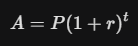
If you invest $500 a month starting at 25, at a 7% return, you would have roughly $1.2 million at age 65. If you wait until 35 to start because you wanted to “do nothing” until it felt safe, you would end up with only about $560,000.
Doing nothing for ten years cost you $640,000. That is a much higher “loss” than any temporary market crash would have caused. Inaction is the most expensive luxury you can’t afford.
Why Failure provides Data, but Inaction provides Only Regret
In the long run, our brains are surprisingly good at rationalizing failures. We can tell ourselves, “I tried my best, it didn’t work, but I learned a lot.” However, the brain is terrible at rationalizing inaction.
The Regret Minimization Framework
Jeff Bezos famously used the Regret Minimization Framework when deciding to start Amazon. he projected himself forward to age 80 and asked, “Will I regret having tried this and failed?” The answer was no. Then he asked, “Will I regret not having tried at all?” The answer was a resounding yes.
Failure is a bruise; inaction is a hole in the soul. One heals and leaves you stronger; the other remains as a haunting “What if?” that can lead to a mid-life or late-life financial crisis.
The “Perfect Plan” Fallacy: Why Good Today is Better Than Perfect Tomorrow

Many people use “planning” as a sophisticated form of procrastination. They believe they aren’t “doing nothing”; they are “preparing.” But preparation without a deadline is just a dream.
In the tech world, there is a saying: “If you aren’t embarrassed by the first version of your product, you launched too late.” The same applies to your financial plan. Your first budget will be wrong. Your first investment might be slightly inefficient. Your first business might be messy.
But a messy start beats a perfect non-start every single time. Real-world feedback is the only way to perfect a plan. You cannot steer a ship that is not moving.
Inflation vs. Risk: Why the “Sidelines” Are the Most Dangerous Place to Be
We are living in an era of high monetary intervention. Central banks around the world have demonstrated that they will print money to solve crises. This leads to a long-term trend of currency devaluation.
When you sit on the sidelines in “cash,” you are betting against the ingenuity of every company in the stock market and betting on the value of a piece of paper that loses value by design.
The “Safe” Bet is a Trap
Historically, the risk of “doing something” (investing in the S&P 500) has resulted in a positive return in roughly 74% of all years. The risk of “doing nothing” (holding cash) has resulted in a loss of value in 100% of all years when adjusted for inflation.
Moving From Stagnation to Action: A Practical Guide for the Fearful
If you recognize yourself in the “do nothing” category, don’t beat yourself up. The goal is to move from a state of static fear to a state of controlled action. Here is how to break the cycle:
1. Lower the Stakes
You don’t have to quit your job and bet your life savings on a startup. Start with a “Micro-Action.” Invest $50. Spend two hours on a side project. The goal is to break the seal of inaction.
2. Set a “Decision Deadline”
Give yourself a window for research. “I have until Friday at 5 PM to decide which index fund to pick. If I haven’t picked one, I will pick the most popular one by default.”
3. Reframe Failure as Feedback
Every time something doesn’t go as planned, ask: “What is the one thing I know now that I didn’t know yesterday?” If you gained knowledge, you didn’t fail; you traded capital for intelligence.
The Case for “Small Failures” as a Path to Big Success

The most successful people in the world are often just the people who failed the most. Each small failure acts as a stepping stone.
-
The person who tries five different side hustles and fails at four of them is now an expert in four different niches. By the fifth one, their “failure rate” drops significantly because they have developed a “nose” for what works.
-
The person who did nothing is still at square one, with the same level of fear they had five years ago.
Wealth is a game of probabilities. To increase your probability of a “Big Win,” you have to increase your number of “At-Bats.” Doing nothing means you have a 0% probability of success.
The Only Real Failure is Staying the Same
In the final analysis, your financial life is a reflection of the actions you take. While failure is painful and embarrassing in the short term, it is the only road that leads to the mountain top.
Inaction is a comfortable prison. It feels safe because there is no immediate “crash,” but the walls are slowly closing in as inflation eats your savings and time steals your opportunities.
If you are standing at a crossroads today, wondering whether to take that financial leap, remember this: The version of you that tried and failed is much more capable, wealthy, and interesting than the version of you that stayed on the couch.
Stop waiting for the light to turn green. It only turns green once you start moving toward it.