7 Psychological Traps That Are Making You Poor

Have you ever wondered why, despite reading every personal finance book on the shelf and using the latest budgeting apps, your bank account still doesn’t reflect your hard work? Most people assume that building wealth is a simple matter of mathematics: Income – Expenses = Savings. However, if human beings were purely rational calculators, nobody would be in credit card debt, and everyone would start saving for retirement with their very first paycheck.
The truth is that money is more about psychology than it is about math. Our brains are hardwired with ancient survival mechanisms that were useful for dodging predators on the savannah but are catastrophic for managing a 401(k) or resisting a “Buy One, Get One Free” sale. This field of study is known as Behavioral Finance, and it reveals that we are often our own worst enemies when it comes to financial freedom.
If you feel like you’re stuck in a cycle of “one step forward, two steps back,” you might be falling into one of these seven psychological traps. Understanding them is the first step toward “rewiring” your brain for abundance.
Hyperbolic Discounting: The Deadly Lure of Instant Gratification

The most fundamental reason people stay poor is a phenomenon psychologists call Hyperbolic Discounting, more commonly known as Present Bias. This is the human tendency to prefer a smaller reward right now over a significantly larger reward in the future.
Why Your Brain Chooses Today Over Tomorrow
From an evolutionary standpoint, our ancestors didn’t know if they would be alive in three months. If they found food, they had to eat it immediately. In the modern world, this manifests as choosing a $1,200 smartphone today instead of investing that same money and letting it grow into $20,000 over several decades.
The mathematical impact of this bias is staggering. Consider the formula for compound interest:
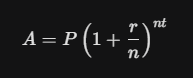
Every time you succumb to instant gratification, you aren’t just spending the principal (P); you are liquidating the “Time” (t) component of the equation. Because t is the exponent, it is the most powerful force in wealth creation. By choosing a temporary “dopamine hit” now, you are effectively stealing from your future self.
Lifestyle Creep and the “Social Proof” Trap
Have you noticed that as your salary increases, your “leftover” money stays exactly the same? This is Lifestyle Creep (or Lifestyle Inflation), and it is fueled by the psychological need for Social Proof.
The Keeping Up with the Joneses Effect
We are social creatures. Historically, being cast out of the “tribe” meant death. Today, we signal our status within the tribe through our consumption. When your peers buy a new SUV or upgrade to a luxury apartment, your brain interprets your older car or smaller home as a threat to your social standing.
This leads to a “Hedonic Treadmill” where you work harder to earn more, only to spend more to maintain a lifestyle that no longer makes you happy. The trap is that you are essentially working to fund an image for people who aren’t even paying attention to you. Real wealth is what you don’t see—it’s the money in the brokerage account, not the BMW in the driveway.
Loss Aversion: Why the Fear of Losing Keeps You From Winning
Loss Aversion is a cornerstone of behavioral economics, popularized by Nobel laureate Daniel Kahneman. It suggests that the pain of losing $100 is psychologically twice as powerful as the joy of gaining $100.
The Risk of Being Too “Safe”
This trap makes people poor in two ways:
-
Panic Selling: When the stock market dips, the intense pain of seeing a “red” screen causes people to sell their investments at the bottom, “locking in” their losses.
-
Inaction: Because the fear of losing money is so great, many people leave their savings in a traditional bank account where interest rates are lower than inflation.
Mathematically, if inflation is I and your interest rate is R, your real return is:
If I > R, you are losing purchasing power every single day. By trying to “save” your money from the volatility of the market, you are guaranteeing its slow death through inflation.
The Anchoring Effect: How “Sales” Manipulate Your Value Perception

Have you ever walked into a store, seen a jacket marked down from $400 to $150, and thought, “What a bargain!”? You might have just fallen for the Anchoring Effect.
How Pricing Anchors Control Your Spending
The human brain is terrible at determining the absolute value of an item. Instead, we rely on the first piece of information we receive—the “anchor.” Once that $400 price tag is in your head, the jacket feels “cheap” at $150, even if its actual manufacturing cost and market value are only $50.
Retailers use this to bypass your rational spending filters. You didn’t “save” $250; you spent $150 on an item you likely didn’t need. This trap is especially dangerous in real estate and car sales, where a high starting price can trick you into overpaying by thousands of dollars because the final price “feels” like a win in comparison.
Mental Accounting: Treating Different Dollars Differently
In classical economics, money is fungible. This means $100 earned from a hard day’s work is identical to $\$100$ found on the street or $100 received as a tax refund. However, our brains practice Mental Accounting.
The “Found Money” Fallacy
Most people treat “unexpected” money (like bonuses, inheritances, or gambling wins) differently than their regular paycheck. They are much more likely to “blow” a $1,000 tax refund on a luxury vacation than they would be to take $1,000 out of their hard-earned savings for the same trip.
Treating money as if it belongs in different “buckets” is a major wealth-killer. To build true wealth, you must realize that every dollar has the same potential for compounding. Whether it came from a 40-hour work week or a scratch-off ticket, its value in 20 years is the same if invested today.
The Sunk Cost Fallacy: Throwing Good Money After Bad
Have you ever continued to repair a “lemon” car because you’ve already spent $3,000 on it? Or stayed in a failing business venture because of the years you’ve put in? This is the Sunk Cost Fallacy.
Why Your Brain Hates “Giving Up”
Our brains are wired to avoid waste. Admitting that an investment was a mistake feels like a failure. So, we continue to pour resources into a losing situation, hoping to “break even.”
In the world of finance, the money you have already spent is gone—it is “sunk.” Your decisions should only be based on future prospects. If an asset is likely to continue losing value, the most “profitable” move is to sell it immediately and move that capital into something with a positive expected return. Continuing to hold a bad asset out of pride is one of the most common ways people drain their net worth.
Decision Fatigue and the “Scarcity Mindset”
Finally, we have Decision Fatigue. Making good financial choices requires a lot of cognitive energy (the prefrontal cortex). As the day goes on, our ability to resist impulses weakens.
Why Poverty is Psychologically Exhausting
Research has shown that people living in a Scarcity Mindset (constantly worrying about bills) actually suffer from a temporary drop in IQ. When you are stressed about money, your brain moves into “survival mode,” making it nearly impossible to think about long-term goals.
This leads to a “poverty trap.” You work a long, stressful shift, and by the time you’re done, your brain is too tired to cook a healthy, cheap meal. Instead, you buy expensive takeout. You’re too tired to research high-yield accounts, so you leave your money in a zero-interest checking account. To break this trap, you must automate your finances so that your wealth grows even when your brain is tired.
How to Rewire Your Brain for Wealth: Actionable Steps

Now that we’ve identified the traps, how do we escape them? You cannot simply “will” your brain to stop being human, but you can build systems that account for your flaws.
1. Automate Everything
Since we suffer from Present Bias and Decision Fatigue, don’t give yourself the choice to save. Set up an automatic transfer that moves a percentage of your paycheck into an investment account the moment it hits your bank. If you never “see” the money, you won’t miss it.
2. The 48-Hour Rule for Purchases
To combat the Anchoring Effect and Instant Gratification, implement a 48-hour cooling-off period for any non-essential purchase over a certain amount (e.g., $\$100$). This allows the initial dopamine spike to subside, letting your rational brain take back control.
3. Reframe Your “Wins”
Instead of practicing Mental Accounting with your tax refund, commit to a “Split Rule.” Take 50% for something fun and 50% for debt or investments. This acknowledges your human need for a reward while protecting your financial future.
4. Practice “Stealth Wealth”
Fight Social Proof by consciously choosing to buy things for their utility rather than their status. Remind yourself of the “Wealthy Neighbor” paradox: the person in the modest house often has the most money, while the person in the mansion is often one paycheck away from disaster.
Wealth is a Mindset, Not Just a Number
Financial independence is not just about how much you earn; it is about how much you keep and how wisely you grow it. By recognizing these seven psychological traps—Present Bias, Social Proof, Loss Aversion, Anchoring, Mental Accounting, Sunk Cost, and Decision Fatigue—you can begin to guard your wealth against your own impulses.
The road to being “rich” is paved with math, but the road to staying “wealthy” is paved with self-awareness. Stop letting your prehistoric brain make 21st-century financial decisions. Tune out the noise, automate your systems, and start building the life your future self deserves.