Top mistakes beginner investors make
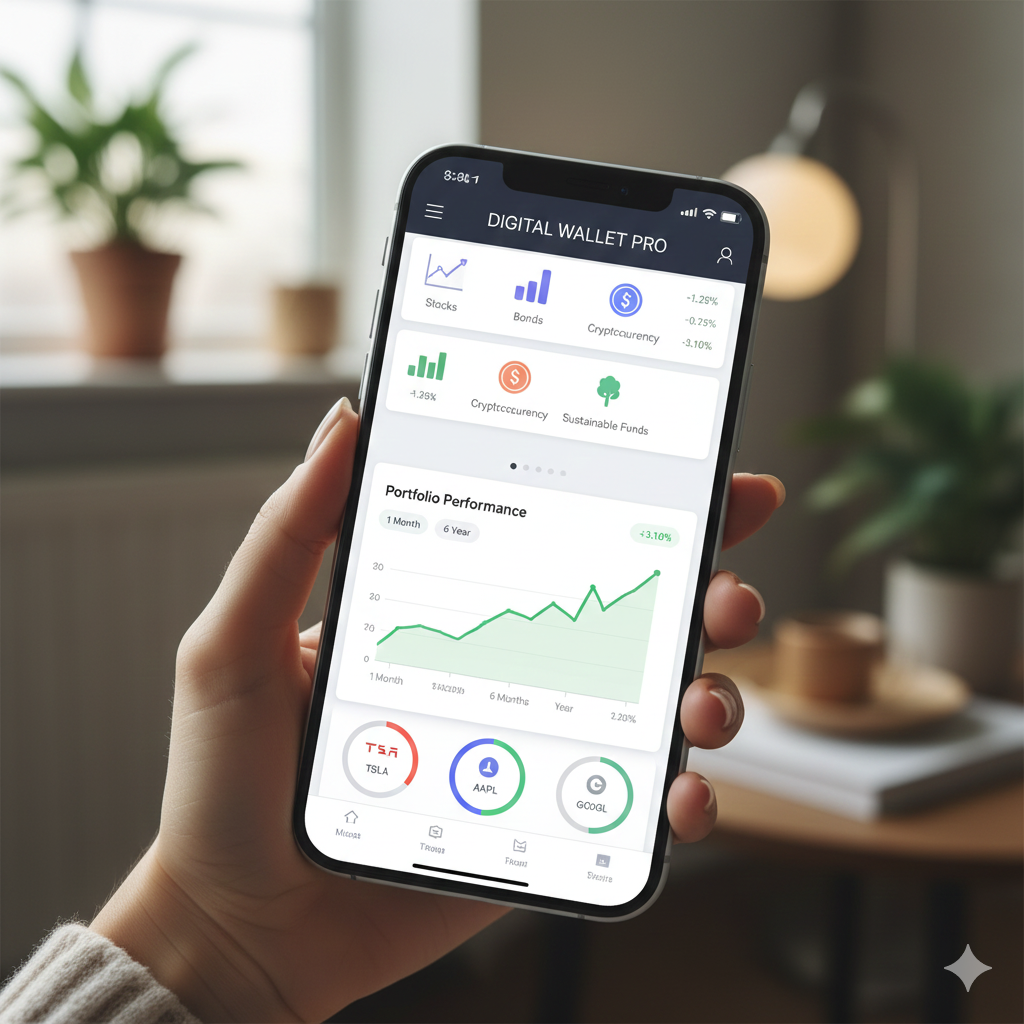
The allure of the financial markets is undeniable. We see headlines of teenagers becoming crypto-millionaires, tech stocks soaring 300% in a year, and early retirees sipping coconuts on a beach. It creates a powerful narrative: investing is the key to freedom. And it is.
However, the road to financial independence is paved with the shattered portfolios of those who rushed in unprepared. The stock market is a unique environment where human nature often works against financial logic. The instincts that kept our ancestors alive—running from danger (selling in a crash) and following the herd (buying the hype)—are the exact behaviors that destroy wealth in the modern economy.
For the beginner, the “tuition” paid to the market in the form of losses can be devastating. But it doesn’t have to be. Most investment errors are repetitive, predictable, and entirely avoidable.
This comprehensive guide is not just a list of “don’ts.” It is a deep dive into the psychology and mechanics of failure. By understanding why beginners fail, you can build a fortress around your finances. Whether you are looking at stocks, real estate, or mutual funds, avoiding these common pitfalls is the first step toward long-term prosperity.
Entering the Market Without a Defined Financial Roadmap

The single most common error is not technical; it is strategic. Many beginners open a brokerage account and click “buy” without answering the fundamental question: What is this money for?
The “Why” Dictates the “How”
Investing is not a one-size-fits-all activity. The strategy for a 25-year-old saving for a retirement 40 years away is radically different from a 30-year-old saving for a house down payment due in two years.
-
The Mistake: Putting money needed for short-term goals (like a wedding or house) into volatile assets (like stocks). If the market crashes the week before you need the money, you are forced to sell at a loss.
-
The Fix: Align your time horizon with your asset class. Money needed in 0-3 years belongs in cash or high-yield savings. Money needed in 10+ years belongs in the market.
The Absence of an Investment Policy Statement (IPS)
Professional fund managers use an IPS to guide their decisions. You should too. This is a simple written rule set: “I will invest $500 a month into low-cost index funds, regardless of what the news says.” Without this roadmap, you are a leaf blowing in the wind, vulnerable to every scary headline.
Succumbing to Emotional Trading and Market Timing
Wall Street has a saying: “The market is designed to transfer money from the Active to the Patient.” The greatest enemy of the investor is not the economy, inflation, or the government; it is the investor’s own emotions.
The Cycle of Fear and Greed
Beginners often fall into the trap of buying when they feel good (Greed) and selling when they feel scared (Fear).
-
The Peak: The market is hitting all-time highs. Everyone is talking about stocks. The beginner feels FOMO (Fear Of Missing Out) and buys in at the top.
-
The Correction: The market drops 10%. The beginner gets nervous.
-
The Crash: The market drops 20%. The news predicts a recession. The beginner panics, thinks “I need to stop the bleeding,” and sells at the bottom.
-
The Recovery: The market bounces back. The beginner is sitting in cash, watching the gains they missed.
The Futility of Timing the Market
Data consistently shows that missing just the 10 best trading days over a 20-year period can cut your returns in half. No one—not even the professionals—can consistently predict when the market will peak or bottom. By trying to jump in and out, you usually just incur transaction fees and tax liabilities while missing the recovery.
Neglecting the Golden Rule of Diversification and Asset Allocation
There is a natural temptation to go “all in” on the next big thing. You hear about a tech company or a biotech firm that is going to change the world, and you want to put all your capital there to maximize returns. This is gambling, not investing.
Concentration Risk
“Concentration” builds wealth (if you are lucky), but “Diversification” preserves it. If you put 100% of your money into one stock, you have a 50% chance of being right and a 100% chance of risking total ruin. Even great companies can face scandals, lawsuits, or technological obsolescence (remember Kodak or Blockbuster?).
True Diversification
Many beginners think they are diversified because they own five different stocks. But if those five stocks are all technology companies, they are not diversified. They are still exposed to “sector risk.”
-
The Fix: A truly diversified portfolio includes different asset classes (Stocks, Bonds, Real Estate, Cash) and different geographies (US, Europe, Emerging Markets). The easiest way to achieve this is through Index Funds or ETFs (Exchange Traded Funds) that hold thousands of companies at once.
Confusing Speculation with Long-Term Investing

In the age of social media, the line between “investing” and “speculating” has blurred.
-
Investing is analyzing a company’s cash flow, management, and competitive advantage, then buying it for the long term because you believe it will generate value.
-
Speculating is buying an asset solely because you think someone else will pay more for it tomorrow (The Greater Fool Theory).
The Meme Stock Phenomenon
Recent years have seen the rise of “meme stocks”—companies with poor business fundamentals that skyrocket due to internet hype. Beginners often jump into these trades hoping for a quick 1000% return. While some get lucky, the majority are left holding the bag when the hype dies down and the price returns to reality.
Treating the stock market like a casino is the fastest way to lose your principal. If you want to gamble, go to Las Vegas—at least there you get free drinks.
Ignoring the Compound Impact of High Fees and Taxes
In investing, you don’t get what you pay for; you get what you don’t pay for. Every dollar you pay in fees is a dollar that cannot grow and compound for your future.
The Expense Ratio Trap
Mutual funds often charge an “Expense Ratio.”
-
Fund A charges 0.05% per year.
- Fund B charges 1.50% per year.It doesn’t sound like much difference, right? Wrong. Over 30 years, that 1.45% difference can eat up one-third of your total potential wealth. Beginners often buy expensive funds sold by bank advisors without realizing that cheaper, better-performing alternatives exist.
Tax Inefficiency
Beginners often trade too frequently. In many jurisdictions, selling an asset you held for less than a year triggers “Short-Term Capital Gains Tax,” which is taxed at a much higher rate than long-term investments. By over-trading, you are voluntarily giving a large chunk of your profits to the government.
Investing Money You Cannot Afford to Lose (The Liquidity Trap)
This is a critical error that leads to financial ruin. Beginners often get excited about investing and throw every spare cent into the market, leaving themselves with $0 in their bank account.
The Forced Seller Scenario
Imagine you invest all your savings. Two weeks later, your car breaks down, or you lose your job. Because you have no cash savings, you are forced to sell your investments to pay for the emergency.
Murphy’s Law dictates that your emergency will likely happen when the market is down. You will be forced to sell your stocks at a loss just to survive.
The Prerequisite: The Emergency Fund
Before you buy your first stock, you must have an Emergency Fund—typically 3 to 6 months of living expenses held in a boring, safe, liquid savings account. This fund is not an investment; it is insurance. It ensures that you never have to interrupt the compounding process of your actual investments.
Chasing Past Performance (Recency Bias)
When choosing a fund or stock, beginners often look at the chart and say, “Wow, this fund went up 30% last year! I’ll buy this one.” This is called Recency Bias—the tendency to think that what happened yesterday will happen tomorrow.
Mean Reversion
In finance, there is a powerful force called “Mean Reversion.” Asset classes that outperform in one cycle often underperform in the next. The best-performing fund of 2024 is rarely the best-performing fund of 2025. By chasing past winners, you are usually buying at the peak of a cycle, right before the trend reverses.
The Fix: Don’t look at the last 1 year of returns. Look at the last 10 or 15 years. Consistency matters more than a single lucky year.
Analysis Paralysis: The Opportunity Cost of Doing Nothing

On the opposite end of the spectrum from the reckless gambler is the “frozen” investor. This person reads every book, listens to every podcast, and watches every market analysis video, but never actually buys anything.
The “Perfect Moment” Myth
They are waiting for the “perfect time” to enter the market. They are waiting for the crash, or for the election to be over, or for inflation to go down.
While they wait, inflation eats away at their cash savings.
-
The Reality: There is never a perfect time. The world is always scary. In the 80s it was the Cold War; in the 90s it was the Dotcom bubble; in the 2000s it was the Housing Crisis. Yet, the market has historically marched upward over time.
-
The Solution: Dollar Cost Averaging (DCA). Invest a small, fixed amount every month regardless of what is happening. This removes the need to make a “decision” and breaks the paralysis.
The Path to Wealth is Boring
If there is one takeaway from the list of errors above, it is this: Successful investing is usually boring.
It isn’t about staring at six monitors, screaming into a telephone, or finding the “secret” cryptocurrency. It is about setting a plan, minimizing fees, diversifying broadly, and having the emotional discipline to do absolutely nothing when the world feels like it is falling apart.
Investing is a marathon, not a sprint. You will make mistakes—everyone does. But if you can avoid the catastrophic ones listed in this article, you will already be ahead of 90% of the population. The goal is not to beat the market every day; the goal is to remain in the market long enough for the magic of compound interest to change your life.
Start small, stay consistent, and let time do the heavy lifting.
Quick Reference: The Investor’s Checklist
| The Mistake | The Solution |
| No Plan | Create an Investment Policy Statement based on your goals. |
| Emotional Trading | Automate your investments and stop checking the app daily. |
| Lack of Diversification | Buy broad-market Index Funds or ETFs. |
| High Fees | Choose low-cost brokerages and funds (expense ratio < 0.2%). |
| No Emergency Fund | Save 3-6 months of expenses in cash before investing. |
| Chasing Hype | Ignore “hot tips” and stick to fundamentals. |
Frequently Asked Questions (FAQ)
Q: How much money do I need to start investing?
A: With modern apps and fractional shares, you can start with as little as $10 or $50. The amount matters less than the habit. Starting early with a small amount is better than starting late with a large amount.
Q: Should I hire a financial advisor?
A: If your financial situation is simple (e.g., just saving for retirement), you can likely do it yourself using Index Funds. However, if you have a high net worth, complex taxes, or struggle with emotional discipline, a fee-only fiduciary advisor can be worth the cost.
Q: What is “Dollar Cost Averaging”?
A: It is the strategy of investing the same amount of money at regular intervals (e.g., $200 on the 1st of every month). This ensures you buy more shares when prices are low and fewer shares when prices are high, averaging out your cost over time.
Q: Is crypto a good investment for beginners?
A: Cryptocurrency is highly volatile and speculative. Financial experts generally recommend that if you want to hold crypto, it should make up no more than 1% to 5% of your total portfolio, and you should be prepared to lose that money entirely.
Q: How do I know my risk tolerance?
A: Ask yourself: “If my portfolio dropped 40% tomorrow, would I sell?” If the answer is yes, you are taking too much risk. You should balance your portfolio with more stable assets like bonds or cash.