Why You Buy What Others Are Buying?

In the modern world of 2026, we are surrounded by a constant stream of “must-have” items. Whether it’s a specific brand of reusable water bottle that everyone seems to be carrying, a viral skincare routine on social media, or a specific investment strategy that “everyone” is talking about, we find ourselves pulled toward the same choices as the crowd.
Have you ever wondered why? Why do we feel an almost magnetic attraction to things just because they are popular?
In behavioral finance, this isn’t seen as a lack of willpower or a sign of being “unoriginal.” Instead, it is a complex intersection of biology, psychology, and evolutionary survival. Understanding why you buy what others are buying is the first step toward reclaiming your financial independence and making decisions that actually align with your own values, rather than the values of the crowd.
The Science of Social Proof: Why We Look to Others for Direction
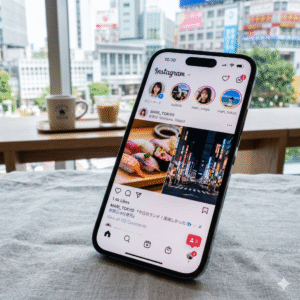
At the heart of our tendency to copy others is a psychological principle known as Social Proof. Coined by psychologist Robert Cialdini, social proof is the idea that people look to the behavior of others to determine the “correct” way to act, especially in uncertain situations.
The “Shortcut” for Decision Making
Our brains are constantly looking for ways to save energy. Making a decision from scratch—researching the quality, price, and utility of every single item we buy—is exhausting. Social proof provides a cognitive shortcut. If a thousand people have bought a specific laptop and rated it highly, our brain assumes, “It must be good,” allowing us to bypass the hard work of deep research.
Uncertainty and the Crowd
The more uncertain we are, the more we rely on social proof. This is why we are most likely to buy what others are buying when we are entering a new phase of life—like starting a first job, buying a home, or beginning an investment journey. When we don’t know the “rules,” we watch the people who seem to know what they are doing and mimic them.
Evolutionary Survival: Why Our Ancestors Followed the Herd
To truly understand why we are “financial sheep,” we have to look back thousands of years. In the prehistoric era, being part of a group was quite literally a matter of life or death.
Safety in Numbers
If our ancestors saw a group of their peers running in one direction, they didn’t stop to ask questions about the local flora and fauna. They ran too. The individuals who followed the herd survived to pass on their genes; the ones who decided to “do their own research” while a predator was approaching were often removed from the gene pool.
The Fear of Ostracism
In a tribal society, being excluded from the group meant starvation or death. This created a deep-seated biological fear of being “different” or “left behind.” Today, that same ancient fear manifests as FOMO (Fear Of Missing Out). When we see everyone else wearing a certain brand or using a certain app, our ancient brain interprets that as: “The tribe is moving in that direction. If I don’t follow, I will be left alone and vulnerable.”
The Bandwagon Effect: How Popularity Creates Its Own Gravity
In economics and behavioral finance, this phenomenon is often called the Bandwagon Effect. It describes a situation where the rate of uptake of an idea or product increases the more it has already been adopted by others.
The Feedback Loop of Popularity
The bandwagon effect creates a self-fulfilling prophecy. A product becomes popular because it is “good,” but then it becomes even more popular simply because it is popular.
-
Initial Adoption: A few people buy a product.
-
Visible Proof: Others see the product being used.
-
Validation: The “crowd” perceives the product as a standard.
-
Mass Adoption: People buy it just to avoid being the odd one out.
This is why “viral” products in 2026 reach mass adoption faster than at any other time in history. The digital bandwagon is moving at the speed of light.
Social Media and the “Digital Mirror” of Success

If our ancestors compared themselves to the 50 people in their tribe, we now compare ourselves to 5 billion people globally. Social media acts as a “digital mirror” that constantly reflects what we should be buying.
The Influencer Effect and “Parasocial” Relationships
Influencers have mastered the art of social proof. Because we follow them daily, our brains begin to view them as “friends” (this is called a parasocial relationship). When an influencer recommends a product, it doesn’t feel like an advertisement; it feels like a suggestion from a trusted member of our tribe.
The Illusion of Universality
Algorithms are designed to show us more of what we are already looking at. If you see five different people on your feed using the same espresso machine, your brain falls for the Availability Heuristic. You start to believe that “everyone” has this machine, even if it’s actually a very small niche. This creates a false sense of pressure to “catch up” to a reality that doesn’t actually exist for the majority of people.
Conspicuous Consumption and the Search for Status
Sometimes, we buy what others are buying not just to fit in, but to show where we stand in the social hierarchy. This is known as Conspicuous Consumption, a term coined by sociologist Thorstein Veblen.
Signaling Theory
In biology, signaling is when an animal does something to show its strength or health (like a peacock’s feathers). In 2026 finance, we use products to signal our “tribe” or our “status.”
-
The Tech Tribe: Buying the latest, most expensive smartphone to signal you are at the cutting edge.
-
The Sustainable Tribe: Buying expensive, eco-friendly brands to signal your moral values.
-
The Luxury Tribe: Buying “Quiet Luxury” items to signal wealth without being flashy.
We buy what the “elite” of our chosen tribe is buying because we want to be identified as a member of that group.
The Financial Cost of Conformity: Debt and Lifestyle Creep
The dark side of following the herd is the devastating impact it can have on your personal balance sheet. When you buy based on what others are doing, you are essentially letting the crowd write your budget.
The Trap of Lifestyle Creep
As your peers start to earn more, they spend more. If you are part of that social circle, you feel the pressure to match their spending. This is Lifestyle Creep. You might find that even though your salary has doubled in the last five years, you have no more money in your savings account because you’ve been busy upgrading your car, your clothes, and your vacations to match the “new normal” of your group.
High-Interest Debt as a Social Tool
In the United States and other consumer-driven economies, credit card debt is often used as a tool to maintain the “facade” of belonging. People are willing to pay $20\%$ interest to a bank just to avoid the social “shame” of not having the same things as their friends.
Behavioral Solutions: How to Stop Being a “Financial Sheep”

Breaking the cycle of copycat spending requires more than just willpower; it requires a change in your decision-making architecture. Here is how to fight back against the pull of social proof:
1. The “Values-Based” Audit
Before any major purchase, ask yourself: “If I could never show this to anyone, and no one would ever know I bought it, would I still want it?” If the answer is no, you are likely buying for status or social proof rather than utility.
2. Identify Your “Anchor” Tribe
Most of our spending pressure comes from a specific group. Identify who you are trying to impress. Is it your coworkers? Your old high school friends? Strangers on the internet? Once you name the group, you can consciously decide if their approval is worth your financial freedom.
3. Create “Friction” in the Process
Social proof relies on impulsive, “System 1” thinking (fast and emotional). You need to move the decision to “System 2” (slow and logical).
-
The 72-Hour Rule: Wait three days before buying anything you saw on social media.
-
The “Tab” Test: If you see something popular online, keep the tab open but don’t buy it for a week. Usually, the “need” fades as the digital dopamine spike wears off.
4. Curate Your Digital Environment
If your social media feed is making you feel like your life is “lacking,” change the feed. Unfollow accounts that focus on “hauls” or luxury lifestyles. Instead, follow accounts that focus on financial independence, minimalism, or hobbies that don’t require constant spending.
Cultivating Financial Individualism
In 2026, the pressure to conform has never been higher, but the rewards for being an individual have never been greater. The most successful investors and the wealthiest individuals are rarely the ones following the latest trend. They are the ones who have the “courage to be boring.”
They buy high-quality items that last, regardless of whether they are “trending.” They invest in broad-market indices rather than chasing “meme stocks.” They prioritize their future security over their present status.
The next time you feel that urge to buy something because “everyone else has it,” take a deep breath. Recognize the ancient, biological urge for what it is. Then, remind yourself that your bank account doesn’t care about the tribe; it only cares about the math.
Be the person who breaks the herd. Your future self will thank you.