How to Build Better Money Habits That Actually Stick

Most personal finance advice is built on a lie. We are told that if we just had a better spreadsheet, a more complex app, or more willpower, we would finally be “good with money.” But if building wealth were simply a matter of math, everyone with a calculator would be a millionaire.
The reality of 2026 is that our financial lives are dictated by habits, not calculations. Our brains are operating on ancient software designed for survival, while we navigate a world designed by trillion-dollar companies to make us spend with a single click. To build better money habits, you don’t need a new budget; you need to understand the psychology of behavior change.
In this comprehensive guide, we will explore why most financial resolutions fail and how you can use the principles of behavioral finance to “reprogram” your spending and saving habits for good.
The Science of the Habit Loop: Why Your Brain Spends Money Subconsciously

Before you can change a habit, you have to understand what a habit actually is. According to behavioral researchers, every habit follows a four-step cycle: Cue, Craving, Response, and Reward.
1. The Cue
The cue is a trigger that tells your brain to go into automatic mode. In finance, this could be the “Ding!” of a notification for a 50% off sale, the smell of fresh coffee as you walk past a café, or the feeling of stress after a long meeting.
2. The Craving
This is the motivational force. You don’t crave the product itself; you crave the change in state it provides. You crave the relief from stress, the boost in status, or the temporary “dopamine hit” of a new purchase.
3. The Response
This is the action you take. You click “Buy Now,” you swipe your card, or you transfer money. Because modern technology has removed almost all “friction” from this step, we often do it without thinking.
4. The Reward
The reward is the end goal. Your stress vanishes for five minutes. You feel “refined” with your expensive coffee. The problem? The reward is temporary, but the financial impact is permanent. To build habits that stick, we must interrupt this loop.
Environment Design: Make Saving Invisible and Spending Difficult
One of the biggest mistakes in behavioral finance is relying on willpower. Willpower is a finite resource. By the time you finish an 8-hour workday, your “willpower battery” is drained, making you a prime target for impulse spending.
Instead of relying on willpower, you should rely on Environment Design.
Automate the “Good” Decisions
If you have to choose to save money every month, you will eventually choose not to. The human brain suffers from Present Bias—we value a small reward today more than a large reward tomorrow.
The solution is to “Pay Yourself First” through automation. Set up a recurring transfer so that $10%, $15%, or $20% of your paycheck moves to your investment or savings account the second it hits your bank. If you never see the money in your checking account, you don’t have to use willpower to avoid spending it.
Increase Friction for “Bad” Decisions
Digital stores are designed to be “frictionless.” To break the cycle, you must manually reintroduce friction:
-
Delete Saved Credit Cards: Remove your card info from Amazon, food delivery apps, and your browser. Forcing yourself to get up and find your wallet to type in 16 digits gives your rational brain (the prefrontal cortex) time to veto the impulse.
-
Unsubscribe from Marketing: If you don’t see the “Limited Time Sale,” the cue never happens.
-
The 48-Hour Rule: For any non-essential purchase over $50$, you must wait 48 hours. Most cravings for a product disappear once the initial dopamine spike settles.
Habit Stacking: Anchoring Your Finances to Your Daily Routine
A powerful technique in behavioral science is Habit Stacking. It’s the process of taking a new habit you want to build and “stacking” it on top of an existing one.
The Formula
“After I [Current Habit], I will [New Financial Habit].”
-
Example 1: “After I check my email on Monday morning, I will spend two minutes reviewing my bank transactions from the weekend.”
-
Example 2: “After I get paid, I will immediately move $50 into my travel fund.”
-
Example 3: “After I buy something online, I will transfer an equal amount of money into my investment account.”
By anchoring financial awareness to things you already do, you stop needing to “remember” to be responsible. It becomes part of the rhythm of your day.
The Mathematics of “Small Wins”: The Power of the 1% Rule
We often think that to change our lives, we need to make massive changes. We try to cut our spending by $50\%$ overnight, fail within a week, and give up entirely. This is the All-or-Nothing Fallacy.
Real wealth is built through the accumulation of 1% gains. In finance, this is reflected in the power of compound interest.
The Compound Interest Formula
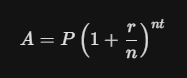
If you can find a way to save just $10 more a day and invest it at a $10\%$ annual return, in 30 years, you will have nearly $650,000.
Better money habits aren’t about finding $1,000 extra a month; they are about finding small, repeatable wins that allow the math of compounding to do the heavy lifting for you.
Identifying Your “Money Script” and Behavioral Triggers
We all have a “Money Script”—a set of subconscious beliefs about money that we learned in childhood. Some people believe “money is the root of all evil,” leading them to subconsciously get rid of it as soon as they earn it. Others believe “money is status,” leading them to overspend to feel important.
Emotional Spending Categories
To build habits that stick, you must identify your emotional triggers. Most impulse spending falls into one of these buckets:
-
Stress Spending: You buy something because you had a “hard day” and feel you deserve a reward.
-
Social Proof Spending: You buy things because your friends have them and you don’t want to feel left behind (FOMO).
-
Boredom Spending: You scroll through shopping apps as a form of entertainment.
The Fix: Find a non-financial substitute for these triggers. If you are stressed, take a 10-minute walk. If you are bored, read a book or call a friend. You must replace the “Response” in the habit loop while still satisfying the “Craving.”
The “Anti-Budget” and Conscious Spending

Traditional budgeting—tracking every single cent for every single category—is exhausting and usually leads to burnout. This is where Decision Fatigue kicks in. After making a hundred small financial decisions, you eventually stop caring.
The 50/30/20 Rule Simplified
A better habit is the Conscious Spending Plan, popularized by many modern financial educators. Instead of tracking what you spent, you plan for what you want to spend.
-
50% Fixed Costs: Rent, utilities, insurance.
-
20% Financial Goals: Savings, investments, debt payoff.
-
30% Guilt-Free Spending: This is the key. By allocating money for fun upfront, you eliminate the guilt that usually leads to “rebellion spending.”
When you have a dedicated “fun” bucket, you are less likely to dip into your savings because you’ve already given your brain the “Reward” it craves.
Connecting with Your “Future Self”
One of the strangest findings in behavioral finance is that when people think about their “Future Self,” their brain activity looks exactly like they are thinking about a complete stranger.
This is why saving for retirement is so hard; it feels like you are giving your money to a person you don’t know.
The Empathy Hack
To make the habit of saving stick, you need to build empathy for your future self.
-
Visualization: Spend a few minutes each month imagining your life in 20 or 30 years. What kind of house are you in? What does your morning look like?
-
Naming Your Accounts: Instead of a “Savings Account,” call it “Early Retirement Fund” or “My Freedom Fund.” Giving the money a specific, human purpose makes it much harder to “steal” from that account for a temporary purchase today.
Managing the “Lifestyle Creep” Trap

As your income grows, your spending tends to grow along with it. This is Lifestyle Creep. You get a $500/month raise, and suddenly you “need” a better car and a more expensive gym membership. Your net worth stays the same despite your higher income.
The “Split the Raise” Habit
A powerful habit to combat this is the 50% Rule for Raises. Every time you get a raise or a bonus:
-
Take 50% of the increase and add it to your automated investments.
-
Take the other 50% and increase your “Guilt-Free Spending.”
This allows you to enjoy the fruits of your labor today while ensuring your future self also gets a “raise.” It turns the “pain” of saving into a “win-win” scenario.
The Importance of Forgiveness and the “Fresh Start Effect”
The most common reason people fail to build better money habits is The What-The-Hell Effect. You overspend by $50 on a Friday night, feel like a failure, and decide, “What the hell, I already ruined my budget,” leading to a $500 weekend bender.
Embrace the Pivot
Habit formation isn’t a straight line; it’s a series of pivots. If you mess up, don’t wait until next month to start over. Use the “Fresh Start Effect”—the psychological phenomenon where we feel more motivated to change at the start of a new week, a new Monday, or even just a new day.
Forgive yourself for the mistake, identify the trigger that caused it, and get back to your automated systems immediately. Perfection is the enemy of prosperity.
Summary Checklist for Lasting Money Habits
| Habit | Goal | Action Step |
| Automation | Remove Willpower | Set up a $100 transfer to your brokerage today. |
| Habit Stacking | Consistency | Check your balance every Friday after lunch. |
| Friction | Reduce Impulse | Delete your saved credit cards from your phone. |
| Conscious Spending | Remove Guilt | Allocate 30% for fun, but stay within that limit. |
| The 50% Rule | Combat Lifestyle Creep | Invest half of your next bonus or raise. |
Wealth is a Practice, Not a Destination
Building better money habits isn’t about becoming a miser or living a life of deprivation. It’s about aligning your spending with your values. When you master the psychology of your behavior, money stops being a source of stress and starts becoming a tool for freedom.
The journey to financial independence is built one habit at a time. Don’t try to change everything today. Pick one strategy from this guide—whether it’s automating your first $50 or deleting your saved cards—and start there.
Your financial life is the sum of your daily choices. Make them count.