Where Should You Put Your First $1,000?
Congratulations! You’ve managed to save your first $1,000. In a world of rising costs and endless temptations to spend, reaching this milestone is a testament to your discipline. But now comes the most critical part: What do you do with it?
The decision you make with your first $1,000 is more than just a financial transaction; it is the foundation of your future wealth. If you put it in the right place, it becomes a seed that grows into a forest. If you put it in the wrong place, it can vanish before you even realize its potential.
In this comprehensive guide, we will explore the best places to put your first $1,000, ranked by financial priority and long-term impact. Whether you are looking for safety, growth, or a mix of both, this is your roadmap to financial freedom.
The “Zero” Step: Pay Off High-Interest Debt First

Before you look at the stock market or a savings account, you must look at your debt. If you have credit card debt, that is likely your most “profitable” investment.
Why Debt is a “Negative” Investment
The average credit card interest rate currently hovers between 20% and 25%. If you invest $1,000 in the stock market, you might hope for a 7% to 10% annual return. Mathematically, it makes no sense to try and earn 10% while you are losing 25% to a bank.
Paying off $1,000 of credit card debt is the equivalent of a guaranteed 25% return on your money. You won’t find that kind of certainty anywhere else in the financial world.
The Rule of Thumb: If the interest rate on your debt is higher than 7%, pay it off before you invest a single penny in the market.
High-Yield Savings Accounts: Your Financial Safety Net
If you are debt-free, the most common (and often best) place for your first $1,000 is a High-Yield Savings Account (HYSA).
What is an HYSA?
Unlike the traditional savings account at your local “brick-and-mortar” bank, which might pay a measly 0.01% interest, an HYSA is typically offered by online banks. These banks have lower overhead costs and pass those savings to you in the form of higher interest rates. In 2026, many HYSAs offer rates between 4.0% and 5.0%.
The “Sleep Well at Night” (SWAN) Factor
Your first $1,000 should serve as your Starter Emergency Fund. Life happens—tires blow out, phones break, and medical bills arrive unexpectedly. Having $1,000 tucked away in a liquid, safe account prevents you from having to go back into debt when an emergency occurs.
Why it’s a winner:
-
Liquidity: You can access the money within 1–2 business days.
-
Safety: Most are FDIC-insured up to $250,000.
-
Psychological Peace: Knowing you have a cushion reduces financial anxiety.
The “Free Money” Route: Capturing the 401(k) Match
If you are employed by a company that offers a 401(k) match, this is arguably the single best place to put your money.
How the Match Works
Many employers will match your contributions up to a certain percentage of your salary (e.g., “We match 100% of your contributions up to 3% of your salary”). If you put in $1,000 and your company matches it, you now have $2,000.
An Instant 100% Return
There is no investment on Wall Street that can guarantee a 100% return in one day. By capturing your employer match, you are doubling your money instantly. This is “free money” that is part of your total compensation package. If you aren’t using it, you are essentially taking a pay cut.
The Strategy: Even if you have other goals, contribute enough to your 401(k) to get the full match before moving on to other investments.
The Roth IRA: The Secret Weapon for Long-Term Growth
If you’ve handled your debt and have a basic emergency fund, the Roth IRA is often the best “wealth-building” vehicle for your first $1,000.
The Power of Tax-Free Growth
In a traditional investment account, you have to pay taxes on your gains. In a Roth IRA, you contribute “after-tax” money (money you’ve already been paid on). The magic happens later: Everything the account earns is 100% tax-free when you withdraw it in retirement.
Why Beginners Love the Roth IRA
One unique feature of the Roth IRA is that you can withdraw your contributions (the original $1,000) at any time, for any reason, without penalty. While we don’t recommend this (you want the money to stay invested), it provides a “backup” layer of security that traditional retirement accounts don’t offer.
Pro-Tip: For the first $1,000, look for a “target-date fund” or a “total market fund” within your Roth IRA to keep things simple.
Broad Market ETFs: The Easiest Way to Own Everything

If you want to put your $1,000 into the stock market but don’t want the stress of picking individual stocks like Apple or Tesla, Exchange-Traded Funds (ETFs) are the answer.
VTI and VOO: The Gold Standards
-
VOO (Vanguard S&P 500 ETF): This allows you to own a piece of the 500 largest, most successful companies in the United States.
-
VTI (Vanguard Total Stock Market ETF): This gives you exposure to every single publicly traded company in the US—over 3,500 of them.
Low Fees, High Diversification
When you buy $1,000 of an ETF like VTI, you aren’t betting on one company; you are betting on the entire US economy. These funds have incredibly low “Expense Ratios” (the fee the company charges to manage the fund). A fee of 0.03% means you only pay $0.30 a year for every $1,000 you invest.
Investing in Yourself: The “Human Capital” Approach
Sometimes the best place to put your first $1,000 isn’t the stock market—it’s your own skills.
Increasing Your Earning Power
If spending $1,000 on a certification, a professional course, or specialized equipment allows you to get a promotion or a new job that pays $5,000 more per year, that is a 500% return on investment.
The Math of Human Capital
Investing $1,000 in a stock that returns 10% gives you $100.
Investing $1,000 in a skill that increases your salary by $5,000 gives you $5,000 every single year.
For young professionals or those in a career transition, “Self-Investment” often yields the highest practical return of any asset class.
What NOT to Do with Your First $1,000
When you have $1,000 for the first time, you will be tempted by “Get Rich Quick” schemes. Here is what to avoid:
-
Penny Stocks: These are highly volatile and often manipulated. You are more likely to lose 90% of your money than to “strike it rich.”
-
Unregulated Crypto Projects: While Bitcoin and Ethereum have become more mainstream, “new” coins with no utility are essentially gambling.
-
Options and Day Trading: Without years of experience, day trading is a fast track to zero. Professional traders have billion-dollar algorithms; you have a laptop. Don’t fight that battle yet.
-
Buying “Things” to Look Rich: Don’t buy a $1,000 watch or a new designer bag. A $1,000 bag with $0 inside is a sign of poor financial health. A $10 bag with $1,000 in an investment account is the start of a legacy.
The Mathematics of Starting Early: Compound Interest

Why does the first $1,000 matter so much? Because of the Time Value of Money.
If you put $1,000 into a diversified stock fund at age 20 and never touch it again, by the time you are 65, that single $1,000 will have grown to roughly $72,000 (assuming a 10% average annual return).
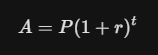
If you wait until age 30 to invest that same $1,000, it only grows to $28,000. That 10-year delay cost you $44,000. Your first $1,000 is the most valuable money you will ever own because it has the most time to grow.
| Age Started | Value at Age 65 (10% Return) |
| 20 | $72,890 |
| 30 | $28,102 |
| 40 | $10,834 |
| 50 | $4,177 |
Overcoming Analysis Paralysis: The “Done is Better than Perfect” Rule
Many people hold onto their first $1,000 in a checking account for months because they are afraid of making the “wrong” choice. This is called Analysis Paralysis.
The “wrong” choice is doing nothing. Inflation is currently eroding the value of your cash. While you sit and wait for the “perfect” stock, your $1,000 is buying less and less every day.
The Solution: If you are unsure, just put it in a High-Yield Savings Account. It’s safe, it earns interest, and you can move it later once you’ve done more research. Just get the money out of your everyday checking account where it’s too easy to spend.
Summary: Your $1,000 Blueprint
To make this easy, follow this priority list for your first $1,000:
-
Debt Check: Is your credit card balance above $0? Pay it off.
-
Emergency Check: Do you have at least $1,000 in a separate account? Put it in an HYSA.
-
Match Check: Does your employer offer a 401(k) match? Use it.
-
Growth Check: Are the first two steps done? Open a Roth IRA and buy a Total Market ETF.
It’s Not About the Money, It’s About the Habit
Your first $1,000 won’t make you a millionaire overnight. But the habit of deciding where to put that $1,000 is exactly what will make you a millionaire eventually.
Investing is a muscle. The more you use it, the stronger it gets. By making a smart, logical choice with your first milestone, you are signaling to yourself that you are a person who takes their future seriously.
Decide today where your $1,000 is going. Don’t wait for the “perfect” market or the “perfect” tip. Secure your foundation, start the engine of compound interest, and watch your future self thrive.