How Inflation Changes Grocery Shopping Behavior
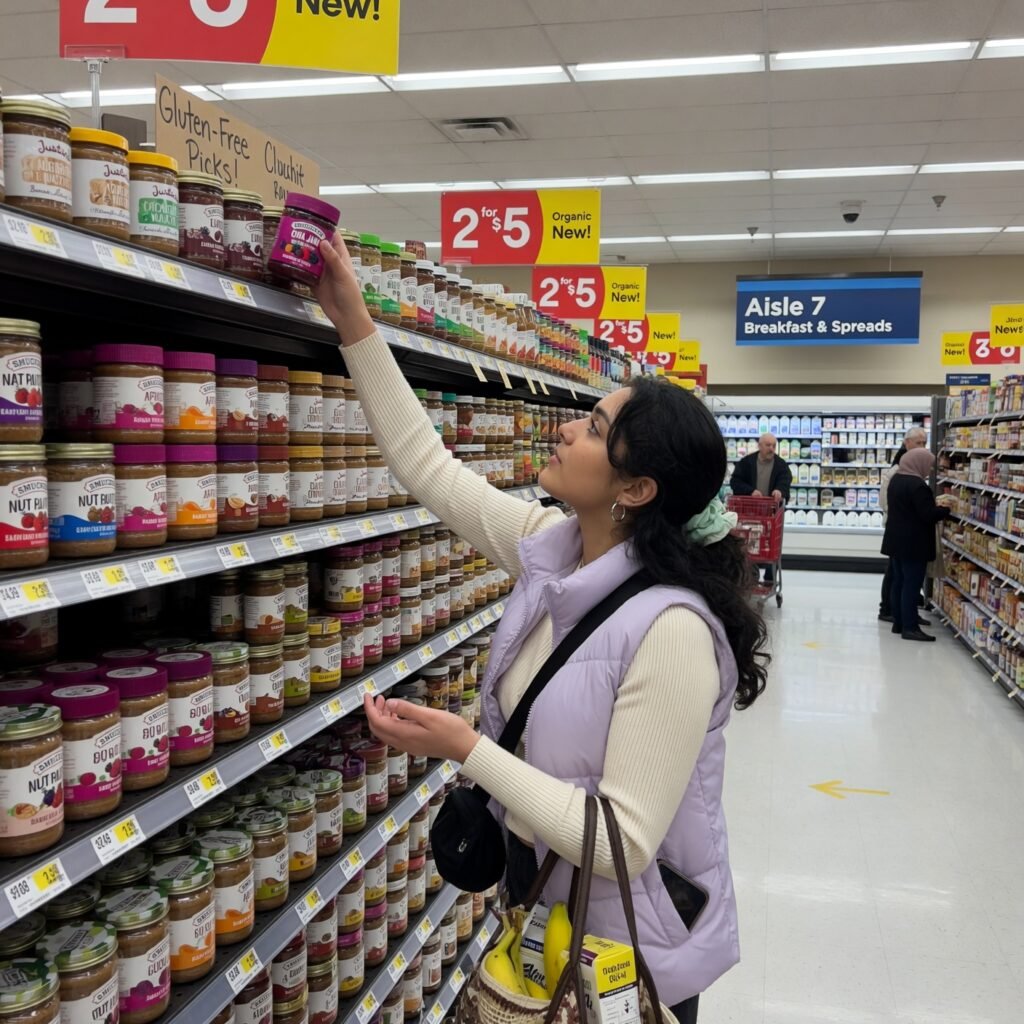
The contemporary supermarket checkout lane has transformed from a routine transactional space into an arena of profound psychological and macroeconomic tension. Over the past several years, structural shifts in global supply chains, fluctuating energy costs, and monetary policy adjustments have combined to generate persistent, systemic inflation. While macroeconomic indicators like the Consumer Price Index (CPI) abstract these changes into generalized percentages, the real-world impact is felt most acutely in the household food budget.
Food is an economically unique asset class. Unlike discretionary purchases—such as luxury electronics, travel, or apparel—nutrition is an absolute, inelastic biological requirement. You can defer buying a new vehicle or cancel a streaming subscription, but you cannot stop consuming calories. Because of this inelasticity, when food prices spike, consumers cannot simply opt out of the market. Instead, they are forced to fundamentally alter how they shop, what they buy, and how they behave inside the retail environment.
This deep-dive analysis explores the hidden behavioral science, microeconomic shifts, and tactical adaptations that occur when inflation alters grocery shopping behavior. Understanding these patterns allows both budget-conscious households and digital platforms to decode the modern consumer mind.
The Macroeconomics of the Supermarket: Why Food Inflation Hits Consumer Psychology First

To understand why inflation alters grocery shopping behavior so radically, we must first examine a core concept in behavioral finance: transaction frequency bias.
Consumers do not calculate inflation based on historical macroeconomic charts. Instead, their perception of inflation is anchored to the frequency with which they encounter changing prices. While rent or mortgage payments change once a year, and insurance premiums adjust semi-annually, grocery shopping occurs multiple times per week.
[High Transaction Frequency: Groceries 2-3x Week] ──> Constant Exposure to Price Adjustments ──> Heightened Psychological Inflation Anxiety

[Low Transaction Frequency: Housing 1x Month]     ──> Isolated Exposure to Price Adjustments ──> Delayed Psychological Inflation Anxiety
This constant exposure means that even minor micro-adjustments to the price of milk, eggs, or bread register immediately in the human subconscious, triggering a heightened state of financial anxiety long before other inflationary pressures are recognized.
The Real Purchasing Power Formula
When nominal wages remain stagnant or grow at a slower velocity than commodity prices, real purchasing power contracts. This economic reality can be modeled through the basic relationship of real wealth:

As the denominator (Price Level) expands without a proportional scaling of the numerator (Nominal Income), the resulting real purchasing power drops. In response, the consumer brain transitions from an abundance mindset to a scarcity-preservation framework, initiating a cascade of defensive behavioral modifications.
The Shrinkflation and Skimpflation Trap: How Food Manufacturers Secretly Alter Products
As raw ingredient costs rise, consumer packaged goods (CPG) companies face a structural dilemma. If they raise the visible retail price of their products too aggressively, they hit a barrier known as price elasticity of demand—the point at which consumers refuse to buy the item and seek alternatives.
To bypass this consumer resistance, manufacturers deploy sophisticated packaging modifications designed to pass the cost increases to the consumer without altering the face value of the price tag.
Decoding Shrinkflation and Packaging Geometry
Shrinkflation is the practice of reducing the physical weight, volume, or net quantity of a product while maintaining its original retail price and packaging footprint.
Retail psychologists know that human eyes prioritize the surface area of a package’s front face when evaluating value on a shelf. Manufacturers exploit this visual heuristic by altering the depth or base geometry of containers. For example:
-
Introducing a deeper concave indentation at the bottom of a peanut butter jar.
-
Thinning the width of a cardboard cereal box while maintaining its height.
-
Increasing the volume of pressurized air (slack fill) inside a bag of potato chips.
Through these geometric adjustments, a consumer continues to pay $4.99 for a box of crackers, but they are receiving 11.2 ounces of food instead of the historical 12.4 ounces. This represents a hidden, compounding price increase per unit of consumption.
The Rise of Skimpflation
While shrinkflation reduces product quantity, skimpflation reduces product quality. When the cost of premium raw ingredients (such as real butter, whole milk, or specific oils) spikes, manufacturers reformulate their ingredient matrices to incorporate cheaper, highly processed alternatives (such as palm oil, high-fructose corn syrup, or soy fillers).
Premium Ingredient Profile (Real Butter / Olive Oil) ──> Cost Spike ──> Reformulation ──> Cheaper Substitutes (Palm Oil / Fillers)
The consumer pays the same price for an item that now possesses lower nutritional value and altered culinary performance. This forces behavioral shifts as shoppers notice taste alterations and adjust their brand loyalty accordingly.
Downward Brand Substitution: The Systematic Shift from Premium to Private Labels
One of the most measurable behavioral adaptations triggered by persistent inflation is the rapid erosion of brand loyalty. In economic theory, this migration is driven by the Substitution Effect—the tendency of consumers to replace high-cost items with lower-cost alternatives as their real income contracts.
The Migration from National Brands to Private Labels
During periods of price stability, national brands leverage massive historical marketing budgets to project an aura of superiority, capturing premium market shares. However, when inflation squeezes discretionary margins, consumers undergo a systematic process of downward brand substitution, abandoning national labels in favor of supermarket private labels (commonly known as store brands or generics).
| Product Tier | Packaging / Marketing Strategy | Average Pricing Spread | Consumer Satiety Equivalence |
| National Premium Brand | High-visibility advertising, distinct graphics, premium shelf slotting. | Baseline (100%) | High perceived emotional value; identical physical utility. |
| Store Brand (Private Label) | Minimalist or mimicry packaging, zero independent advertising. | 25% to 40% Discount | Identical nutritional profile; removes marketing premium. |
| Hard-Discount Generic | Absolute basic white/yellow labeling, bulk bin staging. | 50%+ Discount | High raw utility; zero lifestyle prestige. |
The Co-Packing Realization and Behavioral Retention
A fascinating aspect of this behavioral shift is that it often becomes permanent. Once inflation forces a consumer to try a store-brand product—such as generic canned vegetables, flour, or dairy—they frequently realize that the physical utility and taste profile are identical to the national brand.
This realization stems from the industrial supply chain reality of co-packing, where the exact same manufacturing plant packages identical commodities into two separate labeling streams. Consequently, even when inflation cools, consumers rarely migrate back to premium brands, creating a structural realignment of supermarket market shares.
Structural Changes in Cart Composition: Prioritizing Caloric Density Over Nutrient Variety

When inflation strikes the grocery store, the structural composition of the shopping cart undergoes a profound evolutionary change. Consumers begin executing a brutal triage system, dividing their shopping lists into absolute essentials and expendable luxuries.
The De-prioritization of the Fresh Perimeter
As fresh agricultural commodities experience price volatility due to transportation and climate inputs, consumers systematically retreat from the fresh perimeter of the store (produce, fresh seafood, organic meats). Fresh produce carries a high risk of household capital depreciation via premature spoilage.
To mitigate this risk, inflationary shopping behavior shifts toward shelf-stable, preservation-ready alternatives:
-
Replacing fresh berries with frozen bags of fruit.
-
Swapping fresh Atlantic salmon for canned wild-caught tuna or sardines.
-
Trading fresh broccoli florets for frozen, pre-cut alternatives.
The Caloric Density Shift
In severe inflationary cycles, a more dangerous behavioral shift occurs: consumers prioritize caloric density per dollar over micronutrient density per dollar.
Budget Squeeze ──> Fresh Produce / Lean Meats Abandoned ──> Pivot to High-Carb, High-Fat Shelf Essentials (Pasta, Rice, Processed Goods)
Processed, shelf-stable goods composed of refined grains, seed oils, and sodium are structurally cheaper to manufacture and distribute than fresh whole foods. As low-income households struggle to satisfy baseline hunger within their financial limits, they naturally buy more pasta, white rice, boxed dinners, and processed meats. While this shift successfully fills the stomach for less capital, it creates long-term public health externalities by increasing rates of metabolic dysfunction and nutritional deficiencies.
The Rise of Extreme Deal-Hunting: Couponing, Multi-Store Arbitrage, and Digital Rebates
Inflation transforms the passive shopper into an active market speculator. When prices are stable, consumers prioritize convenience, executing all of their household procurement at a single, geographically close supermarket chain. When inflation compresses margins, consumers willingly trade their time for cost savings, engaging in high-intensity deal-hunting behavior.
1. Cross-Shopping and Multi-Store Arbitrage
Modern inflationary behavior is characterized by the death of the single-store run. Shoppers increasingly segment their lists across multiple competing retail ecosystems:
-
Purchasing paper goods, storage essentials, and dried bulk grains at a warehouse club.
-
Procuring basic produce and dairy at a hard-discount chain (such as Aldi or Lidl).
-
Utilizing traditional regional supermarkets exclusively for loss-leader promotions highlighted in the weekly circular.
This multi-store arbitrage requires significant time and logistical planning, but it allows consumers to bypass the unified margin expansions of individual retail chains.
2. Digital Gamification and Rebate Stacking
The modern consumer leverages technology to fight price increases. Inflation has accelerated the adoption of store-specific mobile applications, digital coupon clipping, and cash-back rebate aggregators.
The Behavioral Loop: Shoppers no longer view couponing as an act of financial desperation; instead, it has been reframed through gamification as an intellectual victory over corporate pricing mechanisms. Stacked deals—where a store digital coupon is paired with a manufacturer rebate and a cash-back credit card multiplier—are actively sought after to lower checkout totals.
Fintech and Alternative Payment Methods: The Growing Reliance on Credit and BNPL for Food
As the cost of living outpaces real wage growth, a more concerning behavioral shift emerges within the financial mechanics of grocery procurement. Consumers are increasingly forced to alter how they fund their nutritional liabilities, relying heavily on debt instruments to bridge the monthly budget gap.
Supermarket Checkout ──> Insufficient Cash Reserves ──> Credit Card Leverage or BNPL Splitting ──> Future Cash Flow Drag
Credit Card Balancing Actions
During non-inflationary periods, affluent and middle-class consumers utilize rewards credit cards as simple convenience vehicles, paying the balance down to zero dollars every cycle. Under persistent inflation, however, data reveals a rising trend of consumers carrying rolling balances on credit cards explicitly used for supermarket transactions.
Using high-interest credit (often carrying 20%+ APR) to fund rapidly depreciating consumable assets like food creates a destructive compounding loop, dragging down future discretionary cash flow.
Buy Now, Pay Later (BNPL) at the Cash Register
One of the newest technological trends accelerated by inflation is the integration of Buy Now, Pay Later (BNPL) platforms into checkout lines. Services historically reserved for discretionary luxury items—such as fashion, beauty products, or electronics—are now integrated into standard supermarket payment terminals and grocery delivery applications.
Consumers are now choosing to split a $150 weekly grocery transaction into four bi-weekly installments of $37.50. This behavior masks the immediate impact of high food costs, but it builds a dangerous layer of micro-debt across the consumer base, leaving households vulnerable to sudden income shocks.
The Elimination of Food Waste: How Households Optimize Kitchen Yield Under Pressure

When food costs are high, the financial penalty for throwing away leftovers or letting produce rot becomes too painful to ignore. Consequently, inflation acts as a powerful catalyst for efficiency inside the home kitchen, driving consumers to adopt rigorous preservation habits.
The Restoration of Leftover Culture
During economic expansions, households routinely discard unconsumed portions of home-cooked meals or restaurant take-out. Inflation reverses this waste behavior. Shoppers intentionally reframe cooking systems to focus on intentional leftovers—cooking massive batches of base proteins or grains on Sunday to serve as the structural foundation for multiple distinct meals throughout the week.
Kitchen Optimization Protocols
Consumers modify their food management behavior through distinct physical habits:
-
The FIFO Fridge Rotation: Adopting the commercial restaurant infrastructure of “First In, First Out” (FIFO) within the home refrigerator, moving older produce to the front display to ensure consumption before spoilage.
-
The Deep Freezer Pivot: Utilizing the freezer as a preservation holding zone, freezing expiring breads, meats, and vegetables before they undergo biological degradation.
-
Culinary Upcycling: Transforming food scraps that were previously treated as waste into valuable culinary assets—such as converting stale bread into croutons, or simmering vegetable skins and chicken carcasses into mineral-dense cooking stocks.
A Systematic Framework for Consumers: Insulation Tactics to Defeat Inflationary Supermarket Pressures
Because supermarkets use advanced behavioral design to maximize transaction sizes, navigating a grocery store during an inflationary cycle requires a strict, defensive personal system. Relying on sheer willpower is ineffective against multi-billion-dollar retail algorithms.
To protect your household capital, deploy this structured operational protocol on every shopping cycle.
The Permanent Economic Scarring of Consumer Shopping Behavior
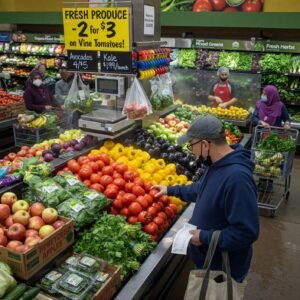
Inflation is not merely a temporary financial inconvenience that vanishes once macroeconomic inflation targets are achieved. Rather, prolonged inflationary cycles leave behind what economists refer to as economic scarring—permanent alterations to consumer psychology and human behavior.
Long after supply chains normalize and price adjustments slow to a stable 2% annualized pace, the behavioral changes learned during an inflationary crisis remain embedded within the cultural baseline. Consumers who were forced to abandon name brands discover that store brands deliver identical utility for less capital, permanently shifting market share profiles away from traditional CPG giants. The habits of digital deal stacking, multi-store cross-shopping, and meticulous unit-price evaluation transform from defensive stress responses into standard, lifetime optimization tools.
Ultimately, inflation strips away the luxury of mindless consumerism. By forcing shoppers to treat food procurement with the discipline of a corporate supply chain manager, it accidentally builds a highly analytical, system-driven consumer base. The households that survive these macroeconomic pressures through automated risk management, structural kitchen preservation, and technological leverage emerge with an optimized relationship with capital—one that positions them to build genuine, long-term financial independence as the broader economy stabilizes.