What is a stock market crash

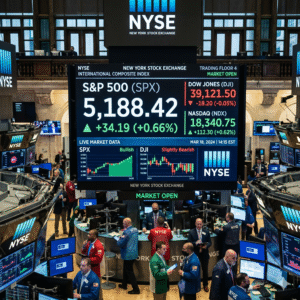
Few phrases in the financial world strike as much fear into the hearts of investors as “stock market crash.” When the evening news leads with flashing red arrows, panicking traders on the floor of the New York Stock Exchange, and billions of dollars vaporizing in a matter of hours, it is entirely natural to feel a knot in your stomach.
If you have money tied up in a 401(k), an Individual Retirement Account (IRA), or a personal brokerage account, a market crash feels less like an abstract economic event and more like a direct threat to your financial future and your family’s security.
But here is the honest truth that veteran investors understand: market crashes, while painful, are a completely normal and inevitable part of the financial ecosystem. They are not the end of the global economy, nor are they a sign that investing is a rigged game.
To navigate the world of investing successfully, you have to lift the veil of fear surrounding these events. By understanding the underlying mechanics of a market panic, recognizing the historical warning signs, and setting up your portfolio to withstand sudden shocks, you can transform a market crash from a terrifying financial disaster into a manageable—and potentially profitable—market event.
What Is a Stock Market Crash? A Simple Definition for Investors
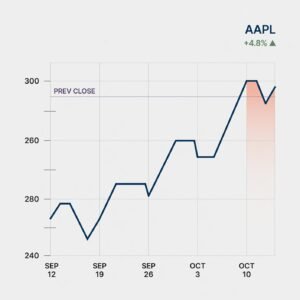
At its most fundamental level, a stock market crash is a sudden, dramatic, and often completely unexpected drop in stock prices across a significant cross-section of the market.
Unlike a slow, grinding decline that takes place over several months, a crash happens with dizzying speed. We are talking about massive double-digit percentage drops that occur over the course of a few days, or sometimes even a few hours.
A crash happens when there is a massive shift in market psychology. On a normal trading day, buyers and sellers are in a constant tug-of-war, keeping prices relatively stable. But during a crash, buyers completely vanish, and a massive wave of panic selling takes over.
Everyone tries to rush through the exit door at the exact same time. Because there are millions of shares being sold and almost no one willing to buy them, stock prices plummet rapidly until they hit a level where buyers are finally willing to step back in.
The Role of Broad Market Indexes
When financial analysts say “the market crashed,” they are usually referring to major stock indexes rather than individual companies. An individual company’s stock can crash because of bad earnings or a corporate scandal, but a true market crash affects the entire economy. Analysts track this by monitoring major benchmarks:
-
The S&P 500: An index tracking the performance of 500 of the largest publicly traded companies in the United States. This is widely considered the best gauge of overall U.S. stock market health.
-
The Dow Jones Industrial Average (DJIA): A price-weighted index that tracks 30 large, blue-chip companies. While older and less comprehensive than the S&P 500, it is still a major cultural indicator of market stability.
-
The Nasdaq Composite: An index heavily weighted toward technology, growth, and internet companies. The Nasdaq is often more volatile and can experience more violent crashes during speculative tech bubbles.
Stock Market Crash vs. Bear Market vs. Correction: Understanding the Crucial Differences
In financial media, terms like “crash,” “correction,” and “bear market” are frequently tossed around as if they mean the exact same thing. This confusion creates unnecessary panic. For a regular investor, understanding the technical boundaries of these terms is essential for keeping your perspective clean during market volatility.
| Market Event | Technical Definition | Typical Velocity | Historical Frequency |
| Market Correction | A drop of 10% to 19.9% from recent all-time highs. | Takes weeks or months to develop; generally orderly. | Happens roughly once every 1 to 2 years; highly common. |
| Bear Market | A prolonged downward trend of 20% or more from recent peaks. | A slow, grinding decline that lasts 9 to 15 months on average. | Happens roughly once every 3.5 to 5 years. |
| Stock Market Crash | A sudden, violent drop of double-digit percentages in a matter of days. | High-velocity collapse over days or hours; driven by pure panic. | Rare, unpredictable, and usually tied to major historical catalysts. |
Why the Distinction Matters for Your Portfolio
Think of a market correction as a routine health check for the economy. When stock prices rise too fast during a booming market, a correction acts as a safety valve, cooling down overinflated stock prices and bringing valuations back to reality. Corrections are healthy, brief, and provide excellent buying opportunities.
A bear market, on the other hand, is a long-term economic condition. It is a slow marathon of declining prices, often accompanied by an actual economic recession, rising unemployment, and declining corporate profits.
A crash is an acute psychological shock. A crash can happen during a bull market, it can kick-start a brand-new bear market, or it can happen right in the middle of an existing economic downturn. The defining feature of a crash is always its terrifying speed.
The Anatomy of a Market Collapse: What Triggers a Sudden Stock Market Crash?
A stock market crash rarely happens in a vacuum. While the sudden drop feels unexpected to the general public, the underlying structural weaknesses have usually been building up quietly in the background for years.
Understanding the root causes of a crash can help you spot dangerous market environments before the collapse occurs.
1. The Bursting of Asset Bubbles
An asset bubble occurs when the price of a specific type of investment—whether it is tech stocks, real estate, or railroad shares—rises far beyond its actual, fundamental economic value.
Bubbles are driven by speculation, media hype, and a psychological phenomenon known as FOMO (Fear of Missing Out). Regular people see their neighbors making easy money on an asset, so they flood into the market, driving prices up even higher.
Eventually, prices reach a point of absolute absurdity where they are completely detached from real corporate earnings or economic reality. All it takes is one small negative piece of news to break the illusion. When the first few big institutional investors start selling to lock in their profits, the entire house of cards collapses, resulting in a violent crash.
2. Excessive Leverage and Margin Calls
Leverage is the financial term for using borrowed money to invest. In a roaring bull market, leverage acts as an absolute accelerant for gains. If you use $10,000 of your own money and borrow $10,000 from your broker (trading on margin) to buy a stock, a 20% increase in the stock price nets you a 40% return on your personal capital.
But leverage is a dangerous double-edged sword. When stock prices drop, leverage magnifies your losses. If the market falls sharply, your broker will issue a margin call. This means you are legally required to immediately deposit more cash into your account to cover the drop in asset value.
If you do not have the cash on hand, the broker will automatically sell your stocks at the current, depressed market price to get their money back. This triggers a vicious domino effect: falling prices force margin calls, margin calls force automatic selling, and automatic selling drives prices down even further, accelerating the crash.
3. Macroeconomic Shocks and Black Swan Events
Sometimes, a crash is caused by an external, unpredictable event that completely derails the global economy overnight. In finance, these are known as Black Swan events.
A sudden geopolitical conflict, a massive change in central bank monetary policy, an unexpected corporate bankruptcy of a major global bank, or a global health crisis can instantly shatter investor confidence. When the future becomes completely unreadable, institutional investors dump riskier assets like stocks and hoard safe assets like cash and government bonds.
4. Algorithmic and High-Frequency Trading (HFT)
In the modern financial landscape, the vast majority of daily trading volume is not executed by human beings sitting at desks. Instead, it is run by incredibly powerful computer programs, complex algorithms, and high-frequency trading systems.
These computers are programmed to automatically execute trades based on mathematical models, news headlines, and price movements. When a market starts dropping rapidly, these algorithms often trigger automatic, mass-scale sell orders to cut losses. This algorithmic herd behavior can cause flash crashes, driving prices down by thousands of points in minutes before human traders can even comprehend what is happening.
Famous Stock Market Crashes in History: Essential Lessons from the Past

To truly understand how a market crash behaves, you have to look at history. By studying past financial collapses, you will see a highly repetitive pattern: a period of intense greed and overvaluation, followed by a sudden catalyst, a wave of absolute panic, an economic hangover, and an eventual, historic recovery.
The Crash of 1929 (The Great Crash)
The granddaddy of all market crashes began in October 1929. Throughout the “Roaring Twenties,” the American public became obsessed with the stock market. Speculation was rampant, and everyday citizens were borrowing massive amounts of money to buy stocks.
The market peaked in September, and by late October, the bubble burst. On Black Thursday (October 24) and Black Tuesday (October 29), the market collapsed in spectacular fashion, losing roughly 25% of its total value in days.
The Crash of 1929 is historically significant because it exposed deep structural flaws in the banking system and acted as the catalyst for the Great Depression, a brutal decade-long economic crisis.
Black Monday (1987)
On October 19, 1987, the Dow Jones Industrial Average experienced the largest single-day percentage drop in its entire history, plummeting a staggering 22.6% in a single trading session.
Unlike the 1929 crash, Black Monday was not accompanied by a massive economic depression. Instead, it was largely a structural and technological failure. Early versions of computerized portfolio insurance programs got caught in an automated loop, selling more and more shares as the market fell.
The market recovered relatively quickly from this shock, proving that a severe crash does not always mean long-term economic doom.
The Dot-Com Bubble Burst (2000)
In the late 1990s, the rise of the commercial internet created an unprecedented speculative bubble. Investors poured millions of dollars into any company that added “.com” to the end of its name, regardless of whether the business had actual revenues or a viable business model.
The Nasdaq index skyrocketed to unsustainable heights. In March 2000, the reality of unprofitability caught up with the sector. The bubble burst, leading to a massive, multi-year tech crash that wiped out trillions of dollars in speculative wealth and forced major tech companies into complete bankruptcy.
The Great Financial Crisis (2008)
The 2008 crash was rooted in the U.S. housing market and the creation of highly complex, toxic mortgage-backed securities. Banks had lent money to millions of unqualified homebuyers. When those mortgages started defaulting, the entire global financial system locked up.
In September 2008, Lehman Brothers, a massive Wall Street investment bank, went bankrupt. This triggered a historic stock market crash that saw the S&P 500 drop by over 50% from its peak. This crash led to the Great Recession, requiring massive government interventions and central bank bailouts to stabilize the economy.
The COVID-19 Flash Crash (2020)
In March 2020, the stock market experienced its fastest descent into a bear market in history. As the COVID-19 pandemic swept across the globe, governments initiated unprecedented economic lockdowns, halting travel, businesses, and daily life.
Fearing a complete economic freeze, investors dumped stocks at lightning speed. The Dow Jones suffered multiple historic single-day point drops. However, due to unprecedented financial support from the Federal Reserve and government stimulus packages, this crash was followed by one of the fastest and most explosive market recoveries in financial history.
Modern Safeguards: How Exchanges Contain Extreme Market Panic
Because historical crashes like Black Monday in 1987 caused so much chaotic damage, modern financial exchanges have implemented built-in safety mechanisms to prevent a total, uncontrolled free-fall. The most important of these tools are market-wide circuit breakers.
Circuit breakers act as automated emergency brakes. If the market drops by a specific percentage in a single day, all trading across the entire stock market is completely halted for a set duration. This mandatory time-out forces algorithmic systems to stop firing and allows human investors to take a breath, review economic data, and cool down emotional panic.
For the U.S. stock market (specifically tracking the S&P 500 index), the modern circuit breaker rules operate as follows:
-
Level 1 Halt: If the S&P 500 drops by 7% below the previous day’s close before 3:25 PM Eastern Time, trading is completely halted for 15 minutes.
-
Level 2 Halt: If the market continues to fall and hits a 13% drop before 3:25 PM, trading is halted for another 15 minutes.
-
Level 3 Halt: If the market drops by 20% at any point during the trading day, all trading is completely shut down for the remainder of the day.
Knowing these guardrails exist should give you immense peace of mind. The financial system has built-in circuit breakers specifically designed to ensure that a market can never drop to zero in a single afternoon.
The Ripple Effect: How a Stock Market Crash Impacts Everyday People
A common point of confusion for people who do not actively trade stocks is how a market crash affects their day-to-day lives. They assume that if they do not own individual corporate shares, a Wall Street collapse has absolutely nothing to do with them.
This is a dangerous misconception. The stock market is not an isolated playground for wealthy elites; it is a forward-looking mirror of the broader economy. When it crashes, the ripple effects eventually reach everyday households.
1. Retirement and Nest Eggs Take a Hit
Even if you have never manually placed a stock trade in your life, you likely have skin in the game. If you work for a company with a 401(k) plan, or if you hold a pension or an IRA, your retirement funds are heavily invested in corporate stock mutual funds. A crash slashes the value of these accounts. For workers who are decades away from retirement, this is a minor setback. But for older workers planning to retire in the next 6 to 12 months, a sudden crash can derail their plans, forcing them to work several years longer than expected.
2. The Credit Crunch and Borrowing Difficulties
When the stock market crashes due to deep banking or systemic economic issues, banks become incredibly risk-averse. They want to preserve their cash reserves to survive the crisis.
As a result, they tighten their lending standards. This creates a credit crunch, making it significantly harder for regular consumers to get approved for a home mortgage, an auto loan, a small business loan, or a personal line of credit.
3. Corporate Layoffs and Unemployment
The stock price of a corporation directly influences its capacity to raise capital, expand operations, and secure credit lines. When a company’s stock drops by 40% or 50% during a crash, its management team immediately pivots from expansion to survival mode.
To protect their bottom line and keep corporate profits afloat, businesses cut costs. This inevitably translates to corporate hiring freezes, the cancellation of major projects, and widespread worker layoffs, which can trigger a broader economic recession.
Psychological Survival: How to Avoid Panic Selling When the Market Plummets
If you find yourself living through a real-time stock market crash, your survival depends entirely on emotional management. The financial choices you make during a 48-hour panic window can fundamentally alter your net worth for the rest of your life.
To ensure you don’t sabotage your financial future, you must understand the psychological traps that lead to ruin.
+-----------------------------------------------------------------------+
|                    THE DESTRUCTIVE CYCLES OF PANIC                    |
+-----------------------------------------------------------------------+
|  Market Peak  --> Optimism and Euphoria ("This will never end!")      |
|  Initial Drop --> Denial ("It's just a temporary dip.")               |
|  Deep Crash   --> Pure Panic ("I need to sell before I lose everything!")|
|  Market Bottom--> Capitulation (Investor sells at the exact bottom)   |
|  The Recovery --> Regret (Investor watches market soar without them)   |
+-----------------------------------------------------------------------+
The Capital Sin of Capitulation
The psychological point of maximum financial danger is called capitulation. This happens at the absolute bottom of a crash, when the media narrative is at its bleakest point and the investor finally cracks under the emotional pressure. They can no longer stand the pain of seeing their portfolio value drop, so they click the “sell all” button, converting their investments into cash.
When you do this, you turn temporary market fluctuations into absolute financial reality. You lock in your losses at the worst possible price.
More importantly, you remove your capital from the market game board. History shows that the stock market’s absolute best trading days often occur immediately after its worst days. If you are sitting in cash during those explosive recovery days, your portfolio will miss out on the rebound, permanently breaking your compound interest trajectory.
Go on a Financial Media Fast
When the market is crashing, the worst thing you can do is sit in front of a financial news channel all day or endlessly refresh financial social media feeds. The media’s business model is built on capturing your attention, and nothing captures attention quite like fear.
Continuous consumption of apocalyptic economic headlines will eventually wear down your willpower, leading you to make an impulsive, emotional decision. Close your laptop, stop checking your portfolio balance, and focus on your long-term goals.
How to Prepare Your Portfolio for a Market Crash: Actionable Wealth Protection Strategies

You cannot control when a stock market crash happens. No economist, financial guru, or algorithm can perfectly predict the exact day a market will collapse.
However, while you cannot predict a crash, you can completely control how prepared you are for one. Implementing these structural strategies will make your portfolio highly resilient to market shocks.
1. Build a True, Bulletproof Cash Cushion
Your primary line of defense against any financial crisis is a robust emergency fund. This fund should consist of 3 to 6 months’ worth of essential living expenses (rent, mortgage, groceries, utilities, insurance) kept in a safe, highly liquid account, completely separate from the stock market.
+-----------------------------------------------------------------------+
|                     THE CASH CRISIS SHIELD                            |
+-----------------------------------------------------------------------+
|  When you have an ironclad cash reserve, you know that even if the     |
|  stock market crashes and you temporarily lose your job, you have     |
|  plenty of money to survive without touching your investments.         |
+-----------------------------------------------------------------------+
|   Result: You never have to liquidate stocks at a steep discount.     |
+-----------------------------------------------------------------------+
2. Implement Strategic Diversification
If your entire investment portfolio consists of three hyper-growth technology stocks, a market crash will cause catastrophic damage to your wealth. But if you have diversified your money across multiple asset classes, industries, and geographies, your portfolio has built-in shock absorbers.
Instead of trying to pick individual winning stocks, focus the core of your investment portfolio on broad, diversified market index funds or Exchange-Traded Funds (ETFs) that track major benchmarks like the S&P 500 or a Total Stock Market Index. When you buy a total market index fund, you instantly own a tiny slice of thousands of profitable corporations across every economic sector, protecting you if a single industry collapses.
3. Lean on Dollar-Cost Averaging (DCA)
Instead of trying to guess when the market has hit its absolute bottom to invest your money, use a system called Dollar-Cost Averaging. With DCA, you invest a fixed, predetermined amount of cash into your chosen index funds on a strict schedule (e.g., every single month or every two weeks), regardless of whether the market is up or down.
When the market crashes, your fixed dollar amount automatically buys more shares at a heavily discounted price. When the market inevitably recovers and climbs to new highs, those cheap shares you accumulated during the crash will act as rocket fuel for your long-term wealth generation.
4. Review Your Asset Allocation and Risk Tolerance
Your asset allocation—the balance between equities (stocks) and fixed income (bonds)—should always match your actual age and retirement timeline.
-
Young Investors (Decades from retirement): Can afford to have a portfolio heavily weighted toward stocks (80% to 90%+). They have plenty of time to ride out a major crash and benefit from the long-term recovery.
-
Older Investors (Near or in retirement): Need to have a much higher percentage of their wealth parked in safe, income-generating assets like government bonds, short-term treasury bills, and high-yield cash instruments. This protects their principal capital from a sudden crash right when they need to start withdrawing money to cover their daily living costs.
Frequently Asked Questions About Stock Market Crashes
To round out your understanding of these volatile financial events, let’s address some of the most common questions everyday investors ask when the market starts to show signs of instability.
Should I sell everything and buy gold or crypto when a crash starts?
No. Rushing out of your core investment strategy into alternative assets during a panic is typically a major mistake. Gold can act as a long-term hedge against inflation, but its price can also fluctuate wildly during a broader liquidity crisis. Cryptocurrency is a highly speculative, hyper-volatile asset class that historically drops even more violently than the traditional stock market during periods of intense economic fear. Stick to a diversified mix of broad index funds, high-quality bonds, and stable cash reserves.
How long does it usually take for the stock market to recover from a crash?
The recovery timeline depends entirely on the root cause of the crash. Short-lived, technical panics (like the crash of 1987 or the COVID-19 drop of 2020) can recover within a matter of months. Deeper structural crashes tied to systemic banking crises or severe economic recessions (like 1929 or 2008) can take several years to fully reclaim their previous all-time highs. However, the historical average recovery time for a major market drop is roughly two years.
Is a stock market crash the same thing as an economic recession?
No, they are distinct concepts, though they are tightly linked. A stock market crash is a specific event involving asset prices on a financial exchange. An economic recession is a broad macroeconomic condition defined as a significant decline in economic activity across the country, lasting more than a few months, visible in industrial production, employment, and real Gross Domestic Product (GDP). A crash can happen without causing a recession, but a severe recession is almost always accompanied by a major stock market decline.
Can the stock market actually drop all the way to zero?
Theoretically, an individual company can go bankrupt, causing its specific stock price to drop to zero. However, for a broad market index like the S&P 500 to drop to zero, every single one of the 500 largest, most profitable corporations in America would have to go completely bankrupt simultaneously. If that were to happen, it would mean the total, permanent collapse of the modern civilized world, and the cash in your wallet or bank account would be completely worthless anyway.
Why Market Crashes Are Opportunities in Disguise
It is completely natural to look at a stock market crash with an initial sense of anxiety. Watching numbers drop on a screen can test the resolve of even the most experienced investors. But if you can train your mind to look past the immediate emotional discomfort, you will realize that a market crash is actually the single greatest wealth-building window you will ever experience.
A crash is the ultimate clearance sale for assets. It takes high-quality, incredibly profitable global corporations and places their shares on a massive financial discount. The vast majority of generational wealth is built by people who have the courage, patience, and discipline to keep buying assets when everyone else is running away in a panic.
By keeping a cool head, maintaining a rock-solid emergency cash fund, ignoring the short-term noise of sensationalized financial media, and sticking to a consistent, diversified investment plan, you can transform a stock market crash from something you fear into something you intentionally leverage to secure your long-term financial freedom.