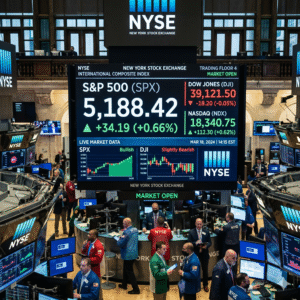
Why Stock Prices Change Before Your Order Fills
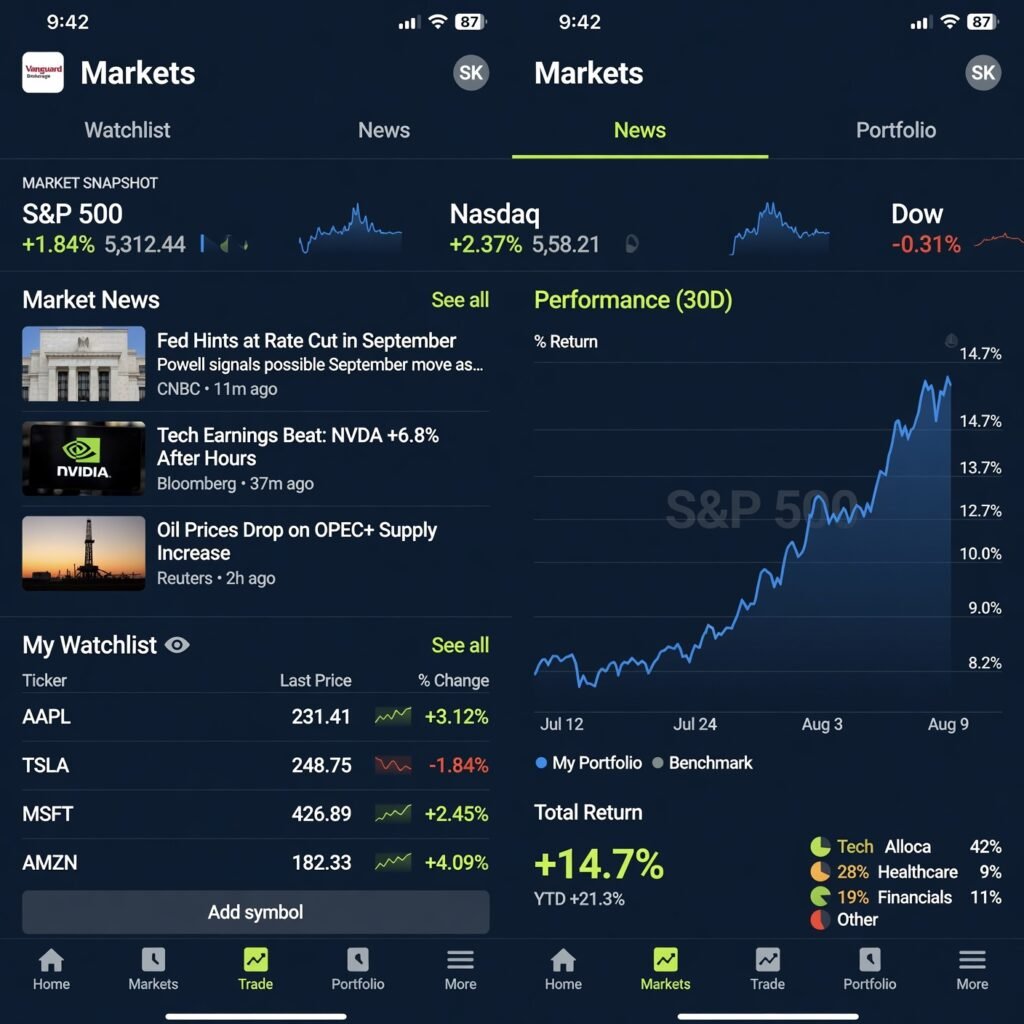
You open your favorite smartphone brokerage app, pull up the chart for a stock you have been watching closely, and see a price tag that looks perfect. You type in the number of shares you want to buy, confidently hit the “Submit” button, and wait for the confirmation notification to pop up.
But when the confirmation screen appears a few seconds later, you notice something frustrating: you did not buy the stock at the price you saw on your screen. Instead, you paid a few cents more per share. Alternatively, if you were trying to sell a position to cut your losses during a sudden market downturn, you might find that your order filled at a price lower than what you were expecting.
For everyday retail investors, this experience can be deeply confusing and mildly irritating. It is easy to feel like the brokerage platform is pulling a fast one on you, hidden fees are being taken out behind your back, or the entire stock market is somehow rigged against the little guy.
The good news is that there is no conspiracy at play. What you are experiencing is a core feature of how global financial markets operate. The stock market is not a retail store with fixed price tags; it is a hyper-speed, highly dynamic continuous auction. The price of an asset moves in milliseconds based on a complex web of order matching, high-frequency computer algorithms, liquidity pools, and execution routing.
If you want to transition from a passive market participant to a savvy, strategic investor, you must lift the curtain on what happens to your order after you click submit. This comprehensive, deep-dive guide will break down the exact mechanical reasons why stock prices change before your order fills, explain the hidden infrastructure of Wall Street execution, and provide you with actionable, advanced trading strategies to protect your capital from sudden price shifts.
The Retail Store Illusion vs. The Global Auction Reality
To understand why stock prices shift mid-execution, we must first dismantle the common mental model that most beginner investors bring to the stock market.
When you buy a book on Amazon or a pair of shoes at a local mall, you are engaging in a fixed-price transaction. The seller posts a static price tag. If you agree to pay that exact amount of cash, the transaction is executed, and you walk away with the product. The price does not fluctuate while you are walking from the aisle to the cash register.
Many retail investors assume that buying a share of stock works the exact same way. They see “$150.00” listed next to a company’s ticker symbol on their screen and assume that the broker has a warehouse full of shares waiting to be sold at exactly $150.00.
The Live Auction Mechanics
In reality, the stock market is a non-stop, global double auction. At any given millisecond, there are thousands of individual buyers trying to buy shares at the lowest possible price, and thousands of individual sellers trying to sell shares at the highest possible price.
The price you see prominently displayed on your brokerage dashboard or a financial news website is not a guaranteed contract; it is simply a historical record of the very last price at which a buyer and a seller successfully agreed to do business.
The moment that trade is finalized, it is old news. The market immediately moves on to matching the next batch of buyers and sellers. Because new orders are flooding into the stock exchange from all over the world every single microsecond, the balance of supply and demand is in a state of perpetual chaos.
If a flood of positive news drops about a company while your order is traveling through the digital pipeline, a wave of buyers will instantly bid prices higher, ensuring that the old historical price on your screen vanishes before your order ever arrives at the trading floor.
Understanding the Order Book: Bid, Ask, and the Market Spread
To comprehend the exact micro-movements of stock execution, you must familiarize yourself with the structural core of every financial exchange: the order book.
The order book is a live, continuously updated digital ledger that organizes all open, unfilled buy and sell orders for a specific stock. It is divided into two distinct columns: the “Bid” side and the “Ask” side.
+-------------------------------------------------------------------------+
|                         THE DIGITAL ORDER BOOK                          |
+-------------------------------------------------------------------------+
|        BID SIDE (Buyers)         |          ASK SIDE (Sellers)          |
|  100 shares  @  $149.98          |    500 shares  @  $150.02            |
|  300 shares  @  $149.97          |    200 shares  @  $150.03            |
|  500 shares  @  $149.95          |    1,000 shares @ $150.05            |
+-------------------------------------------------------------------------+
|                  THE SPREAD: $150.02 - $149.98 = $0.04                  |
+-------------------------------------------------------------------------+
The Bid Price
The Bid represents the maximum price that buyers are currently willing to pay to acquire shares of the stock. Think of it as the wholesale price or the auction floor. Buyers want to keep this number as low as possible to protect their capital.
The Ask Price
The Ask (often referred to as the “Offer”) represents the minimum price that current sellers are willing to accept to part ways with their shares. Think of this as the retail price. Sellers want to keep this number as high as possible to maximize their profits.
The Bid-Ask Spread
Notice that the highest Bid and the lowest Ask never naturally touch. If they did, a trade would instantly execute and disappear from the ledger. The empty gap between these two numbers is called the bid-ask spread.
-
The Formula:
$$\text{Bid-Ask Spread} = \text{Lowest Ask Price} – \text{Highest Bid Price}$$
The spread is the transactional friction of the financial markets. For highly liquid, massive blue-chip corporations like Apple or Microsoft, the bid-ask spread is typically tiny—often just one single penny. For obscure, low-volume penny stocks, the spread can be massive, sometimes accounting for 5% or 10% of the entire value of the stock.
When you look at a standard stock chart on a retail app, the platform frequently displays a single blended number (the mid-price, which is halfway between the bid and the ask) to keep the screen clean for beginners.
However, when you click buy, you aren’t paying the mid-price; you are forced to buy from the lowest seller on the Ask column. If that seller changes their mind or gets bought out by an institutional player a millisecond before you click, the Ask price climbs, and your execution price changes along with it.
Market Orders vs. Limit Orders: The Mechanics of Execution
The single most common reason retail investors experience unexpected price changes is that they are utilizing the wrong order type. When you tell your broker to execute a trade, you must choose the set of rules the broker will follow when interacting with the live order book.
The two foundational order types that every investor must master are Market Orders and Limit Orders. Choosing between them requires balancing a critical trade-off: prioritizing execution speed versus prioritizing price certainty.
1. Market Orders: Prioritizing Guaranteed Speed
A Market Order is an instruction to your broker to buy or sell a stock immediately at the absolute best available price currently listed in the order book.
When you submit a market order, you are telling the system: “I do not care what the price tag is; just get me into this stock right now as fast as humanly possible.”
-
The Advantage: Your order fills almost instantaneously. If the market is open, a market order guarantees that you will get your shares.
-
The Disadvantage: You have zero price control. If the market is moving incredibly fast, or if the order book is thin, your order will chew through the available tiers of the Ask column, resulting in an execution price that could be significantly higher than the last traded price you saw on your dashboard.
2. Limit Orders: Prioritizing Price Certainty
A Limit Order is an instruction to your broker to buy or sell a stock only at a specific, designated price or better.
-
Buy Limit Order: Tells the broker to execute the trade only if the stock price drops to your limit price or lower.
-
Sell Limit Order: Tells the broker to execute the trade only if the stock price climbs to your limit price or higher.
When you submit a limit order, you are telling the system: “I want to buy this stock, but I am refuse to pay a single penny more than $150.00. If you cannot find a seller willing to meet my price, leave my order unfilled.”
-
The Advantage: Complete price protection. You will never experience an unexpected price hike before your order fills.
-
The Disadvantage: Zero execution guarantee. If the stock price is trading at $150.01 and instantly takes off toward $160.00, your limit order at $150.00 will sit in the ledger completely ignored. You will miss out on the entire upward move.
Crucial Takeaway for Beginners: If you are trading volatile stocks, high-growth tech companies, or placing trades during breaking news events, never use a market order. Using a market order in a wild market is equivalent to writing a blank check to Wall Street and hoping for the best.
What Is Slippage? Tracking the Real Cost of Changing Stock Prices
In the professional trading world, the difference between the price you expect to get when you submit a trade and the actual final price at which the trade executes is called slippage.
Slippage is not an arbitrary penalty or a hidden fee pocketed by your brokerage platform; it is a mathematical reality driven by market velocity and order size. Slippage can move in two directions:
Negative Slippage
This is the variant that causes investor frustration. It occurs when a buy order fills at a higher price than expected, or a sell order fills at a lower price than expected.
Imagine you submit a market order to buy 1,000 shares of Company X, which appears to be trading at $10.00 on your screen. However, the order book only has 200 shares available for sale at $10.00. The remaining shares are priced at $10.05 and $10.10. Your market order will automatically buy up all 1,000 shares across those ascending price tiers, resulting in an average fill price of $10.07. You have experienced 7 cents per share of negative slippage.
Positive Slippage
Though less frequent for retail investors, positive slippage is a pleasant financial surprise. It happens when a buy order fills at a lower price than expected, or a sell order fills at a higher price than expected.
This usually happens if you submit a limit order to buy a stock at $50.00, but a massive block trade hits the market at that exact microsecond, driving prices down momentarily to $49.95. Your broker may pass that price improvement along to you, filling your order at a better rate than your stated cap.
The Speed of Wall Street: High-Frequency Trading and Latency
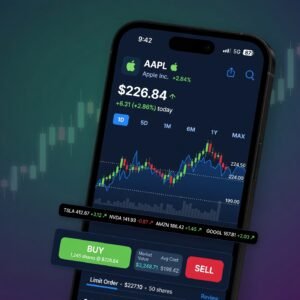
To understand why prices can change in the blink of an eye, you have to realize that you are competing against the fastest computer hardware on the planet. The modern stock market is dominated by High-Frequency Trading (HFT) firms.
HFT firms utilize advanced supercomputers, proprietary mathematical algorithms, and ultra-high-speed fiber-optic networks to scan global financial exchanges and execute millions of trades in fractions of a millisecond.
The Real Meaning of Latency
When you click “Buy” on your smartphone app, that digital signal has to travel from your physical device, through your cellular network or home Wi-Fi, over to your broker’s cloud servers, and finally down to the servers of the actual financial exchange (like the New York Stock Exchange or the Nasdaq). This travel duration is known as latency.
While latency may only take 200 to 500 milliseconds (half a second), to a high-frequency trading computer, half a second is an absolute eternity.
During that brief half-second window while your data packet is traveling across the internet, an HFT algorithm could have scanned a new corporate press release, re-calculated the fair value of the stock, cancelled their old sell orders at $100.00, and posted brand-new sell orders at $100.15. By the time your order arrives at the exchange, the old landscape is completely gone.
How Payment for Order Flow (PFOF) Influences Retail Trade Fills
If you use a modern retail brokerage platform that boasts “zero-commission trading,” you might wonder how that company manages to pay its bills, maintain its apps, and turn a profit without charging you a fee.
The answer lies in a widespread, highly controversial financial mechanism called Payment for Order Flow (PFOF).
+--------------------------------------------------------------------------+
|                  THE PAYMENT FOR ORDER FLOW (PFOF) LOOP                  |
+--------------------------------------------------------------------------+
|  1. Retail Investor clicks "Buy" on a zero-commission app.               |
|  2. The Brokerage routes the order to a massive Market Maker (Wholesaler)|
|  3. The Market Maker fills the order from their internal ledger.         |
|  4. The Market Maker pays a tiny fractional fee back to the Brokerage.   |
+--------------------------------------------------------------------------+
|        Result: Free trades for you, but potential execution delays       |
+--------------------------------------------------------------------------+
The Role of Market Makers
When you submit an order through a PFOF brokerage, your trade does not always go directly to a public stock exchange like the NYSE. Instead, the broker packages your order along with millions of other retail orders and sells that data package to massive institutional financial firms known as wholesale market makers (such as Citadel Securities or Virtu Financial).
Market makers act as the ultimate liquidity wholesalers of the financial system. They keep their internal ledgers packed with millions of shares of every stock imaginable. When you want to buy, they sell to you out of their inventory; when you want to sell, they buy from you.
The Catch: Internalization and Latency Friction
Market makers buy retail order data because retail flow is highly predictable and safe. They can profit off the tiny bid-ask spread by buying from one retail investor at the Bid and instantly selling to another retail investor at the Ask.
Because your order is routed to an external market maker’s private system (a process called internalization) rather than being blasted directly onto the public exchange, an extra layer of processing time can be introduced.
During this micro-delay, the public market price of the stock can move, leading to minor execution discrepancies. While federal regulations require market makers to provide retail investors with “best execution” (meaning they must match or beat the best prices available on public exchanges), the structural routing path can still explain why prices look slightly different compared to a live public exchange tape.
The Role of Market Volatility and Liquidity Shocks
Stock price movements are heavily dictated by the current macroeconomic environment and the specific volume profile of the stock you are trading. Two major factors that turn standard order execution into an absolute roller-coaster are volatility and liquidity.
1. Market Volatility
Volatility measures the speed and magnitude of price swings for a given asset. High volatility typically occurs during:
-
Major corporate earnings announcements.
-
Geopolitical events or unexpected political crises.
-
The release of critical economic data (like inflation updates or employment reports).
-
The first 30 minutes of the stock market opening bell (9:30 AM to 10:00 AM Eastern Time).
During a high-volatility event, the order book becomes highly unstable. Sellers rapidly yank their orders out of the ledger to avoid being caught on the wrong side of a major trend.
When the order book thins out, prices can jump across massive gaps in a fraction of a second. If you place a market order during these chaotic periods, the slippage you experience can be devastating.
2. Liquidity Shocks
Liquidity refers to how easily an asset can be bought or sold without significantly impacting its overall price. A stock with high liquidity has millions of active buyers and sellers and an incredibly dense order book.
A stock with low liquidity—such as micro-cap companies, obscure small businesses, or penny stocks—may only see a few thousand shares traded across an entire day.
If you attempt to place an order for a low-liquidity stock, you will instantly cause a liquidity shock. Because there aren’t enough natural sellers to match your order, your purchase will manually force the stock price higher as it searches for available inventory, ensuring that your later shares fill at a drastically different price than your initial shares.
Advanced Strategies to Protect Your Portfolio from Sudden Price Movements
Now that you fully grasp the technical mechanics behind changing stock prices, you can transition from defensive understanding to proactive execution. You do not have to be a helpless victim of market slippage. By implementing these advanced trading tactics, you can take complete command of your execution and protect every single dollar of your investment capital.
Strategy 1: Make Limit Orders Your Universal Default
The simplest and most effective rule you can establish for your portfolio is to completely ban the use of market orders from your trading routine. Treat limit orders as your standard default operational tool.
If a stock is trading at $55.00 and you want to acquire shares, submit a limit order at $55.02. This ensures that you give the broker a tiny bit of flexibility to match a fast-moving market, but you establish an ironclad legal ceiling at $55.02. If the stock gaps up to $55.05 before your order hits the exchange, your order will safely pause, protecting you from buying an overvalued asset.
Strategy 2: Utilize “Marketable” Limit Orders for Instant Execution
A common complaint against limit orders is that they can cause you to miss out on an upward trend if the stock price moves away from your cap too quickly. To solve this, professional traders utilize a tactic known as a marketable limit order.
A marketable limit order is a buy limit order placed slightly above the current market price, or a sell limit order placed slightly below the current market price.
Imagine a stock is currently trading at $100.00. You want to buy it immediately, but you want ironclad protection against extreme slippage. You submit a limit order with a cap set at $100.50.
The brokerage system treats this as a highly flexible instruction: it will instantly scan the order book and buy up every available share at $100.00, $100.01, and $100.02. It acts exactly like a high-speed market order, giving you rapid execution.
However, if a sudden algorithmic glitch hits the market and the next available shares spike to $102.00, your marketable limit order hits its structural brick wall at $100.50. The order stops filling, isolating your risk and shielding your portfolio from a flash crash.
Strategy 3: Implement Strategic Advanced Time-In-Force Restraints
When placing an order through an advanced brokerage platform, you are not limited to just setting the price. You can also adjust the Time-In-Force (TIF) parameters, which dictate how long your order remains active and how it must be handled inside the ledger.
-
Immediate-Or-Cancel (IOC): This constraint requires that all or part of your order be executed immediately upon hitting the exchange. Any portion of the order that cannot be filled within a millisecond is automatically cancelled. This prevents your order from sitting in the book and filling at bad prices later.
-
Fill-Or-Kill (FOK): This is an all-or-nothing instruction. It requires that your entire order size be executed immediately in its entirety. If the market cannot provide all of your requested shares at your stated price right now, the entire order is instantly killed with zero partial executions allowed.
+-----------------------------------------------------------------------+
|                    TIME-IN-FORCE (TIF) CONTRASTS                      |
+-----------------------------------------------------------------------+
|  [IMMEDIATE-OR-CANCEL (IOC)]  --> Fills whatever shares are available  |
|                                   right now; cancels the rest.        |
|                                                                       |
|  [FILL-OR-KILL (FOK)]        --> Demands 100% execution instantly;     |
|                                   otherwise, cancels the whole order. |
+-----------------------------------------------------------------------+
Strategy 4: Avoid the “Danger Zone” Trading Hours
The stock market does not behave uniformly throughout its standard six-and-a-half-hour trading session. The level of volatility and liquidity shifts dramatically based on the time of day.
The absolute worst time for a retail investor to place an order is during the Opening Cross (9:30 AM to 10:00 AM Eastern Time).
When the opening bell rings, the exchanges are forced to process a massive backlog of overnight news, corporate press releases, international market developments, and thousands of accumulated retail orders. This creates an environment of extreme price swings, wide bid-ask spreads, and violent slippage.
If you want smooth, predictable order fills where the price on your screen aligns beautifully with your final execution price, wait until the market settles into its midday lull (11:30 AM to 2:00 PM Eastern Time). During these hours, institutional trading volumes stabilize, spreads tighten to their absolute narrowest margins, and algorithmic noise drops significantly.
Structural Discrepancies: Quote Delays and the Consolidated Tape Association

Outside of the core execution mechanics, there is a technical baseline issue that often explains unexpected price movements: delayed market data.
To manage massive bandwidth and server costs, many free financial websites, mobile news apps, and basic brokerage tiers do not provide users with real-time, streaming price quotes. Instead, they operate on a 15-minute data delay.
If you are looking at a chart that is lagging fifteen minutes behind reality, the actual live price on the trading floor will obviously look completely different when your order attempts to fill. Always verify with your brokerage provider that your account profile has “Real-Time Market Data” actively enabled.
The Fragmented Exchange Landscape
Even with real-time data active, the U.S. stock market is highly fragmented. Shares of a single company aren’t just traded on the floor of the New York Stock Exchange; they are simultaneously traded across roughly 16 public stock exchanges and dozens of alternative trading systems known as dark pools.
To keep the financial system organized, the SEC mandates the use of a unified system called the National Market System (NMS), specifically enforcing Rule 611 (The Order Protection Rule).
This rule requires that regardless of where your broker sends your order, you must legally receive the absolute best price available anywhere across all global exchanges. The system tracks this via the National Best Bid and Offer (NBBO).
The NBBO acts as a continuous digital aggregator, scanning every exchange in real time to pin down the absolute lowest Ask and the highest Bid nationwide. Because updating the NBBO across dozens of geographically separated data centers takes a few microseconds, minor data lags can still manifest as subtle price shifts on your personal user interface.
Summary Checklist: Guarding Your Capital from Slippage
To ensure your future stock transactions execute flawlessly with absolute predictability, run through this concise mechanical checklist before finalizing any trade:
-
[ ] Verify Quote Freshness: Confirm that your platform is streaming live, real-time data rather than lagging behind on a 15-minute delay.
-
[ ] Check the Bid-Ask Spread: Look at the active width between the Bid and Ask columns; avoid placing large orders if the spread is wide.
-
[ ] Ditch Market Orders completely: Commit to utilizing limit or marketable limit orders to establish an unbreakable price ceiling.
-
[ ] Analyze Current Asset Liquidity: Ensure the company you are buying maintains strong daily trading volumes to prevent your order from spiking the price.
-
[ ] Steer Clear of High-Volatility Windows: Refrain from submitting trades during the chaotic first half-hour of the market morning or immediately surrounding high-stakes macroeconomic data releases.
-
[ ] Leverage Advanced Time-In-Force Rules: Utilize IOC or FOK parameters when executing larger positions to prevent partial, unfavorable fills.
The stock market is a masterpiece of modern financial engineering, capable of matching billions of shares across global networks in fractions of a heartbeat. Viewing price changes not as an unfair system failure but as a natural consequence of a hyper-speed global auction transforms your perspective as an investor. By abandoning unpredictable market orders, mastering the structure of the order book, and deploying strategic limit parameters, you can take absolute control of your financial execution and ensure that your wealth-building roadmap remains perfectly on track.