Learn how to start investing from scratch in 2026
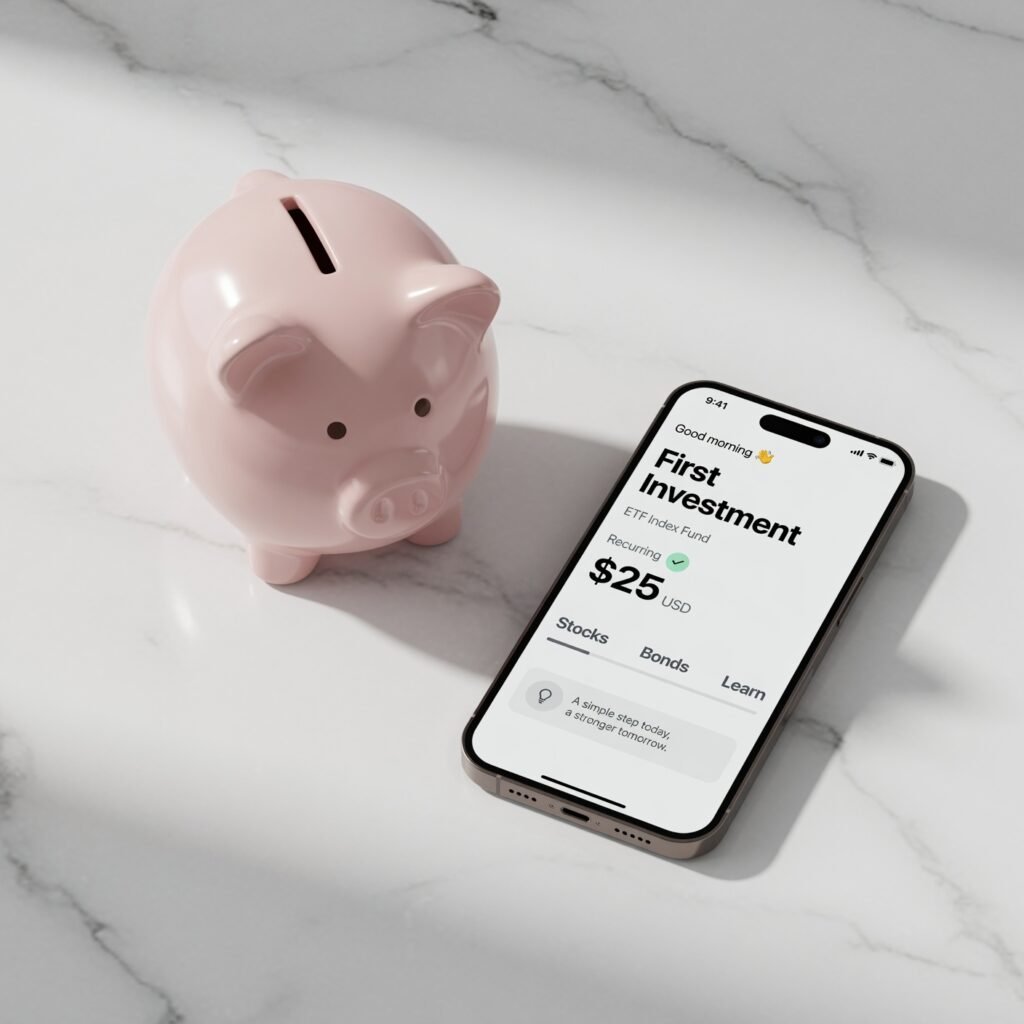
image for illustrative purposes only.
The journey to financial independence often begins with a single, daunting question: “How do I actually get started?” In 2026, the barriers to entry have never been lower, yet the sheer volume of information can make the process feel overwhelming. Whether you are aiming to build a retirement nest egg, save for a major purchase, or simply grow your wealth over time, starting from zero is not only possible—it is a proven pathway to long-term success.
This guide is designed to strip away the jargon and provide a clear, actionable roadmap for new investors. By focusing on fundamental principles rather than market timing, you can establish a robust financial foundation that stands the test of time.
Why 2026 Is the Ideal Time to Begin Your Investment Journey

Many people wait for the “perfect” market conditions before investing. However, the most successful investors understand that time in the market is significantly more valuable than timing the market. In 2026, we are operating in a sophisticated digital financial landscape. With the proliferation of low-cost brokerage apps, fractional shares, and automated investment tools, you no longer need thousands of dollars or expert-level knowledge to participate in the global economy.
Starting today allows you to harness the power of compounding. By reinvesting your earnings, your money begins to generate its own returns, creating a snowball effect that accelerates wealth accumulation the longer you remain invested.
Step 1: Establish Your Financial Foundation
Before you purchase your first share of stock, you must ensure your financial house is in order. Investing while carrying high-interest debt is counterproductive; the interest you pay on credit cards or personal loans will almost certainly outpace the returns you earn on your investments.
The Emergency Fund
Before deploying capital into the markets, aim to set aside three to six months of essential living expenses in a high-yield savings account. This “rainy day” fund acts as a shock absorber. When unexpected life events occur—a car repair, a medical bill, or a period of unemployment—this liquidity prevents you from being forced to sell your long-term investments at a loss.
Debt Management
Prioritize paying off “bad” debt—high-interest liabilities that drain your monthly cash flow. Once your high-interest debt is eliminated, you can pivot your focus toward building your investment portfolio with a sense of security and peace of mind.
Step 2: Define Your Financial Goals and Risk Tolerance
Investing without a plan is like sailing without a compass. Are you investing for retirement three decades from now, or are you saving for a home down payment in five years?
-
Long-Term Goals: Require more growth-oriented assets, such as stocks, which have the potential for higher returns but come with higher short-term volatility.
-
Short-Term Goals: Demand capital preservation. Here, you should lean toward more stable, lower-risk instruments like bonds or money market funds to ensure your money is there when you need it.
Understanding your risk tolerance—your emotional and financial capacity to handle market swings—is equally critical. A common mistake for beginners is overestimating their ability to handle “red” days in their portfolio. Start conservative; you can always increase your risk profile as you gain experience and confidence.
Step 3: Choose Your Investment Vehicle
For the modern beginner, the landscape of investment vehicles is vast but can be categorized into a few high-efficiency options.
Index Funds and ETFs
Exchange-Traded Funds (ETFs) and index funds are often the “gold standard” for beginners. Instead of trying to pick individual winning stocks—which is notoriously difficult even for professionals—these funds track a broader market index, such as the S&P 500. By buying one share of an S&P 500 ETF, you are essentially owning a tiny piece of the 500 largest publicly traded companies in the United States. This provides instant diversification, effectively “spreading your eggs across many baskets.”
Robo-Advisors
If you prefer a “hands-off” approach, robo-advisors are an excellent solution. These platforms use algorithms to build and manage a diversified portfolio based on your specific goals and risk tolerance. They automatically rebalance your holdings, ensuring your asset allocation stays aligned with your original strategy without you needing to monitor the markets daily.
Step 4: The Power of Dollar-Cost Averaging
Perhaps the most important technique for new investors is “Dollar-Cost Averaging” (DCA). This is the practice of investing a fixed dollar amount at regular intervals—for example, $200 on the first of every month—regardless of whether the market is high or low.
This strategy removes the psychological stress of trying to “buy the dip.” When the market is down, your $200 buys more shares; when the market is up, your $200 buys fewer shares. Over time, this averages out your cost per share, helping you build wealth consistently and removing the temptation to make impulsive, emotion-driven decisions.
Step 5: Diversification: The Only “Free Lunch” in Finance
Diversification is the concept of spreading your investments across various sectors, geographies, and asset classes. By doing this, you ensure that the poor performance of one company or sector does not jeopardize your entire financial future.
In 2026, diversification means looking beyond just U.S. stocks. Consider incorporating international equities, bonds, and perhaps even real estate or commodities to build a resilient, “all-weather” portfolio. Remember, a truly diversified portfolio is designed to withstand market turbulence, not just to capitalize on bull runs.
Staying the Course: The Psychological Aspect of Investing

The greatest threat to a beginner’s portfolio is not the market itself, but the investor’s own behavior. During periods of volatility, headlines may scream of crashes or economic uncertainty. It is natural to feel fear, but seasoned investors know that market corrections are a normal part of the economic cycle.
The “Buy and Hold” mentality is your best friend. By focusing on your long-term horizon and ignoring daily fluctuations, you position yourself to capture the inevitable recovery and growth that follows downturns. Successful investing is a marathon, not a sprint.
Automating Your Path to Wealth
One of the best ways to ensure success is to remove willpower from the equation. Set up automatic transfers from your checking account to your investment account. When your savings happen automatically, you build a habit that becomes second nature. Over the years, these consistent, small contributions will grow into a substantial nest egg, proving that you do not need to be a Wall Street professional to achieve your financial dreams.
As you move through 2026, keep your focus on your personal objectives. Revisit your budget annually, ensure your emergency fund is intact, and adjust your contributions as your income grows. By starting with these fundamentals, you are not just investing money—you are investing in your future peace of mind and financial freedom.