What is the safest investment for beginners?

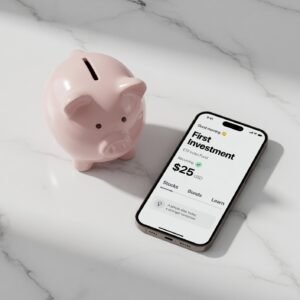
image for illustrative purposes only.
Entering the world of investing can feel like walking through a minefield. With constant headlines about stock market volatility, cryptocurrency crashes, and economic shifts, it is entirely normal for a beginner to feel hesitant. The fear of losing your hard-earned money is a powerful deterrent. However, leaving all your money in a traditional, low-interest checking account means losing purchasing power over time due to inflation.
The great news is that you do not have to jump directly into risky stocks or complex financial derivatives. There are highly secure, government-backed, and institutionally protected financial vehicles designed precisely to preserve your capital while offering a predictable return. For a true beginner, the absolute safest investments are those that guarantee you will get your principal balance back, regardless of what happens to the broader economy.
Understanding which low-risk investments are available, how they function, and how to balance them against your personal financial goals will give you the confidence needed to transition from a saver to an investor. Let’s break down the most secure financial options available today.
High-Yield Savings Accounts (HYSAs): The Most Accessible Low-Risk Option

For someone taking their very first step away from standard everyday banking, a High-Yield Savings Account (HYSA) is often the ideal entry point. While many people view savings accounts as a banking tool rather than a true investment, an HYSA functions as a low-intensity wealth-building vehicle.
How an HYSA Works
A high-yield savings account operates exactly like the standard savings account you might already have, but it pays a significantly higher interest rate—often 10 to 20 times the national average of traditional financial institutions. These accounts are predominantly offered by online banks, which save money on physical branch infrastructure and pass those savings on to consumers in the form of higher annual percentage yields (APYs).
Why They Are Unbelievably Safe
The structural safety of an HYSA comes from government backing. Reputable financial institutions secure these accounts through the Federal Deposit Insurance Corporation (FDIC) or, in the case of credit unions, the National Credit Union Administration (NCUA). This means your money is legally protected up to $250,000 per depositor, per insured institution. Even if the bank completely collapses and goes out of business, the government guarantees that your funds will be returned to you.
Best Uses for Beginners
-
Emergency Funds: Because you can withdraw your cash instantly or within a few business days, HYSAs are the premier home for your emergency savings.
-
Short-Term Savings Goals: If you plan to buy a car, take a vacation, or make a down payment on a house within the next year or two, an HYSA keeps that cash perfectly safe while letting it grow.
Certificates of Deposit (CDs): Locking in Guaranteed Returns
If you have a lump sum of money that you know you will not need to touch for a specific period, a Certificate of Deposit (CD) is an exceptional, rock-solid alternative to an HYSA.
The Mechanics of a CD
When you open a CD, you are entering a formal agreement with a banking institution. You agree to leave a specific amount of cash in the account for a fixed duration—ranging from a few months to several years. In exchange for leaving your money untouched, the bank rewards you with a guaranteed interest rate that remains locked for the entire life of the agreement.
The Trade-Off: Liquidity vs. Predictability
The safety profile of a CD is identical to an HYSA; they are fully backed by FDIC or NCUA insurance up to the $250,000 threshold. The primary risk associated with a CD is not financial loss, but a lack of liquidity. If an unexpected emergency occurs and you absolutely must withdraw your money before the maturity date, the bank will charge you an early withdrawal penalty. This penalty typically eats into the interest you earned, and in severe cases, it can slightly impact your initial principal.
Strategic Use: The CD Ladder
A popular advanced strategy for beginners utilizing this low-risk tool is called “CD Laddering.” Instead of putting all your money into a single five-year CD, you split your capital into several smaller amounts and buy multiple CDs with staggered maturity dates (e.g., a 1-year, 2-year, 3-year, and 4-year CD). Every year, one of your investments matures, giving you regular access to your cash while still taking advantage of the higher interest rates offered by longer-term commitments.
U.S. Treasury Bills, Notes, and Bonds: The Safest Investment on Earth
When financial professionals talk about a “risk-free rate of return,” they are referring to debt securities issued directly by the federal government. Buying a government bond means you are literally lending money to the state, which promises to pay you back with interest.
Different Types of Treasury Securities
The government categorizes these investments based on how long they take to mature:
-
Treasury Bills (T-Bills): Short-term securities that mature in a few days up to 52 weeks. They are sold at a discount, and when they mature, the government pays you the full face value.
-
Treasury Notes (T-Notes): Mid-term investments that mature in two, three, five, seven, or ten years. They pay interest every six months.
-
Treasury Bonds (T-Bonds): Long-term commitments that mature in 20 or 30 years, offering a steady stream of interest payments over decades.
Why They Excel in Security
U.S. Treasuries are backed by the “full faith and credit” of the government. For you to lose your money, the federal government would have to completely collapse and default on its sovereign debt obligations—an event that would devastate global markets to such a degree that cash in a bank account would face similar issues. Because of this, they are widely considered the safest investment option on the planet.
How Beginners Can Purchase Them
You can buy these securities directly from the government through the official TreasuryDirect digital platform, or you can purchase them through most major online brokerage accounts. They require a remarkably low financial barrier to entry, with minimum purchase requirements starting as low as $100.
Series I Savings Bonds: The Ultimate Weapon Against Inflation

One of the biggest hidden dangers of traditional low-risk investments is inflation. If your savings account pays 3% interest but the cost of groceries, housing, and gasoline rises by 4%, your money is technically losing purchasing power. Series I Savings Bonds were engineered by the government to solve this exact problem.
The Dual Interest Rate Structure
An I Bond is a non-marketable savings bond that earns interest based on a combination of two distinct rates:
-
A Fixed Rate: An interest rate that stays exactly the same for the entire 30-year life of the bond.
-
An Inflation Rate: A variable rate that is recalculated twice a year based on changes to the Consumer Price Index (CPI).
This unique structure guarantees that your investment keeps pace with the real-world cost of living, effectively protecting your wealth from being eroded by inflation.
Crucial Holding Rules to Remember
While I Bonds are incredibly safe, they come with strict rules regarding when you can cash them in:
-
The 12-Month Rule: You are legally prohibited from cashing in an I Bond during its first year. Your money is completely locked away.
-
The 5-Year Penalty: If you cash in the bond before holding it for a full five years, you will lose the most recent three months of interest earnings as a penalty. After five years, you can cash out at any time with zero penalties.
Money Market Mutual Funds: Low Risk Combined with High Flexibility
Not to be confused with a money market account at a standard bank, a Money Market Mutual Fund is an investment pool operated by a professional brokerage firm.
What Is Inside a Money Market Fund?
When you purchase shares of a money market fund, your money is aggregated with cash from millions of other investors to purchase high-quality, short-term debt instruments. This includes short-term government T-bills, certificates of deposit from massive commercial banks, and highly rated corporate debt that matures in a very short timeframe.
The “Maintain the $1 NAV” Principle
Money market funds are structured with the strict objective of maintaining a Net Asset Value (NAV) of exactly $1.00 per share. This means that for every dollar you put into the fund, you should always be able to pull exactly one dollar back out, while the interest earned is paid out to you monthly as additional fractional shares. While they are not technically FDIC-insured, the underlying assets are so stable that instances of a fund falling below the $1.00 mark—referred to in finance as “breaking the buck”—are extraordinarily rare historic anomalies.
Why Beginners Love Them
Money market funds offer a stellar combination of safety and utility. Most brokerages allow you to instantly liquidate your money market fund holdings to buy other assets, or even write checks directly against the balance, making it an incredibly flexible parking spot for capital you intend to invest in the future.
Understanding the True Relationship Between Risk and Reward
Before building your portfolio around these ultra-safe assets, it is vital to master a core economic concept: the absolute trade-off between risk and financial reward.
[ Higher Risk ] ---> Potential for Substantial Long-Term Wealth (e.g., Stocks)
[ Lower Risk  ] ---> Capital Preservation and Predictable Income (e.g., T-Bills)
In the financial universe, risk and return are inextricably linked. If an investment offers zero risk of capital loss, it will naturally offer a lower return over long periods compared to volatile assets like stocks or real estate.
If you choose to keep 100% of your wealth in low-risk environments, you are making a conscious decision to prioritize safety over maximum growth. This is an excellent approach for money you need in the near future, but it can limit your ability to compound wealth over multiple decades. A truly balanced financial plan recognizes that different buckets of money require different levels of protection.
How to Choose the Right Low-Risk Asset for Your Goals
Determining which of these ultra-safe vehicles is right for you boils down to a single question: When do you need the money back?
The Ultra-Short Horizon (Under 6 Months)
If you might need to access your money tomorrow or a few months from now, stick with a High-Yield Savings Account or a Money Market Mutual Fund. These options give you maximum liquidity, ensuring you can access your cash without facing penalties or administrative delays.
The Short-to-Medium Horizon (1 to 3 Years)
If you are saving for a specific goal a few years away, a Certificate of Deposit (CD) or a Short-Term Treasury Bill is often the superior choice. They allow you to lock in a specific, predictable yield, ensuring that market fluctuations cannot shrink your savings before you reach your goal.
The Medium-to-Long Horizon (3 to 5+ Years)
If you want to protect your capital from inflation over a longer duration without exposing it to stock market corrections, Series I Savings Bonds or multi-year Treasury Notes are brilliant options. They offer long-term stability and unique structural protections against the rising cost of living.
Actionable Steps for Beginners to Get Started Today

Transitioning into investing does not require a massive financial inheritance or a degree in economics. You can begin securing your financial future by following a few simple steps:
-
Audit Your Current Accounts: Check the interest rate on your current checking and savings accounts. If it is close to 0%, you are actively losing ground to inflation.
-
Define Your Investment Timeframe: Separate your money into short-term needs (emergency fund, immediate bills) and long-term savings.
-
Open the Right Account: Research online banks for HYSAs or create an account with a highly regulated, reputable online brokerage platform to access Treasury securities and money market funds.
-
Start Small and Automate: You do not need thousands of dollars to begin. Many top-tier platforms allow you to set up automatic monthly transfers of $25 or $50, helping you build a consistent investing habit entirely on autopilot.
By focusing on capital preservation and choosing vehicles backed by government insurance or elite-grade credit, you can completely eliminate the anxiety of market crashes. Investing safely isn’t about getting rich overnight; it is about building a rock-solid financial foundation that grants you peace of mind, stability, and total control over your financial destiny.