What Is the New York Stock Exchange (NYSE)?
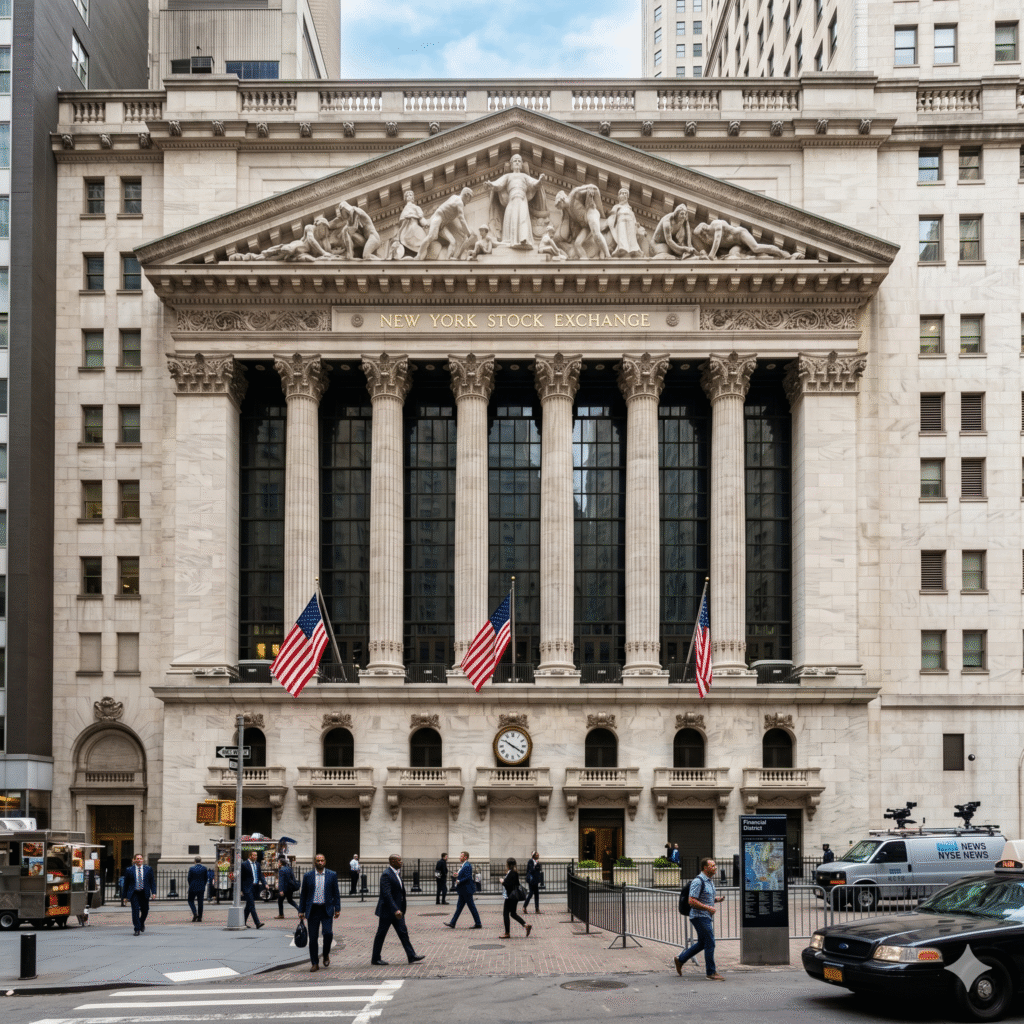
When people talk about “Wall Street,” they aren’t just referring to a narrow street in Lower Manhattan. They are usually talking about the heartbeat of the global financial system: the New York Stock Exchange (NYSE). Often referred to as the “Big Board,” the NYSE is the world’s largest stock exchange by market capitalization.
Whether you are a seasoned investor or a beginner looking to place your first trade in 2026, understanding the NYSE is fundamental. It is the place where the world’s most iconic companies—from Coca-Cola and Walmart to Disney and ExxonMobil—go to raise capital and where millions of investors go to build their wealth.
In this comprehensive guide, we will break down the history, the mechanics, and the modern evolution of the NYSE, helping you understand how this legendary institution shapes the global economy every single day.
The Birth of an Icon: A Brief History of the NYSE
The New York Stock Exchange didn’t start in a high-tech skyscraper. It began under a tree.
The Buttonwood Agreement of 1792
In May 1792, 24 stockbrokers signed the Buttonwood Agreement beneath a buttonwood tree outside of 68 Wall Street. This simple document established a set of rules for trading securities and laid the foundation for what would become the most powerful financial institution in history.
At the time, the young United States was looking for ways to fund its growth and pay off war debts. The exchange provided a structured, transparent marketplace for government bonds and early bank stocks to be traded.
Evolution and Expansion
As the U.S. economy transformed from an agrarian society to an industrial powerhouse, the NYSE grew along with it. In 1863, it officially took the name “New York Stock Exchange.” Throughout the 20th century, it survived the Great Depression, two World Wars, and numerous “Black Swan” events, consistently serving as the primary barometer for the health of the American economy.
How the NYSE Actually Works: The Hybrid Market Model
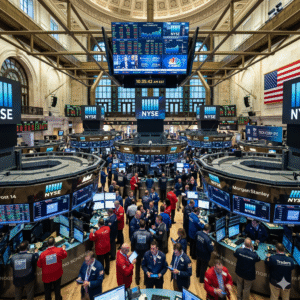
If you watch financial news, you see the iconic blue jackets of the traders on the floor. While many other exchanges (like the Nasdaq) are entirely electronic, the NYSE utilizes a Hybrid Market Model.
The Best of Both Worlds: Human and Machine
By 2026, the NYSE has mastered the integration of Artificial Intelligence and high-speed electronic execution with human oversight.
-
Electronic Trading: The vast majority of trades happen in milliseconds through advanced server arrays located in data centers.
-
The Trading Floor: The physical floor still exists to provide a human “buffer” during times of extreme market volatility. This human element is what the NYSE believes gives it an edge in maintaining an “orderly market.”
The Role of the Designated Market Maker (DMM)
Unlike other exchanges that rely solely on automated “Market Makers,” the NYSE uses Designated Market Makers (DMMs). These individuals (and their firms) are tasked with maintaining a fair and orderly market for specific stocks.
If a stock suddenly plummets because of bad news, the DMM is obligated to step in and buy shares to prevent a total collapse in liquidity. This specialized role is a key reason why many “Blue Chip” companies prefer to list on the NYSE.
NYSE Listing Requirements: The Prestige of the Big Board
Not just any company can list on the NYSE. The exchange is known for having some of the strictest listing requirements in the world. Being listed on the “Big Board” is often seen as a badge of corporate maturity and stability.
The Financial Thresholds
To list on the NYSE, a company must meet specific financial criteria, including:
-
Market Capitalization: Usually requiring a minimum of $100 million for global listings.
-
Stock Price: A minimum share price (typically $4.00) at the time of listing.
-
Public Float: A minimum number of shares held by the public (at least 1.1 million).
-
Profitability: A history of earnings over the previous three years.
Corporate Governance
Beyond the numbers, the NYSE requires companies to follow strict corporate governance rules. This includes having a board of directors where the majority are “independent” and maintaining an audit committee to ensure financial transparency. For the lay investor, these rules provide a layer of safety, as NYSE-listed companies are under constant regulatory scrutiny.
NYSE vs. Nasdaq: What’s the Difference?
If you are starting your investment journey, you’ve likely noticed that some stocks are on the NYSE while others are on the Nasdaq. While they both facilitate stock trading, their structures are quite different.
| Feature | NYSE (New York Stock Exchange) | Nasdaq |
| Location | Physical floor (Wall Street) + Electronic | Entirely Electronic |
| Trading Model | Auction Market (DMMs) | Dealer Market (Market Makers) |
| Reputation | Blue Chip, Established, Industrial | Tech, Growth, Innovation |
| Listing Fees | Generally Higher | Generally Lower |
In the modern era, the lines have blurred. Many tech giants like Oracle have moved to the NYSE, while established companies like PepsiCo are on the Nasdaq. However, the NYSE remains the spiritual home of the “Industrial” and “Value” sectors of the economy.
Understanding the Major Indices: How We Track the NYSE
You can’t “buy the NYSE,” but you can track its performance through indices. These are “baskets” of stocks that represent the overall movement of the exchange.
The Dow Jones Industrial Average (DJIA)
Perhaps the most famous index in the world, “The Dow” consists of 30 massive, influential companies. Almost all of the companies in the Dow are listed on the NYSE. Because it is “price-weighted,” the Dow tells us how the biggest “Blue Chips” are performing.
The NYSE Composite Index
While the Dow only tracks 30 companies, the NYSE Composite Index tracks all common stocks listed on the exchange. This includes over 2,000 companies from all over the world. This index is a much better reflection of the “total” health of the exchange, including international firms and mid-cap companies.
The Opening and Closing Bell: More Than Just a Ceremony

The ringing of the bell at 9:30 AM and 4:00 PM Eastern Time is one of the most recognizable traditions in the business world.
Signaling the Start and End of Trade
The bell ensures that every trader knows exactly when the “official” market is open and closed. In 2026, the bell ceremony has become a major branding event. Everyone from CEOs of newly public companies to celebrities and Olympic athletes has been invited to ring the bell.
The “Opening Cross” and “Closing Auction”
While the bell is ceremonial, the 4:00 PM close is a critical moment for the market. This is when the “Closing Auction” occurs, determining the final “closing price” for every stock on the exchange. This price is used by mutual funds and ETFs to calculate their values for the day.
Why the NYSE Matters to You as a Beginner
You might think, “I’m just buying $100 of a stock on my phone; why do I care about a building in New York?” ### 1. Liquidity and Execution
Because the NYSE is so large, it has massive liquidity. This means there are always buyers and sellers. When you want to sell your stock, you can do it instantly at a fair market price. On smaller, less-regulated exchanges, you might find yourself “stuck” in a position because there are no buyers.
2. Price Discovery
The NYSE’s auction model is the gold standard for “Price Discovery.” By bringing all buyers and sellers into one environment, the exchange ensures that the price you see on your app is the true, fair market value of the company at that second.
3. Stability During Crisis
During times of extreme market stress (like a sudden geopolitical event), the NYSE’s “Circuit Breakers” step in. If the market drops too fast, the NYSE automatically halts trading for 15 minutes to allow investors to catch their breath and prevent a “Flash Crash” driven by panicking AI algorithms.
The Future of the NYSE: Wall Street in 2026 and Beyond
As we move through 2026, the NYSE continues to evolve.
ESG and Sustainable Investing
The NYSE has launched several initiatives to promote ESG (Environmental, Social, and Governance) reporting. Companies listed on the exchange are increasingly expected to be transparent about their carbon footprint and their social impact. For the modern investor, this makes the NYSE a hub for “Impact Investing.”
The Digital Asset Frontier
While the NYSE primarily deals in traditional stocks, it is exploring ways to integrate blockchain technology for faster settlement and “Tokenized” assets. The exchange is working to ensure that the security and trust of the 1792 Buttonwood Agreement can be translated into the 21st-century digital world.
The Anchor of Your Investment Journey
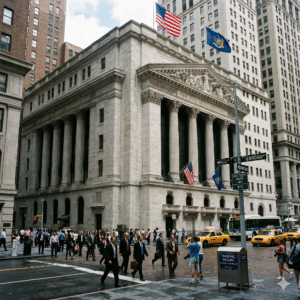
The New York Stock Exchange is more than just a building or a collection of servers. It is the physical and digital anchor of global capitalism. It provides the transparency, liquidity, and regulation that allow ordinary people to participate in the growth of the world’s greatest companies.
When you invest in an NYSE-listed stock, you are joining a 230-year tradition of wealth creation. By understanding how the “Big Board” works, you are no longer just a spectator in the financial news; you are an informed participant in the global market.