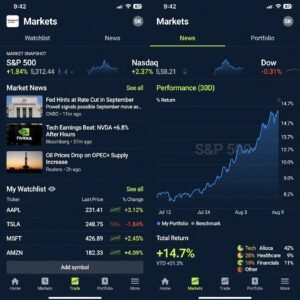
What Is the Dow Jones and How Is It Related to NYSE?

If you have ever tuned into a financial news broadcast or glanced at a newspaper’s business section, you have undoubtedly seen the headline: “The Dow is up 200 points.” For many, this is the definitive signal of how the economy is doing. But for the average person, the “Dow” remains a somewhat mysterious figure. Is it a stock? Is it a place? Is it the same thing as the stock market?
Understanding the Dow Jones Industrial Average (DJIA) and its intimate relationship with the New York Stock Exchange (NYSE) is the first step toward financial literacy. In this guide, we are going to strip away the Wall Street jargon and explain exactly what this index is, how it works, and why its connection to the NYSE is the cornerstone of American finance.
Understanding the Basics: What Exactly is the Dow Jones Industrial Average?

At its simplest, the Dow Jones Industrial Average—often just called “The Dow”—is a stock market index.
Think of it as a “sample platter” of the American economy. Instead of trying to track the thousands of companies that trade every day, the Dow tracks just 30 prominent, blue-chip companies listed in the United States. When the Dow “goes up,” it means that, on average, the stock prices of these 30 giants have increased.
A Brief History: Charles Dow’s Vision
The index was created in 1896 by Charles Dow, the founder of the Wall Street Journal. Back then, the US economy was dominated by heavy industry—railroads, sugar, leather, and tobacco. Dow wanted a quick way to tell his readers whether the economy was growing or shrinking.
In the beginning, the Dow only tracked 12 companies. Today, it has grown to 30, and the “Industrial” part of its name is largely a historical relic. While it once focused on smokestacks and factories, today’s Dow includes tech behemoths like Apple, healthcare giants like UnitedHealth, and retail titans like Walmart.
The Historic Bond: How the Dow Jones and the NYSE Are Intertwined
One of the most common points of confusion for beginners is the difference between an index (the Dow) and an exchange (the NYSE). To put it simply: The NYSE is the stadium, and the Dow Jones is the All-Star team.
The NYSE as the Physical (and Digital) Home
The New York Stock Exchange is the physical place on Wall Street where stocks are traded. It is the oldest and largest stock exchange in the world. For over a century, the NYSE was the only place where the companies in the Dow were allowed to live.
Historically, if you were a company in the Dow Jones Industrial Average, you were almost certainly listed on the NYSE. This created a symbiotic relationship: the NYSE provided the prestige and the “Big Board” for the world’s most important companies, while the Dow provided the mathematical score for how those companies were performing.
The Modern Relationship
In 2026, the relationship is slightly more flexible but no less vital. While the majority of the 30 companies in the Dow are still listed on the NYSE, the index now includes companies from the NASDAQ as well (such as Apple and Microsoft).
However, the NYSE remains the spiritual home of the Dow. When the “Opening Bell” rings on Wall Street, the world is looking at the NYSE floor to see how the Dow will react. They are two different entities—one is a list, the other is a marketplace—but they are the twin pillars of American capitalism.
The 30 Blue-Chip Giants: How Stocks Are Selected for the Dow
You might wonder, “How does a company get on this exclusive list of 30?” Unlike other indices that use strict mathematical formulas based on company size, the Dow is a bit more… prestigious.
The Averages Committee
The stocks in the Dow are selected by a committee at S&P Dow Jones Indices. There is no “automatic” way to get in. Instead, the committee looks for companies that:
-
Have an excellent reputation.
-
Demonstrate sustained growth.
-
Are of interest to a large number of investors.
-
Accurately represent the current state of the US economy.
The “Blue-Chip” Label
The companies in the Dow are often called “Blue-Chip” stocks. The term comes from poker, where blue chips hold the highest value. These are companies that have survived recessions, wars, and technological shifts. When a company is added to the Dow, it is a sign that it has “arrived” at the very top of the corporate world. Conversely, being removed from the Dow (as happened to General Electric in 2018) is often seen as a sign of a company’s declining influence.
Price-Weighting Explained: The Mathematics Behind the Index

This is where the Dow gets a little “weird” compared to other indices like the S&P 500. Most indices are market-cap weighted, meaning bigger companies have more influence. The Dow, however, is price-weighted.
How Price-Weighting Works
In the Dow, a company with a higher stock price has a bigger impact on the index’s movement than a company with a lower stock price, regardless of how big the actual company is.
For example, if a stock priced at $300 moves up by 1%, it will push the Dow higher than a stock priced at $30 moving up by 1%. Critics argue this is an outdated way of doing math, but it is the way Charles Dow started it in 1896, and the tradition continues.
The Dow Divisor
You can’t just add the 30 prices together and divide by 30. Because of stock splits and dividends, the math would get messy. Instead, the committee uses the Dow Divisor. The formula looks like this:
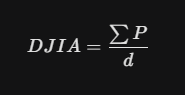
Where:

As of 2026, the divisor is actually a very small decimal (less than 1). This means that a $1 change in any single stock’s price results in the Dow moving by many points.
Dow Jones vs. S&P 500: Which One Actually Reflects the Market?
If you talk to professional fund managers, they often prefer the S&P 500 over the Dow. Why? Because the S&P 500 tracks 500 companies and covers about 80% of the total value of the US stock market.
Why the Dow Still Wins the Headlines
If the S&P 500 is “more accurate,” why do we still care about the Dow?
-
History: It is the oldest “vibe check” for the economy.
-
Simplicity: It is easier for the general public to understand “30 big companies” than “500 mathematically weighted entities.”
-
Correlation: Interestingly, even though the math is different, the Dow and the S&P 500 usually move in the same direction about 95% of the time. If the Dow is doing well, the American economy is generally doing well.
The “Magnificent” Evolution: How the Dow Adapts to the Modern Economy
One of the criticisms of the Dow is that it moves too slowly. However, if you look at the components over the last decade, the index has undergone a radical transformation to stay relevant in the age of AI and digital transformation.
Out with the Old, In with the Tech
The Dow used to be full of steel, oil, and tobacco. Today, it is increasingly dominated by Tech and Services. The inclusion of Amazon, Apple, and Salesforce shows that the “Averages Committee” understands that the “Industrial” part of the American economy is now driven by silicon and code rather than iron and steam.
The Prestige of the NYSE Listing
Even as the Dow adds NASDAQ stocks, the NYSE remains the primary venue for these companies to showcase their stability. Many companies that grow up on the NASDAQ eventually “transfer” to the NYSE once they become established giants, seeking the prestige of the “Big Board” and the stability that the NYSE’s human-hybrid trading model provides.
Practical Investing: How to Trade the Dow in 2026

You cannot “buy” the Dow Jones Industrial Average itself because it is just a list. However, thanks to modern financial products, you can invest in it very easily.
1. Index ETFs (Exchange Traded Funds)
The most popular way to invest in the Dow is through an ETF that tracks it. The most famous is the SPDR Dow Jones Industrial Average ETF, known by its ticker symbol DIA (investors often call these “Diamonds”). When you buy a share of DIA, the fund manager uses your money to buy all 30 stocks in the Dow in their exact proportions.
2. Options and Futures
For more advanced traders, the Dow provides a massive market for options and futures. These allow investors to bet on which way the index will move or to “hedge” their portfolios against a market crash.
3. “Dogs of the Dow” Strategy
This is a classic investment strategy where an investor buys the ten stocks in the Dow with the highest dividend yields at the beginning of the year. The theory is that these are “undervalued” blue-chip giants that are likely to bounce back.
The Criticisms: What the Dow Doesn’t Tell You
While the Dow is a great “quick glance” at the economy, it has its blind spots. If you want to be a smart investor, you must recognize what the Dow is not:
-
It is NOT the whole market: It ignores thousands of small and mid-sized companies that are often the real engines of innovation.
-
It is NOT global: It only tracks US-based companies, though most of them do business globally.
-
The Math is “Flawed”: Because it is price-weighted, a $100 stock has more influence than a $50 stock, even if the $50 company is actually twice as large.
The Pulse of American Finance
The Dow Jones Industrial Average and the New York Stock Exchange are more than just financial entities; they are the cultural icons of wealth. The NYSE provides the infrastructure—the place where the world’s capital meets. The Dow provides the narrative—the story of how the world’s most successful companies are faring.
In 2026, as the markets become more digital and decentralized, the Dow remains a vital anchor. It tells us that despite all the changes in technology, the core of the economy still rests on the shoulders of the “30 Giants.”
Whether you are looking to invest your first $1,000 or you are just trying to understand the evening news, remember this: The Dow is the All-Star team, the NYSE is the stadium, and together, they are the heartbeat of the financial world.