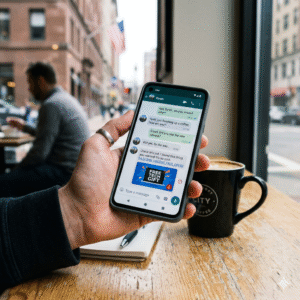
Will Bitcoin become a medium of exchange?
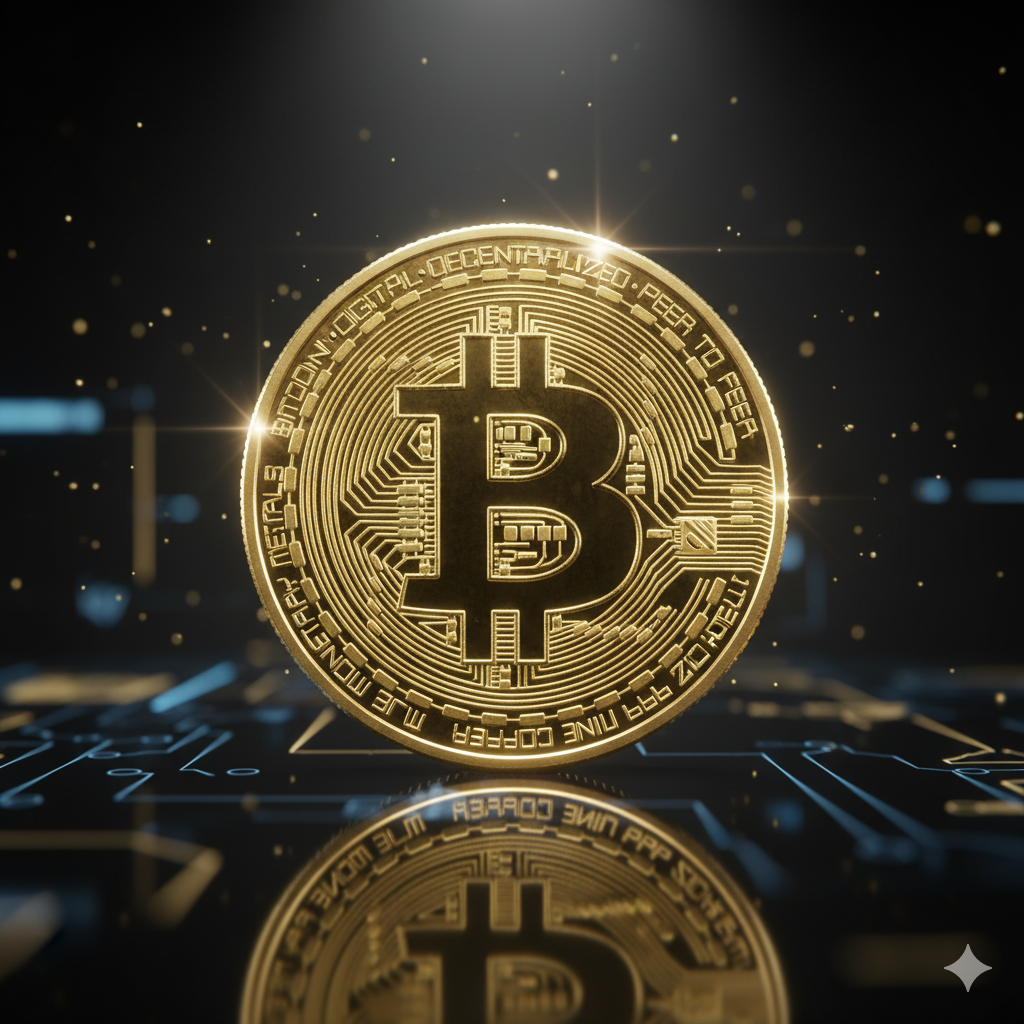
Since its inception in 2009, Bitcoin has been described in many ways: a revolutionary technology, “digital gold,” a speculative bubble, and a hedge against inflation. However, its original creator, the anonymous Satoshi Nakamoto, titled the Bitcoin whitepaper “A Peer-to-Peer Electronic Cash System.”
This raises a fundamental question that divides the financial world: Will Bitcoin ever become a common medium of exchange—a currency we use to buy coffee, pay rent, and settle daily bills—or is it destined to remain a high-value asset that sits in digital vaults?
To answer this, we must look beyond the price charts and examine the economic, technical, and regulatory hurdles that stand between Bitcoin and the checkout counter.
The Vision vs. The Reality: Is Bitcoin Money?

In traditional economics, for something to be considered “money,” it must fulfill three primary functions:
-
Store of Value: It can be held and exchanged at a later date without losing significant purchasing power.
-
Medium of Exchange: It is widely accepted as payment for goods and services.
-
Unit of Account: It is used to measure the value of goods (i.e., prices are listed in that currency).
Currently, Bitcoin is winning the “Store of Value” argument. With its limited supply of 21 million coins, it has outperformed almost every other asset class over the last decade. However, as a Medium of Exchange, it still faces significant challenges.
Why Bitcoin Struggles as a Daily Payment Method
If you try to buy a $5 latte with Bitcoin today using the “Base Layer” (the main blockchain), you will likely run into three major problems: Speed, Cost, and Scalability.
1. The Scalability Bottleneck
The Bitcoin network can only process roughly 5 to 7 transactions per second (TPS). In comparison, Visa can handle over 24,000 TPS. Because Bitcoin prioritizes security and decentralization over speed, the network can become “congested” during busy times.
2. High Transaction Fees
When the network is busy, users must pay a fee to miners to prioritize their transactions. During peak periods, these fees can rise to $10, $20, or even $50. No one wants to pay a $20 fee for a $5 coffee. This makes small “micro-payments” on the main blockchain economically impossible.
3. Confirmation Times
A Bitcoin transaction on the main layer typically takes about 10 minutes to be included in a block, and most merchants wait for at least three to six “confirmations” to ensure the payment is final. Waiting 30 to 60 minutes at a cash register is simply not viable in a modern economy.
The Lightning Network: The Solution for Instant Bitcoin Payments
To solve the speed and cost issues, developers created “Layer 2” solutions, most notably the Lightning Network.
The Lightning Network acts as a second layer on top of Bitcoin. It allows users to open “payment channels” with one another. Transactions within these channels happen instantly and cost almost nothing (fractions of a cent). Only when the channel is closed is the final balance recorded on the main Bitcoin blockchain.
How Lightning Changes the Game:
-
Instant Settlements: Payments happen in milliseconds.
-
Micro-payments: You can send a single “Satoshi” (the smallest unit of Bitcoin) across the world for a negligible fee.
-
Scalability: It can potentially handle millions of transactions per second, rivaling or exceeding traditional payment processors.
If Bitcoin does become a common medium of exchange, it will almost certainly be through the Lightning Network or similar secondary layers, rather than the main blockchain itself.
Volatility: The Greatest Psychological Barrier to Adoption
Even if the technology is fast enough, the price volatility of Bitcoin remains a massive hurdle for both consumers and merchants.
The Consumer’s Dilemma (Gresham’s Law)
In economics, Gresham’s Law states that “bad money drives out good.” If you have $100 in US Dollars (which loses value over time due to inflation) and $100 in Bitcoin (which you expect to go up in value), which one will you spend?
Most people choose to spend the “bad” money (dollars) and hoard the “good” money (Bitcoin). This behavior makes Bitcoin act more like a digital gold bar than a circulating currency.
The Merchant’s Risk
A business owner operates on thin profit margins. If a merchant accepts $100 worth of Bitcoin for a product, but Bitcoin’s price drops by 10% before they can pay their suppliers or staff, they have lost their profit. Until Bitcoin’s price stabilizes, most merchants will immediately convert Bitcoin payments back into stablecoins or local fiat currency.
The “Tax Trap”: Why Spending Bitcoin is a Legal Nightmare
In the United States and many other developed nations, the biggest obstacle to using Bitcoin as a currency isn’t technical—it’s Regulatory.
The IRS views Bitcoin as Property, not currency. This means that every time you spend Bitcoin, it is considered a “taxable event.”
-
If you bought $10 worth of Bitcoin and it grew to $20, and then you used that $20 to buy lunch, you have technically “sold” an asset for a $10 profit.
-
You are legally required to report that $10 capital gain on your tax return.
Imagine having to track the purchase price and sale price of every single Satoshi spent throughout the year. Until governments grant a de minimis tax exemption (allowing small transactions to be tax-free), Bitcoin will never be a practical currency for daily use in the US or Europe.
El Salvador and the Legal Tender Experiment
In 2021, El Salvador became the first country in the world to make Bitcoin Legal Tender. This means businesses are technically required to accept it, and taxes can be paid in BTC.
The experiment has yielded mixed results:
-
Tourism & Investment: It has attracted a massive wave of “crypto-tourists” and tech investment to the country.
-
Remittances: It has made it easier and cheaper for Salvadorans living abroad to send money home without paying high fees to companies like Western Union.
-
Daily Use: Adoption among local citizens for daily groceries remains relatively low compared to the US Dollar, largely due to a lack of education and the aforementioned volatility.
Regardless of the outcome, El Salvador is providing a real-world “laboratory” for the rest of the world to watch how a nation functions on a Bitcoin standard.
Will Stablecoins Steal Bitcoin’s “Currency” Crown?

While Bitcoin enthusiasts want BTC to be the currency, a different type of crypto has already taken that role: Stablecoins (like USDC or USDT).
Stablecoins are digital assets pegged to the value of the US Dollar. They offer the benefits of blockchain technology (24/7 trading, global reach, fast speeds) without the volatility of Bitcoin.
-
Many people in developing countries with high inflation (like Argentina or Turkey) use Stablecoins for daily savings and trade.
-
In the future, we may see a “hybrid” system where Bitcoin is the savings account (Store of Value) and Stablecoins are the checking account (Medium of Exchange).
The Evolutionary Path of Bitcoin
Will Bitcoin become a medium of exchange? The answer is likely a “Yes,” but it will be a gradual evolution.
Economists often point out that a new form of money must evolve in stages:
-
Collectible (The early “hobbyist” phase).
-
Store of Value (Where we are now—Institutional adoption).
-
Medium of Exchange (The next step, enabled by Layer 2 tech).
-
Unit of Account (The final stage, where goods are priced directly in Bitcoin).
We are currently firmly in the “Store of Value” phase. For Bitcoin to move into a true “Medium of Exchange,” we need more user-friendly wallets, wider adoption of the Lightning Network, and—most importantly—regulatory clarity that removes the tax burden from small purchases.
Bitcoin might not replace the dollar in your wallet tomorrow, but it is already becoming the “Internet’s Native Currency”—a borderless, neutral way to move value across the globe at the speed of light.