Stock market terms every beginner should know

Entering the world of investing can feel like landing in a foreign country where you don’t speak the language. Between the shouting on news networks and the complex charts filled with acronyms, it’s easy to feel overwhelmed. However, the “language of money” isn’t as impenetrable as it seems.
To succeed in the stock market, you don’t need a PhD in Economics, but you do need to understand the vocabulary used by traders, brokers, and analysts. This knowledge is your first line of defense against costly mistakes and your primary tool for building long-term wealth. In this comprehensive guide, we will break down the most critical stock market terms into plain English, ensuring you have the foundation needed to navigate the financial markets with confidence.
The Building Blocks: Core Definitions of Ownership
Before you can trade, you must understand exactly what you are buying. These terms form the bedrock of the equity markets.
1. Common Stock vs. Preferred Stock
When you buy “stock,” you are buying a piece of a company. However, there are two main types:
-
Common Stock: This is what most people invest in. It represents ownership and usually grants you voting rights at shareholders’ meetings. If the company grows, the stock price usually rises.
-
Preferred Stock: This functions more like a hybrid between a stock and a bond. You typically don’t have voting rights, but you have a higher claim on assets and earnings (like dividends) than common stockholders.
2. The Ticker Symbol
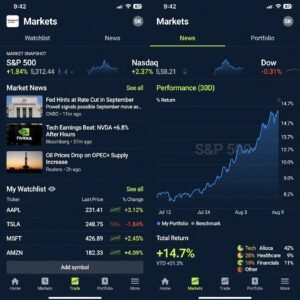
Every public company has a unique alphabetic code used to identify it on the exchange. For example, AAPL is Apple, TSLA is Tesla, and AMZN is Amazon. Knowing the ticker is vital because some companies have very similar names, and entering the wrong one could lead to a disastrous trade.
3. Shareholder Equity
In simple terms, equity is the value of the company that would be returned to shareholders if all assets were liquidated and all debts were paid off. It’s a key indicator of a company’s financial health.
Market Sentiment: Understanding Bull and Bear Markets

The “mood” of the market dictates how prices move. You will hear these two animals mentioned constantly in financial media.
4. Bull Market
A Bull Market is characterized by optimism, investor confidence, and expectations that strong results will continue. In a bull market, stock prices are rising or are expected to rise. The term comes from the way a bull attacks—thrusting its horns up into the air.
5. Bear Market
Conversely, a Bear Market occurs when stock prices fall 20% or more from recent highs, amid widespread pessimism. Like a bear swiping its paws down, the market is in a retreat. These periods can be scary, but historically, they have also been the best times for long-term investors to buy high-quality stocks at a discount.
Valuation Metrics: How to Tell if a Stock is “Cheap” or “Expensive”
A stock’s price alone tells you nothing about its value. A $10 stock might be “expensive” while a $1,000 stock might be a “bargain.” To understand why, you need these metrics.
6. Market Capitalization (Market Cap)
This is the total dollar market value of a company’s outstanding shares. It is calculated by multiplying the current stock price by the total number of shares.
-
Large-cap: $10 billion or more (Stable, established companies).
-
Mid-cap: $2 billion to $10 billion.
-
Small-cap: $300 million to $2 billion (Higher growth potential, but higher risk).
7. P/E Ratio (Price-to-Earnings)
The P/E ratio is the most famous valuation tool. It compares the company’s stock price to its earnings per share. If a company has a P/E of 20, it means investors are willing to pay $20 for every $1 of profit the company makes. A high P/E might suggest a stock is overvalued, or that investors expect massive growth in the future.
8. Dividend Yield
Some companies share their profits with investors by sending them regular cash payments called dividends. The “yield” is the annual dividend payment divided by the stock price, expressed as a percentage. It’s a great way to generate “passive income” from your investments.
The Art of the Trade: Execution Vocabulary
When you are ready to pull the trigger and buy a stock, your brokerage will ask you how you want to execute the trade.
9. Market Order vs. Limit Order
-
Market Order: An instruction to buy or sell immediately at the best available current price. It guarantees execution but does not guarantee the price.
-
Limit Order: An instruction to buy or sell only at a specific price or better. You might not get your trade filled if the price never hits your limit, but it protects you from paying more than you intended.
10. The Bid-Ask Spread
The Bid is the highest price a buyer is willing to pay. The Ask is the lowest price a seller is willing to accept. The difference between them is the “spread.” In highly liquid stocks like Microsoft, the spread is just pennies. In obscure stocks, the spread can be wide, making it harder to enter and exit positions profitably.
11. Volatility and the VIX
Volatility refers to how much a stock’s price swings up and down. High volatility means high risk but also high potential reward. The VIX, often called the “Fear Gauge,” measures the market’s expectation of volatility over the next 30 days.
Portfolio Strategy: Managing Risk Like a Pro
Investing isn’t just about picking winners; it’s about not losing everything when a sector fails.
12. Diversification
“Don’t put all your eggs in one basket.” Diversification is the practice of spreading your investments across different industries (Tech, Healthcare, Energy) and asset classes (Stocks, Bonds, Real Estate) to reduce risk.
13. Blue-Chip Stocks
These are shares in very large, well-recognized companies with a long history of sound financial performance. Think of companies like Coca-Cola, Walmart, or Disney. They are considered safer bets during economic downturns.
14. Exchange-Traded Funds (ETFs)
An ETF is a basket of stocks that trades on an exchange just like an individual stock. Instead of buying 500 different companies, you can buy one share of an S&P 500 ETF (like VOO or SPY) and instantly own a tiny piece of the 500 largest companies in the U.S.
Advanced Concepts: For When You’re Ready to Level Up

As you grow, you will encounter terms that describe more complex market behaviors.
15. Short Selling
This is when an investor “borrows” shares they don’t own, sells them, and hopes the price goes down. If it does, they buy the shares back at the lower price, return the borrowed shares, and pocket the difference. It is highly risky because, theoretically, a stock price can rise forever, leading to infinite losses.
16. IPO (Initial Public Offering)
This is the first time a private company sells its shares to the general public. It’s often a high-hype event, but beginners should be cautious, as IPO prices can be extremely volatile in the first few months.
17. Margin Trading
Trading “on margin” means borrowing money from your broker to buy more stocks than you could afford with your own cash. While it can magnify your gains, it also magnifies your losses. If your stocks drop too far, the broker will issue a Margin Call, demanding you deposit more cash immediately or they will sell your stocks for a loss.
Knowledge is Your Greatest Asset
The stock market is a powerful machine for building wealth, but it requires a disciplined approach and a clear understanding of the rules. By mastering these terms, you have moved from a “blind participant” to an “informed investor.”
Remember, the goal of investing is not to “get rich quick” by gambling on terms you don’t understand. It is about consistent, informed decision-making over years and decades. As you continue to read financial reports and follow market news, these terms will become second nature to you.