How AI Is Changing the Stock Market
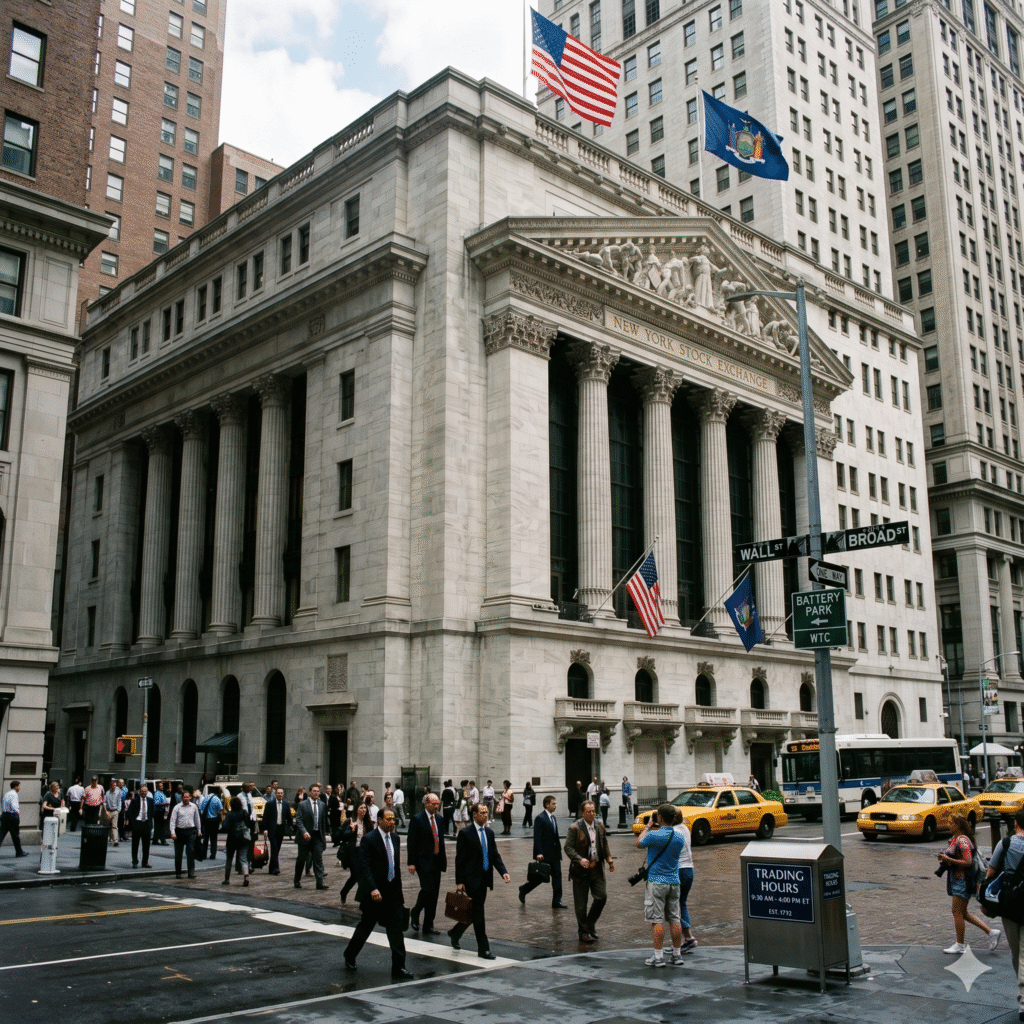
The year is 2026, and the image of a chaotic trading floor filled with people shouting orders is a relic of the past. Today, the heartbeat of the global financial system is found in the hum of massive server rooms where Artificial Intelligence (AI) makes decisions in the blink of an eye.
Whether you are a casual investor with a few hundred dollars in a retirement account or a high-net-worth individual, you are navigating a landscape that has been fundamentally reshaped by machine learning, predictive algorithms, and natural language processing. But what does this actually mean for your money? Is AI a “crystal ball” that can predict the next big winner, or is it a double-edged sword that creates new risks for the average person?
In this comprehensive guide, we will explore how AI is changing the stock market, breaking down complex technologies into simple concepts, and helping you understand how to stay ahead in this new digital era.
The Evolution of Algorithmic Trading and High-Frequency Execution

In the “old days,” if you wanted to sell a stock, a human broker had to find another human broker who wanted to buy it. This took time and was prone to human error. Today, AI-driven algorithmic trading handles the vast majority of trades on the New York Stock Exchange and the Nasdaq.
What is Algorithmic Trading?
At its simplest, an algorithm is a set of rules. An AI algorithm might be told: “Buy 1,000 shares of Company X if the price drops below its 50-day moving average, but only if the trading volume is 20% higher than normal.”
In 2026, these algorithms are no longer just static rules written by programmers; they are self-learning. They analyze decades of historical data to find patterns that a human could never see.
The Speed of High-Frequency Trading (HFT)
AI allows for High-Frequency Trading, where computers execute thousands of orders per second. These systems look for tiny price discrepancies—fractions of a penny—between different exchanges and exploit them instantly. While this provides “liquidity” (making it easier for you to buy and sell), it also means that the market moves faster than ever before.
Predictive Analytics: Can Machine Learning Forecast Market Trends?
One of the most sought-after goals in finance is the ability to predict the future. While no one has a perfect crystal ball, AI’s predictive analytics are getting closer than ever.
Pattern Recognition at Scale
Machine learning models are designed to ingest “big data.” This isn’t just stock prices; AI looks at “alternative data” such as:
-
Satellite Imagery: Counting the number of cars in a retailer’s parking lot to predict quarterly sales.
-
Shipping Logs: Tracking oil tankers across the ocean to forecast energy prices.
-
Weather Patterns: Predicting crop yields for agricultural investments.
The Probability Engine
It is important for laypeople to understand that AI does not “know” the future. Instead, it calculates probabilities. An AI model might determine that based on current interest rates, geopolitical tensions, and consumer spending, there is a $72\%$ probability that the tech sector will outperform the energy sector over the next 30 days.
As an investor, having access to these probability models can be the difference between a calculated risk and a blind gamble.
Sentiment Analysis: Using NLP to Trade on the “Pulse” of the Internet
In the past, you had to wait for the morning newspaper or a quarterly report to know how a company was doing. Today, public opinion changes in seconds on social media. AI uses Natural Language Processing (NLP) to keep up.
Scanning the “Digital Vibe”
AI models can “read” millions of posts on platforms like X (formerly Twitter), Reddit, and specialized financial forums. This is called Sentiment Analysis. The AI looks for keywords and emotional tones to determine if the public “vibe” around a stock is turning positive or negative.
Real-Time News Processing
If a major news outlet publishes a story about a CEO’s resignation, an AI sentiment bot can read that article, understand its implications, and execute a trade in milliseconds—often before a human has even finished reading the headline. This is why stock prices often jump or plumet the exact second news is released.
Robo-Advisors and the Democratization of Wealth Management
Perhaps the biggest change for the average person is the rise of Robo-Advisors. In the past, you needed hundreds of thousands of dollars to afford a professional wealth manager. Today, AI provides that same level of sophistication for a fraction of the cost.
Automated Portfolio Management
Robo-advisors use AI to manage your portfolio based on your goals and risk tolerance. They perform complex tasks automatically, such as:
-
Tax-Loss Harvesting: Automatically selling losing investments to offset taxes on your gains—a strategy that used to take accountants hours to calculate.
-
Automatic Rebalancing: If your stocks do too well and now represent too much of your portfolio, the AI sells a little bit and buys bonds to keep your risk level steady.
Lower Fees, Better Access
Because these systems are automated, they charge significantly lower fees than human advisors. This allows younger and smaller investors to start building wealth with the same “math” that billionaires use.
Generative AI in Financial Research: The End of the 200-Page Report?

In 2026, Generative AI (the evolution of tools like ChatGPT) has become the primary assistant for financial analysts.
Summarizing Complexity
Instead of reading a 200-page “10-K” annual report, investors can now use AI to summarize the key risks, debt obligations, and growth opportunities of a company in three bullet points. This allows for faster decision-making and helps laypeople understand complex financial documents without needing a degree in accounting.
Building Custom Models
Advanced investors are now using Generative AI to write custom code that back-tests their own investment theories. For example, you can ask an AI: “Write a script that shows how the S&P 500 performed every time inflation was above $3\%$ and unemployment was below $4\%$.”
The Risks of AI in the Stock Market: What Could Go Wrong?
While AI offers incredible benefits, it also introduces new, systemic risks that every investor must be aware of.
The “Black Box” Problem
Some AI models are so complex that even the people who built them don’t fully understand why the machine made a certain decision. This is known as a “Black Box.” If a major AI model makes a mistake, it can cause a “Flash Crash,” where the market drops $10\%$ in minutes for no apparent reason.
Algorithmic Bias and “Herding”
If many different investment firms are all using the same AI models, they might all try to buy or sell the same stock at the exact same time. This creates “herding” behavior, which can lead to extreme price swings and bubbles that have no basis in reality.
The Ethics of AI Finance: Transparency and Fairness
As AI takes over the markets, regulators like the SEC are grappling with difficult ethical questions.
Is the Playing Field Level?
There is a concern that big banks with the most expensive AI systems have an unfair advantage over the average retail investor. However, the counter-argument is that as AI technology becomes cheaper and more open-source, it actually empowers the individual to compete with “The Big Guys.”
Ensuring Accountability
If an AI makes a trade that crashes a stock, who is responsible? The programmer? The firm? The AI itself? In 2026, we are still defining the legal frameworks that will hold these automated systems accountable.
The Future of the Human Investor: Will AI Replace Us?
The most common question investors ask is: “Is there any room left for humans?” The answer is a resounding yes, but the role of the human has changed.
The “Cyborg” Investor
The most successful investors in 2026 are not fighting against AI; they are using it as a superpower. We call this the Cyborg Investor. The human provides the wisdom, ethics, and long-term vision, while the AI provides the data processing and mathematical execution.
AI is excellent at finding correlations, but it struggles with context. AI can see that a stock is dropping, but a human can understand why—perhaps because of a cultural shift or a change in consumer values that the numbers haven’t captured yet.
Embracing the AI Revolution in Your Portfolio

AI is not a passing trend; it is the new reality of the financial world. It has made the stock market faster, more efficient, and more accessible, but it has also made it more complex and volatile.
To succeed in this environment, the modern investor must:
-
Educate Themselves: Understand the basics of how these algorithms work.
-
Use AI Tools: Don’t be afraid to use robo-advisors or AI research assistants to level the playing field.
-
Stay Human: Remember that at the end of every trade is a human goal—retirement, a house, or a child’s education. No AI can define those goals for you.
The stock market of 2026 is a digital frontier. By embracing AI rather than fearing it, you can navigate the waves of the market with more confidence and precision than ever before.